
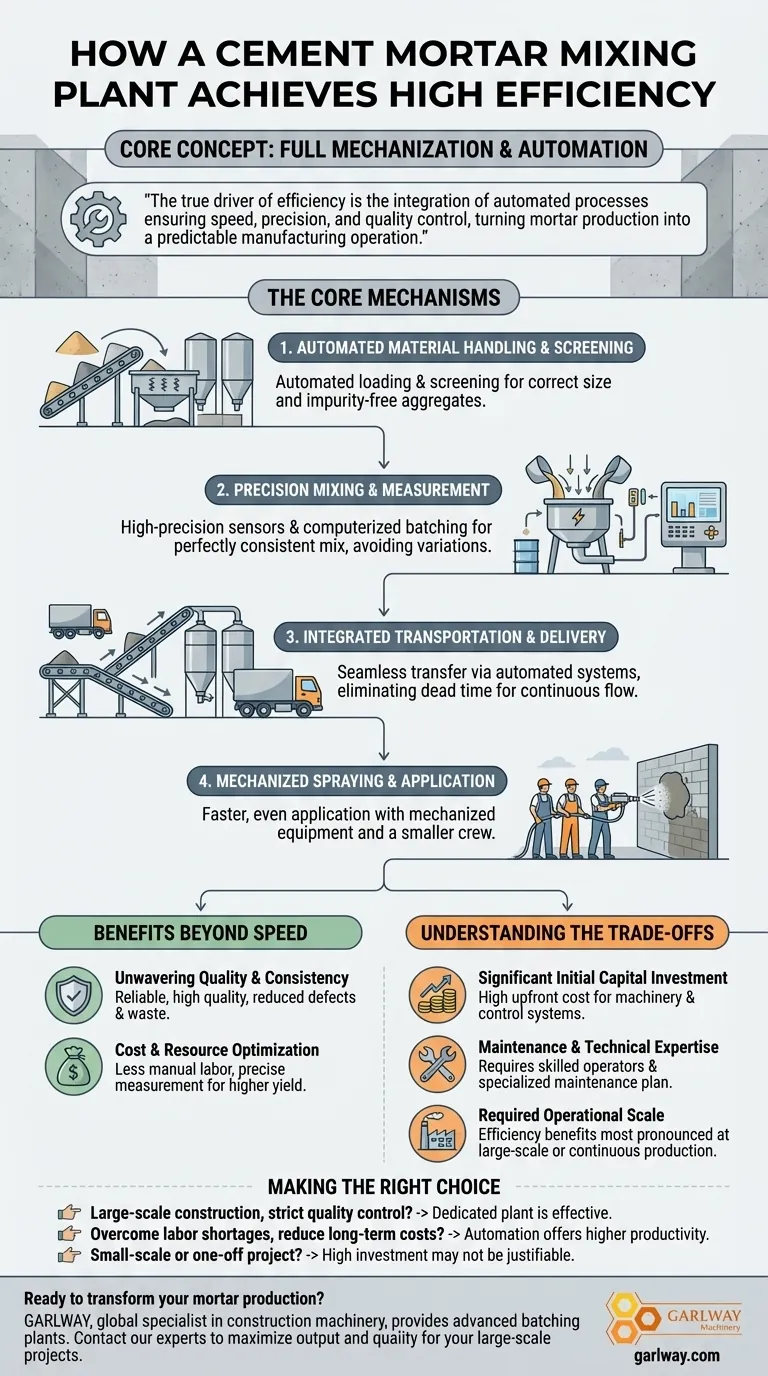
At its core, a modern cement mortar mixing plant achieves high efficiency by replacing manual labor with a fully mechanized and automated system. This system automates the entire production line, from initial material screening and precise mixing to final transportation and even application, dramatically increasing output and consistency.
The true driver of efficiency is not just mechanization itself, but the integration of automated processes that ensure speed, precision, and quality control at every stage, turning mortar production into a predictable and optimized manufacturing operation.
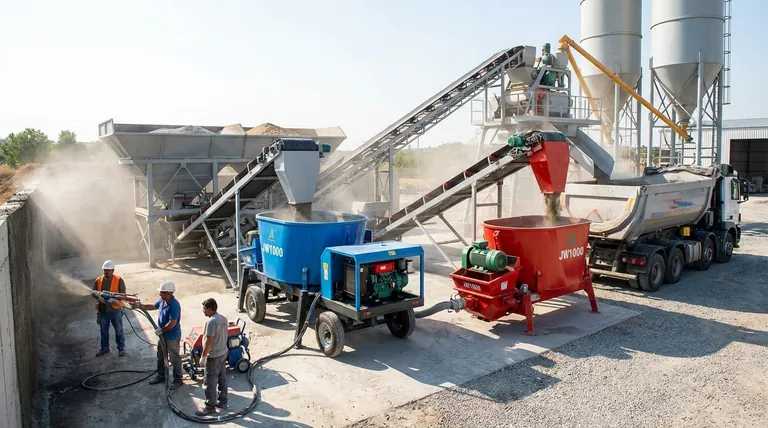
The Core Mechanisms of High Efficiency
A plant's efficiency is the result of several interconnected, automated systems working in concert. Each stage is designed to eliminate bottlenecks and human error inherent in traditional mixing methods.
Automated Material Handling and Screening
The process begins with the automated loading and screening of raw materials like sand and cement. This initial step ensures that all aggregates are of the correct size and free from impurities, which is fundamental for high-quality mortar. Mechanizing this front-end process eliminates slow, labor-intensive manual screening.
Precision Mixing and Measurement
This is the heart of the plant's efficiency. High-precision sensors and computerized batching systems weigh and measure each component—cement, sand, water, and additives—with extreme accuracy. This guarantees a perfectly consistent mix every time, preventing the quality variations and rework common with manual measurement. The mixing itself is done in a high-speed, powerful mixer that ensures complete homogenization in a fraction of the time.
Integrated Transportation and Delivery
Once mixed, the mortar is transferred via automated conveyor systems to storage silos or directly to specialized transport trucks. This seamless integration between the mixing and transportation phases eliminates dead time, ensuring a continuous flow of ready-to-use product from the plant to the job site.
Mechanized Spraying and Application
For many projects, the efficiency gains extend to the final application. The mortar produced is often designed to be used with mechanized spraying equipment. This allows a small team to apply mortar to surfaces far more quickly and evenly than a larger team using traditional hand-troweling methods.
Benefits Beyond Raw Speed
While speed is a major advantage, the true value of a mixing plant lies in the secondary benefits that arise from its systematic approach.
Unwavering Quality and Consistency
Because every batch is controlled by precise sensors and software, the quality of the mortar is exceptionally high and consistent. This reliability reduces the risk of structural defects, improves the final finish, and minimizes material waste from bad batches.
Cost and Resource Optimization
Automation significantly reduces the need for manual labor, which is often a major project cost. Furthermore, the precise measurement of materials ensures there is virtually no waste, leading to a higher yield from the raw materials purchased and overcoming the high costs associated with inefficient manual mixing.
Understanding the Trade-offs
While highly efficient, adopting a cement mortar mixing plant involves clear trade-offs that must be considered.
Significant Initial Capital Investment
The primary drawback is the high upfront cost of purchasing, installing, and commissioning the plant. The machinery, silos, and control systems represent a major capital expenditure that is only justified by large-scale or continuous production needs.
Maintenance and Technical Expertise
Automated systems require skilled operators and regular, specialized maintenance. Downtime due to a mechanical or software failure can halt production entirely, making a dedicated maintenance plan and access to technical support essential.
Required Operational Scale
The efficiency benefits are most pronounced at scale. For very small or intermittent projects, the logistical overhead and operational costs of a full-scale plant may outweigh the advantages over more traditional or mobile mixing solutions.
Making the Right Choice for Your Project
Choosing the right production method depends entirely on your project's scale, quality requirements, and budget.
- If your primary focus is large-scale construction with strict quality control: A dedicated mixing plant is the most effective solution for ensuring consistency and meeting high-volume demand.
- If your primary focus is overcoming labor shortages and reducing long-term operational costs: The automation provided by a plant offers a clear path to higher productivity with a smaller workforce.
- If your primary focus is a small-scale or one-off project: The high initial investment of a plant may not be justifiable, and manual or portable mixing methods might remain more practical.
Ultimately, investing in a cement mortar mixing plant transforms mortar production from a variable craft into a precise, reliable, and highly efficient industrial process.
Summary Table:
| Key Efficiency Driver | Core Benefit |
|---|---|
| Automated Material Handling & Screening | Eliminates manual labor, ensures material quality |
| Precision Mixing & Measurement | Guarantees consistent, high-quality mortar batches |
| Integrated Transportation & Delivery | Seamless flow from mixing to job site, reducing downtime |
| Mechanized Spraying Application | Accelerates on-site application with a smaller crew |
Ready to transform your mortar production with high-efficiency automation? As GARLWAY, a global specialist in construction machinery, we provide advanced concrete batching plants and mixers designed for construction companies and contractors seeking to maximize output and quality. Our solutions help you overcome labor shortages, reduce operational costs, and ensure unwavering consistency. Contact our experts today to discuss how a GARLWAY plant can be tailored to your large-scale project needs!
Visual Guide
Related Products
- HZS25 Best Cement Mixer for Quick Mix Concrete at Bunnings
- JDC350 Small Cement Concrete Mortar Mixer
- HZS120 Ready Mix Concrete Batching Plant Commercial Mud Cement Mixer
- HZS35 Small Cement Concrete Mixing Batch Plant
- HZS75 Concrete Batching Plant Cement Mixer Price Concrete Mixer Bunnings Mixing Plant
People Also Ask
- How do cement mixers enhance safety on construction sites? Reduce Strain, Hazards, and Accidents
- What are the main components of a cement mixer? A Guide to Core Parts & Functions
- What are some tips for using a cement mixer effectively? Maximize Your Mixer's Performance & Concrete Quality
- How does cleaning a cement mixer after use benefit its performance? Maximize Lifespan and Mix Quality
- Why is it important to clean the cement mixer after use? Prevent Costly Damage and Ensure Quality Concrete





