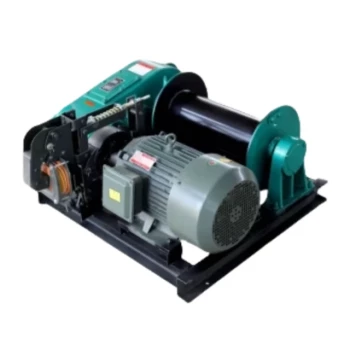
The primary benefits of electric winches over hydraulic models are their simpler installation, lower upfront cost, and greater operational convenience. They don't require the complex pumps and fluid lines of a hydraulic system, making them easier to set up, maintain, and integrate into a wider variety of applications, especially where intermittent use is expected.
The choice between an electric and hydraulic winch is not about which is universally superior, but about aligning the tool with the task. Electric winches excel in applications demanding convenience and simplicity, while hydraulic winches are built for sustained, heavy-duty industrial power.
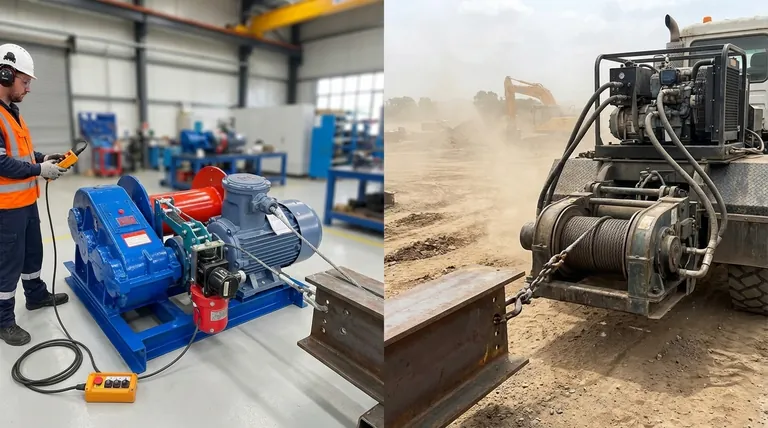
The Core Advantages of Electric Winches
Electric winches offer a distinct set of advantages rooted in their self-contained, electrically-driven design. This makes them a highly versatile and accessible choice for many users.
Simplified Installation and Maintenance
An electric winch is a largely self-contained unit. It wires directly to a power source, like a vehicle's battery, eliminating the need to install and maintain a separate hydraulic pump, reservoir, and network of high-pressure fluid lines.
This inherent simplicity reduces installation complexity, lowers initial setup costs, and minimizes potential points of failure over the winch's lifespan.
Enhanced Control and Convenience
Modern electric winches provide a high degree of control. They are easily operated with push-button controls or wireless remotes, allowing the user to manage the load from a safe distance.
Advanced models can be paired with a Variable Frequency Drive (VFD), enabling precise, programmable control over speed and stopping positions. This is ideal for delicate operations where accuracy is critical.
Cleaner and Quieter Operation
Because they do not use hydraulic fluid, electric winches offer a much cleaner operational environment. There is no risk of messy and potentially hazardous fluid leaks, which is a significant advantage in sensitive settings.
They also operate much more quietly than the engine-driven pumps required for hydraulic systems, reducing noise pollution on the job site.
Lower Initial Investment
For most applications, the total upfront cost of purchasing and installing an electric winch is significantly lower than a full hydraulic system. This makes them a more economical choice for individuals and businesses that don't require continuous, high-intensity operation.
Understanding the Trade-offs: Electric vs. Hydraulic
To make an informed decision, it's crucial to understand the limitations of electric winches, which are precisely where hydraulic models excel.
Power and Duty Cycle
The most significant limitation of an electric winch is its duty cycle. The electric motor generates considerable heat and can overheat if run continuously under heavy load. They are designed for intermittent pulling, with rest periods required to cool down.
Hydraulic winches, powered by a continuously running pump, can operate indefinitely without overheating, providing more consistent power for prolonged, demanding jobs.
Dependency on Electrical Power
An electric winch places a heavy demand on its power source. In vehicle-mounted applications, this can quickly drain a battery if the engine is not running, potentially leaving you stranded.
Hydraulic winches run off the vehicle's power steering pump or a PTO, which is powered by the engine, ensuring a constant and reliable power source as long as the engine is on.
Environmental Durability
While robust, electric winches contain sensitive electrical components that can be vulnerable to water and extreme conditions.
Hydraulic systems are inherently sealed and rugged, making them immune to water. This allows many hydraulic winches to be fully submerged and still operate reliably, a critical feature in marine or extreme off-road applications.
Making the Right Choice for Your Application
Selecting the correct winch comes down to a clear-eyed assessment of your specific operational needs.
- If your primary focus is occasional use like off-road recovery or loading a trailer: An electric winch is the ideal choice for its cost-effectiveness, ease of use, and simple installation.
- If your primary focus is continuous, heavy-duty industrial work like in towing or manufacturing: A hydraulic winch provides the necessary durability, sustained power, and long duty cycle.
- If your primary focus is precise, clean, and quiet operation in a controlled environment: An advanced electric winch, potentially with a VFD, offers unmatched control and cleanliness.
Ultimately, choosing the right winch means matching its fundamental design advantages to the demands of your work.
Summary Table:
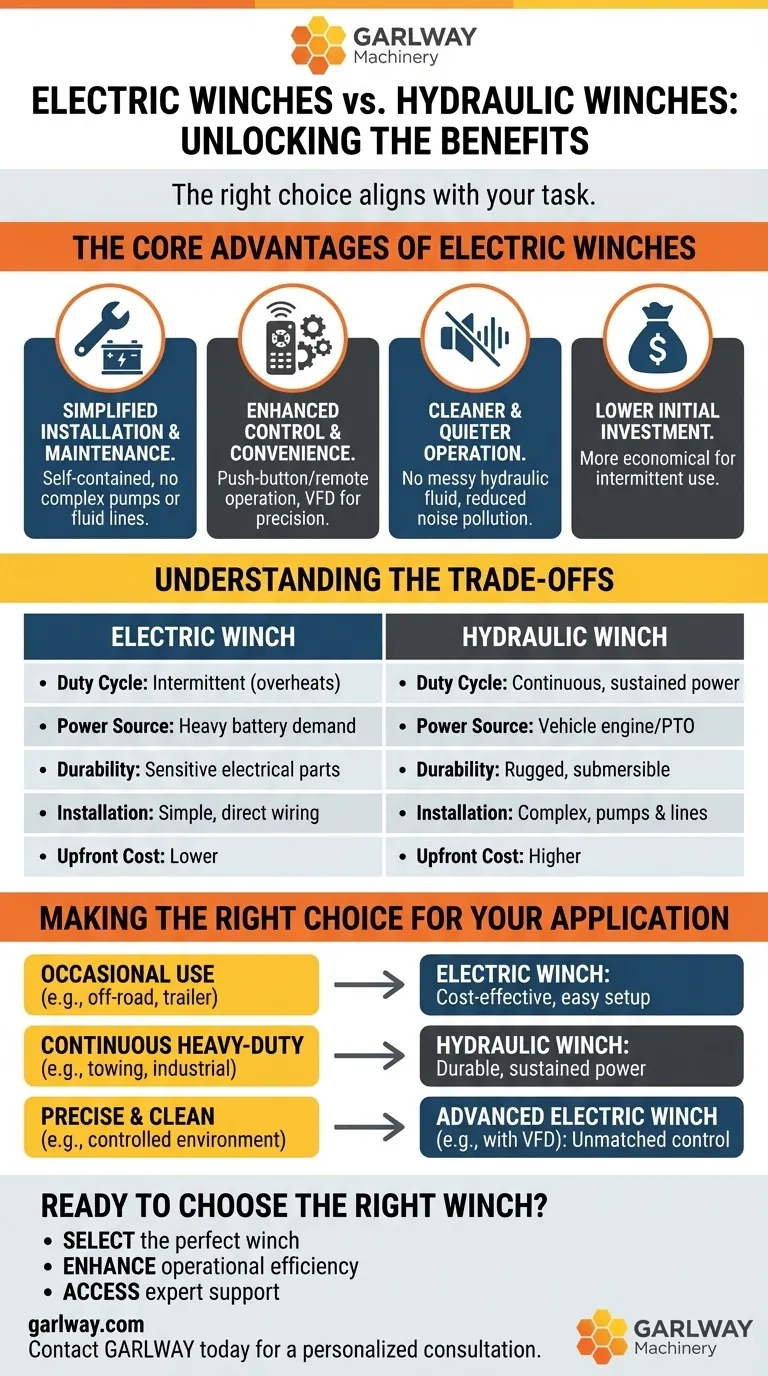
| Feature | Electric Winch | Hydraulic Winch |
|---|---|---|
| Installation | Simple, direct wiring | Complex, requires pump & fluid lines |
| Upfront Cost | Lower | Higher |
| Duty Cycle | Intermittent use (requires cooling) | Continuous, heavy-duty operation |
| Control | Precise, often with remote/VFD | Less precise, dependent on pump |
| Maintenance | Easier, fewer components | More complex due to hydraulic system |
| Best For | Occasional use, cost-sensitive projects | Sustained, high-intensity industrial tasks |
Ready to Choose the Right Winch for Your Project?
GARLWAY specializes in providing robust and reliable construction machinery, including a full range of electric and hydraulic winches, concrete mixers, and batching plants. Our solutions are designed for construction companies and contractors who demand efficiency, durability, and value.
Let us help you:
- Select the perfect winch for your specific application and budget.
- Enhance your operational efficiency with the right lifting equipment.
- Access expert support from a trusted global supplier.
Contact GARLWAY today for a personalized consultation and discover how our machinery can power your success.
Visual Guide
Related Products
- Electric 120V Boat Winch by Badlands
- Electric and Hydraulic Winch for Heavy Duty Applications
- Small Electric Winch 120V and 240V for Compact Applications
- 12000 lb Electric Boat Trailer Winch with Windlass Anchor Warn
- Electric Hoist Winch Boat Anchor Windlass for Marine Applications
People Also Ask
- How do electric boat winches work? Unlock Effortless Launching & Retrieval
- How much current does an electric boat winch draw? Plan Your Electrical System for Peak Performance
- Can I run a winch straight from a battery? Essential Power Setup for Safe Operation
- What are the types of electric winches available? Choose the Right Winch for Your Job
- What are the uses of electric winches in mining and tunneling? Enhance Safety and Efficiency Underground