
Properly securing a mixer for maintenance is an absolute, non-negotiable safety requirement that involves more than just flipping a switch. The process requires a strict, multi-layered approach that includes complete electrical isolation, physical lockouts, visible warnings, and direct human supervision to prevent accidental startup.
The fundamental goal is not simply to turn the machine off, but to achieve and verify a zero-energy state. This ensures that no person can inadvertently re-energize the equipment while a colleague is in a position of danger.
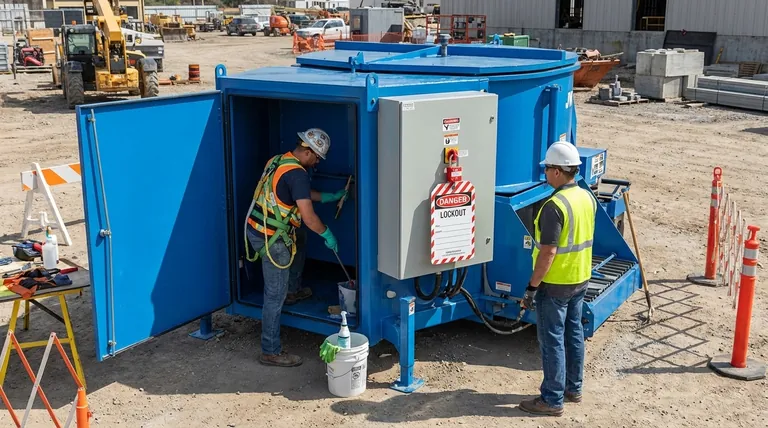
The Core Principle: Total Energy Isolation
Before any cleaning or maintenance begins, you must ensure the mixer is completely isolated from all power sources. This goes beyond pressing the stop button on the control panel, which can fail or be accidentally overridden.
Electrical Lockout and Tagout (LOTO)
The most critical step is to follow a formal Lockout/Tagout procedure. This is an industry-standard practice for disabling machinery.
First, disconnect the main power switch that supplies the entire machine. Immediately follow this by disconnecting the specific circuit breaker for the maintenance motor to create a redundant electrical break.
After disconnecting the power, the cabinet door for the electrical panel must be physically locked. A highly visible warning sign or tag should be attached, clearly stating that maintenance is in progress and the equipment must not be operated.
Operational Safeguards
As an additional layer of safety, press the emergency stop button on the main operation console. This engages a separate safety circuit.
If the console uses a physical key for operation, that key must be removed and kept by the person performing the maintenance or their direct supervisor. This prevents anyone from starting the machine, even if they bypass the lockout.
Securing the Entire System
Industrial mixers rarely operate in isolation. You must also secure any connected equipment.
For example, if a conveyor belt feeds or removes material from the mixer, the emergency stop switches at both ends of that conveyor must also be pressed. This prevents the accidental movement of materials or components while someone is working.
The Critical Human Element
Even the best technical procedures can fail without disciplined human oversight. Technology is only one part of a comprehensive safety system.
The Role of the Dedicated Supervisor
During the entire cleaning and maintenance process, a dedicated person must be present to supervise. This individual's sole responsibility is to ensure safety protocols are followed and to act as a "spotter."
Their job is to watch over the person inside the mixer, prevent anyone from attempting to restart the equipment, and provide immediate assistance in an emergency.
Maintaining Visibility and Access
The maintenance door must be kept open at all times while work is being performed. This provides a clear line of sight for the supervisor and ensures the person inside is never accidentally locked in.
An open door serves as a constant, unambiguous visual reminder that the machine is in a special maintenance state and is not to be operated.
A Non-Negotiable Safety Checklist
Use this sequence to ensure every maintenance task is performed safely. Deviating from this process introduces unacceptable risk.
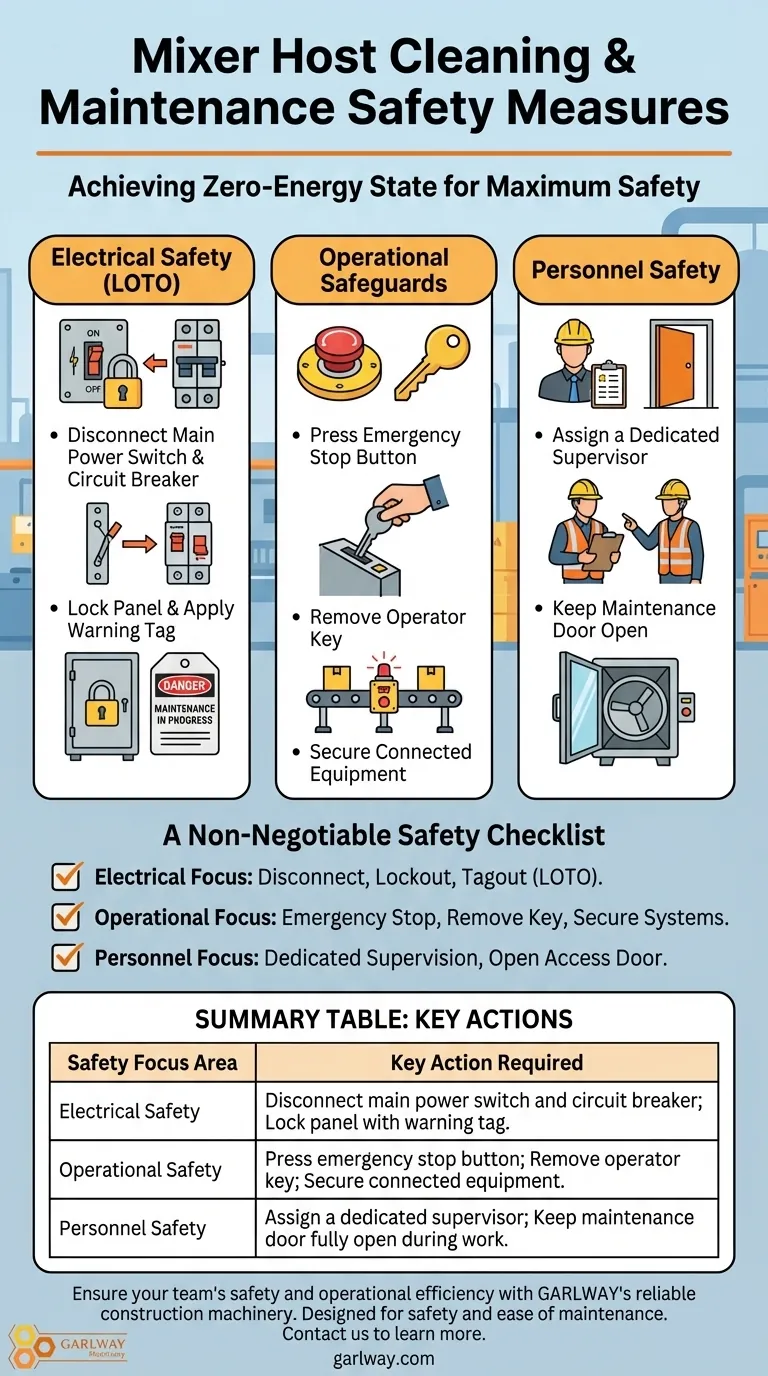
- If your primary focus is electrical safety: Always disconnect both the main switch and the circuit breaker, then lock the panel and apply a warning tag.
- If your primary focus is operational safety: Always press the emergency stop, remove the operator key, and secure all associated equipment like conveyors.
- If your primary focus is personnel safety: Always assign a dedicated supervisor and ensure the maintenance door remains fully open throughout the entire process.
Ultimately, a safe work environment is created not by chance, but by a disciplined and systematic commitment to these procedures every single time.
Summary Table:
| Safety Focus Area | Key Action Required |
|---|---|
| Electrical Safety | Disconnect main power switch and circuit breaker; Lock panel with warning tag. |
| Operational Safety | Press emergency stop button; Remove operator key; Secure connected equipment (e.g., conveyors). |
| Personnel Safety | Assign a dedicated supervisor; Keep maintenance door fully open during work. |
Ensure your team's safety and operational efficiency with GARLWAY's reliable construction machinery. Our concrete mixers are designed with safety and ease of maintenance in mind, helping contractors and construction companies minimize downtime and prevent accidents. Contact our experts today to learn how our mixers, winches, and batching plants can bring superior performance and peace of mind to your projects.
Visual Guide
Related Products
- Commercial Electric Concrete Mixer Machine HZS 50 Small Batch Plant for Sale
- HZS25 Best Cement Mixer for Quick Mix Concrete at Bunnings
- Belle Mixer Drum Self Loading Mortar Mixers JS3000
- HZS120 Ready Mix Concrete Batching Plant Commercial Mud Cement Mixer
- Portable Ready Mix Concrete Mixer Equipment
People Also Ask
- What are the types of concrete mixers used in batching plants? Choose the Right Mixer for Your Project
- What is the core component of a concrete batching plant? The Mixer Unit Defines Your Concrete Quality
- Why is proper maintenance important for a concrete batch mix plant? Maximize Uptime & Profitability
- Why buy concrete batch plant parts only from the manufacturer? Protect Your Investment and Maximize Uptime
- What are the two main types of concrete batch mixers? Choose the Right Mixer for Your Project


