
In short, volumetric concrete mixing equipment is governed by a combination of standards for the concrete it produces and standards for the machine itself. The primary specifications are ASTM C685 and AASHTO M241, which define the quality of the concrete, and the Volumetric Mixer Manufacturers Bureau (VMMB) standards, which certify the equipment's capability to meet those specifications.
The critical takeaway is that while ASTM and AASHTO standards define what constitutes acceptable concrete, the VMMB certification provides the assurance that a specific volumetric mixer is engineered and built to consistently produce concrete that meets those exacting requirements.
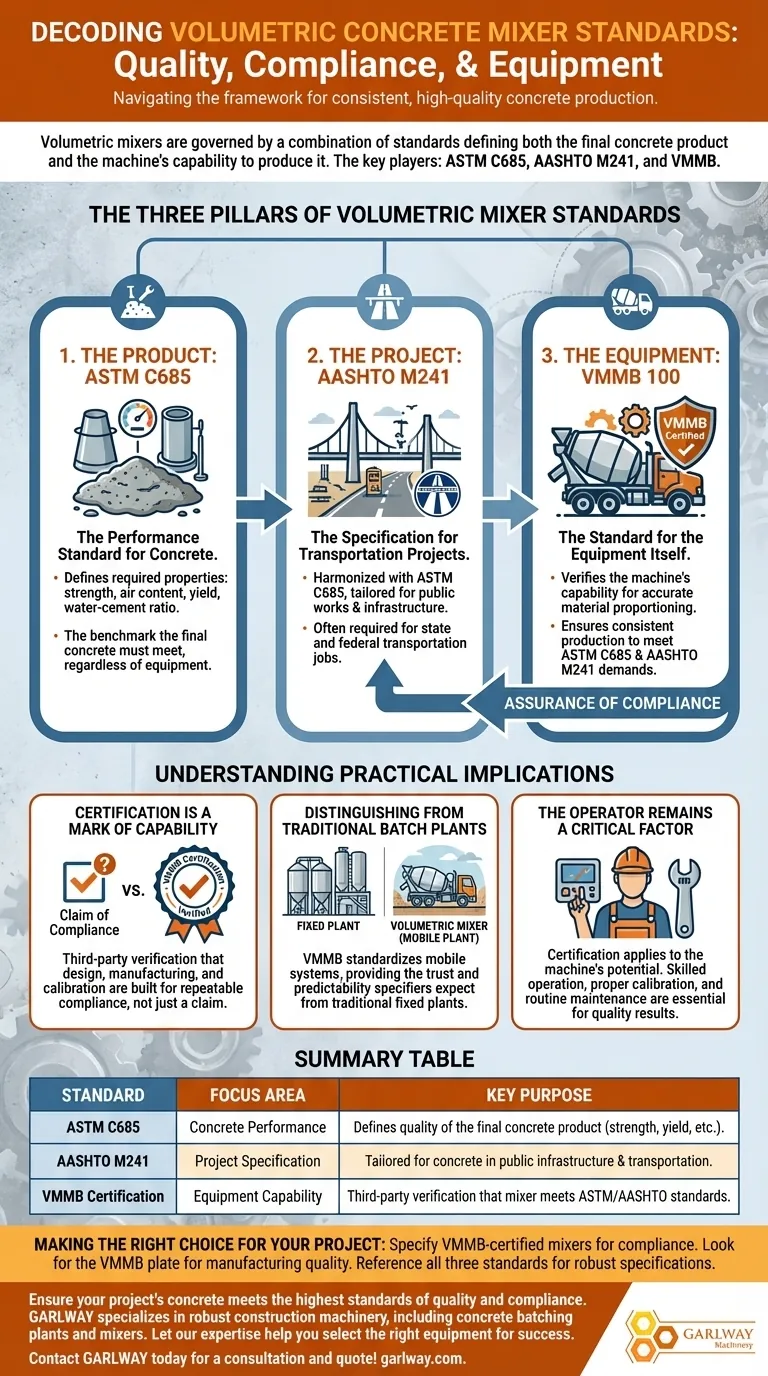
The Three Pillars of Volumetric Mixer Standards
To ensure quality and reliability, a tiered system of standards is applied. This system covers the final product, its application, and the manufacturing of the machine itself.
H3: ASTM C685: The Performance Standard for Concrete
This is the foundational standard for concrete made by volumetric batching and continuous mixing.
ASTM C685 does not specify how to build a mixer. Instead, it defines the required properties and performance of the fresh concrete produced, such as strength, air content, yield, and water-cement ratio.
It serves as the benchmark that the final product must meet, regardless of the equipment used.
H3: AASHTO M241: The Specification for Transportation Projects
The American Association of State Highway and Transportation Officials (AASHTO) provides its own standard, AASHTO M241.
This specification is largely harmonized with ASTM C685 but is specifically tailored for concrete used in public works and infrastructure projects.
Compliance with AASHTO M241 is often a requirement for state and federal transportation jobs.
H3: VMMB 100: The Standard for the Equipment Itself
The Volumetric Mixer Manufacturers Bureau (VMMB) provides the crucial link between the machine and the required concrete quality.
Established in 1999, the VMMB created standards to rate and certify the equipment. A VMMB-certified mixer has been verified to have the necessary accuracy and controls to proportion materials correctly.
This certification ensures the machine is capable of consistently producing a mix that can meet the stringent demands of ASTM C685 and AASHTO M241.
Understanding the Practical Implications
Simply owning a volumetric mixer is not enough; understanding the role of certification is key to ensuring quality control on any project.
H3: Certification is a Mark of Capability
A manufacturer can claim their mixer produces concrete that complies with ASTM C685.
However, VMMB certification provides third-party verification that the equipment's design, manufacturing, and calibration systems are built to a standard that makes compliance achievable and repeatable.
H3: Distinguishing from Traditional Batch Plants
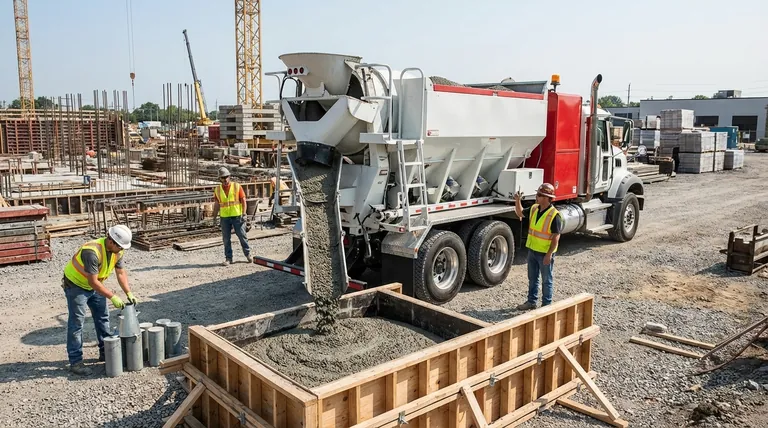
Volumetric mixers are essentially mobile concrete plants, carrying unmixed sand, stone, cement, and water to a job site.
The VMMB was established to standardize these mobile systems, providing the same level of trust and predictability that specifiers expect from a fixed, traditional ready-mix plant.
H3: The Operator Remains a Critical Factor
Certification applies to the machine's potential, but it cannot guarantee results without a skilled operator.
Proper calibration for the specific materials being used, routine maintenance, and correct operational procedures are essential to producing quality concrete, even with a certified mixer.
Making the Right Choice for Your Project
Use these standards to guide your specifications, procurement, and quality assurance processes.
- If your primary focus is project compliance: Specify that all concrete must be produced by a VMMB-certified volumetric mixer to ensure the equipment meets ASTM C685 and AASHTO M241 capabilities.
- If your primary focus is equipment procurement: Look for the official VMMB rating plate on the machine as a clear, non-negotiable indicator of manufacturing quality and performance reliability.
- If your primary focus is writing technical specifications: Reference all three standards (ASTM, AASHTO, and VMMB) to create a robust requirement for both the final concrete product and the equipment producing it.
By understanding how these interconnected standards function, you can confidently specify and utilize equipment that delivers predictable, high-quality concrete for any application.
Summary Table:
| Standard | Focus Area | Key Purpose |
|---|---|---|
| ASTM C685 | Concrete Performance | Defines quality of the final concrete product (strength, yield, etc.). |
| AASHTO M241 | Project Specification | Tailored for concrete used in public infrastructure and transportation projects. |
| VMMB Certification | Equipment Capability | Third-party verification that the mixer can consistently meet ASTM/AASHTO standards. |
Ensure your project's concrete meets the highest standards of quality and compliance. GARLWAY specializes in providing robust construction machinery, including concrete batching plants and mixers, for contractors and construction companies globally. Let our expertise help you select the right equipment for success.
Contact GARLWAY today for a consultation and quote!
Visual Guide
Related Products
- Belle Cement Mixer JS2000 Volumetric Concrete Mixer for Harbor Freight
- JS1000 Volumetric Concrete Mortar Mixer for Sale Skid Steer Cement Mixer
- Harbor Freight JS1500 On Site Concrete Mixing Volumetric Cement Mixer
- Portable Concrete Mixer Machine Equipment for Mixing Concrete
- HZS25 Best Cement Mixer for Quick Mix Concrete at Bunnings
People Also Ask
- What is a volumetric concrete mixer? A Mobile Concrete Batch Plant for On-Demand Mixing
- What is the predicted future for volumetric concrete mixers? Growth Driven by On-Demand Efficiency
- How does a volumetric concrete mixer contribute to sustainability? Reduce Waste, Water, and Emissions On-Site
- How does volumetric concrete compare to ready-mix concrete? Choose the Right Method for Your Project
- What types of concrete can be produced with volumetric mixers? Achieve On-Demand Mixing for Any Project




