The most critical precautions for a concrete mixing station's feeding system are to prevent aggregates from entering operating mechanisms, use separate chutes for different materials, and ensure each batch's material is completely discharged from hoppers and chutes. These steps are fundamental to protecting the equipment, ensuring mix accuracy, and maintaining operational efficiency.
The core principle is that a feeding system isn't just a conveyor; it's the primary control point for batch quality and equipment longevity. Treating it with procedural discipline prevents cascading failures, from inaccurate mixes to catastrophic mechanical damage.
The Core Principles of Material Feeding
To operate a feeding system effectively, one must understand the "why" behind the rules. These precautions are designed to manage three critical variables: material integrity, batch accuracy, and mechanical wear.
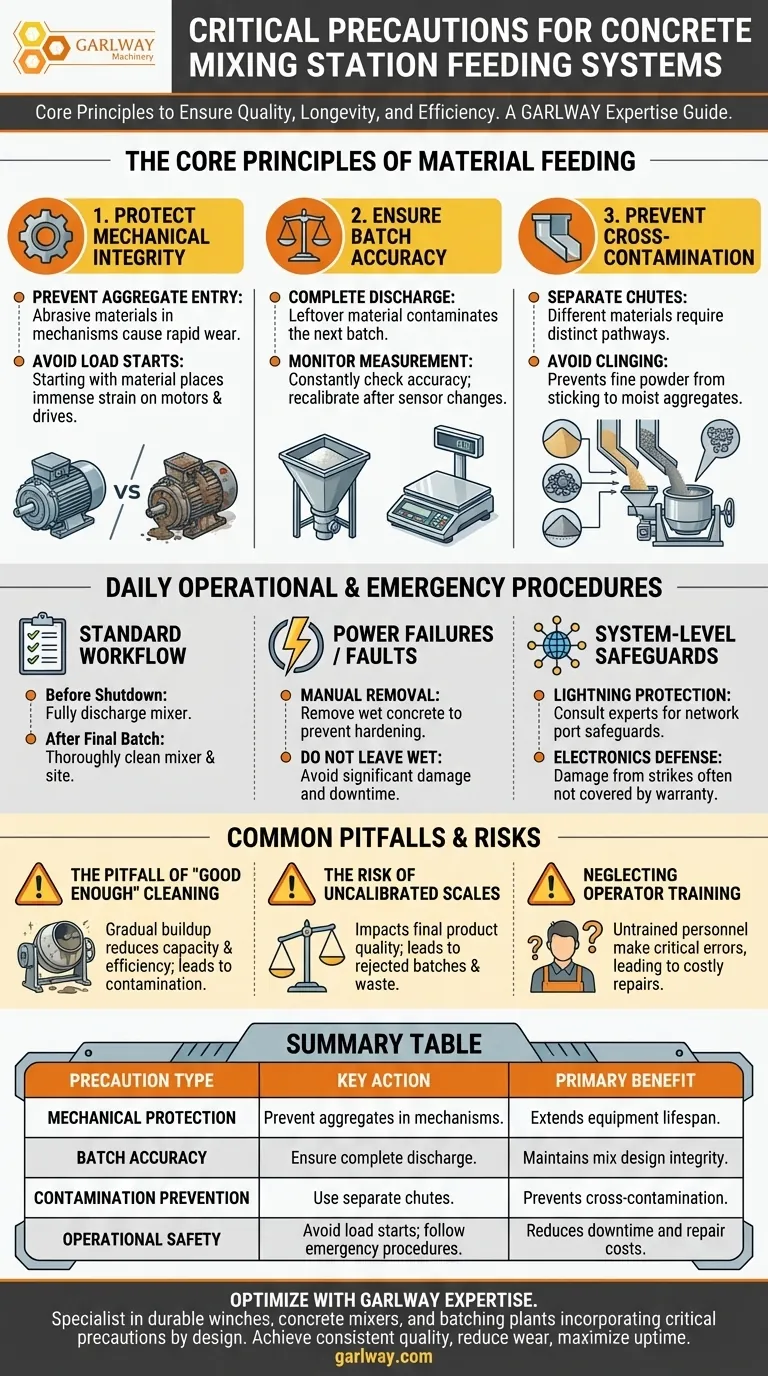
Protecting Mechanical Integrity
The single greatest threat to your feeding system is misplaced material.
Aggregates like stone and sand are highly abrasive. If they enter the operating mechanisms of conveyor belts, motors, or scales, they can cause rapid wear and premature failure.
A key operational rule is to avoid load starts for the mixer and conveyor belts. Starting the system when it is already full of heavy material places immense strain on the motors and drive components.
Ensuring Batch Accuracy
Consistency is the hallmark of quality concrete, and it begins with precise feeding.
The rule to completely discharge the hopper and chute after each feeding is non-negotiable. Leftover material from a previous batch will contaminate the next, throwing off the carefully calculated mix design.
Similarly, weighing systems must be exact. Measurement accuracy must be constantly monitored, and scales must be recalibrated immediately after any sensor is replaced to guarantee precise inputs.
Preventing Cross-Contamination
Different materials have different flow characteristics and chemical properties.
Sand, stone, and cement should not be fed through the same chute. Using separate pathways prevents fine cement powder from clinging to moist aggregates and ensures that each material flows smoothly without blockages or cross-contamination.
Daily Operational and Emergency Procedures
A disciplined routine is essential for safe and efficient operation. These precautions should be integrated into your daily workflow and emergency plans.
Standard Operating Workflow
Before shutdown, all concrete must be fully discharged from the mixer.
After the final batch, the mixer should be thoroughly cleaned, typically by washing it with a small amount of water and stones to scour the interior. The entire mixing site should also be kept clean.
Handling Power Failures or Faults
In the event of a sudden power failure or equipment fault, you cannot leave wet concrete in the main unit.
The material must be carefully and manually removed to prevent it from hardening inside the mixer, which can cause significant damage and require extensive downtime to fix.
System-Level Safeguards
Modern mixing stations rely on sensitive electronics that require protection.
If your control system uses a network port, you must consult with technical experts to ensure proper lightning protection measures are in place. Damage from lightning strikes is often not covered by warranty and can disable your entire operation.
Understanding the Trade-offs and Common Pitfalls
Ignoring these precautions may seem to save time in the short term, but it leads to significant costs and risks down the line.
The Pitfall of "Good Enough" Cleaning
Rushing the end-of-day cleaning is a common mistake. Leaving a thin layer of concrete to harden daily leads to a gradual buildup that reduces mixer capacity and efficiency. Over time, this hardened material can break off, contaminating batches or damaging the equipment.
The Risk of Uncalibrated Scales
Scales can drift over time or after maintenance. Relying on an uncalibrated system is a gamble that directly impacts the quality and strength of your final product. This can lead to rejected batches, wasted materials, and reputational damage.
Neglecting Operator Training
The most sophisticated system is only as reliable as the person operating it. Untrained personnel are more likely to make critical errors, such as starting a loaded conveyor or failing to clear the mixer during a power outage, leading to preventable and costly repairs.
Making the Right Choice for Your Goal
Your operational priorities will determine where you focus your attention, but all these precautions are interconnected.
- If your primary focus is equipment longevity: Prioritize preventing aggregates from entering mechanisms, avoiding load starts, and conducting thorough daily cleaning.
- If your primary focus is concrete quality: Emphasize the complete discharge of materials after each batch, the use of separate chutes, and the regular calibration of all weighing systems.
- If your primary focus is operational safety and uptime: Implement rigorous operator training, establish clear emergency procedures for power failures, and ensure all maintenance is supervised.
Ultimately, disciplined adherence to these feeding system precautions is the foundation of a reliable, safe, and profitable concrete mixing operation.
Summary Table:
| Precaution Type | Key Action | Primary Benefit |
|---|---|---|
| Mechanical Protection | Prevent aggregates from entering mechanisms | Extends equipment lifespan |
| Batch Accuracy | Ensure complete discharge from hoppers/chutes | Maintains mix design integrity |
| Contamination Prevention | Use separate chutes for different materials | Prevents cross-contamination |
| Operational Safety | Avoid load starts; follow emergency procedures | Reduces downtime and repair costs |
Optimize your concrete mixing station's feeding system with GARLWAY expertise. As a specialist in construction machinery, we provide durable winches, concrete mixers, and batching plants that incorporate these critical precautions by design. Our solutions help construction companies and contractors globally achieve consistent mix quality, reduce equipment wear, and maximize operational uptime. Contact our experts today to discuss how we can enhance your batching plant's performance and reliability.
Visual Guide
Related Products
- JZC1000 Industrial Concrete Mixer Machine Cement Mixer Price
- HZS90 Large Multiquip Concrete Mixers for Construction
- Hydraulic Concrete Mixer Machine Cement Mixing Equipment for Mixture Concrete
- Harbor Freight JS1500 On Site Concrete Mixing Volumetric Cement Mixer
- HZS180 Ready Mix Concrete Plant for Foundations with Sand and Cement
People Also Ask
- How are industrial mixers used in the construction industry? The Foundation of Strong, Durable Structures
- What are the three main categories of industrial concrete mixers? Choose the Right Mixer for Your Plant
- What types of materials can be processed in these mixers? Match Your Material to the Perfect Mixer
- Why are industrial mixers important in mining and mineral processing? Maximize Recovery & Ensure Safety
- How are industrial mixers used in the pulp and paper industry? Ensure Consistent, High-Quality Pulp