
At its core, a portable capstan winch is powered by one of two primary sources: a commercial gas engine or a battery-powered electric motor. Both designs typically feature a durable, oil-bath lubricated gearbox to transfer that power into pulling force, but the energy source itself dictates where and how the winch can be effectively used.
The fundamental choice between gas and battery power is a trade-off. Gas engines provide unmatched raw power and unlimited runtime in remote locations, while battery motors offer quiet, emission-free operation and unmatched convenience.
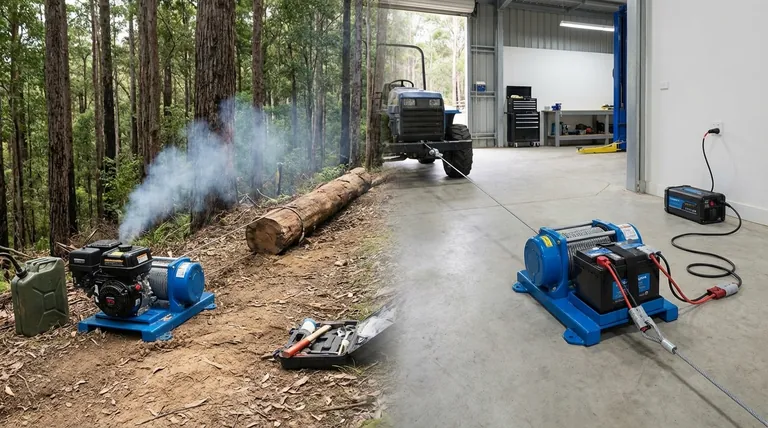
The Two Primary Power Sources
Understanding the characteristics of each power plant is the first step in selecting the right tool for your specific application. The decision directly impacts performance, portability, and environmental suitability.
Gas-Powered Engines
Gas-powered capstan winches are built for raw strength and endurance. They use small, commercial-grade engines similar to those found on other outdoor power equipment.
This design is self-contained and does not rely on any external power source, making it the definitive choice for truly remote job sites where access to electricity is non-existent.
Battery-Powered Electric Motors
Battery-powered models offer significant advantages in convenience and operational flexibility. They are quiet, produce no exhaust fumes, and require less routine maintenance than a gas engine.
These winches often include built-in overload protection to prevent damage to the motor. Their ability to operate indoors or in noise-sensitive areas makes them exceptionally versatile.
Power Delivery and Connectivity
For battery-powered models, how the winch connects to its power source is a critical factor in its practical usability. These options enhance the winch's flexibility in the field.
Direct Vehicle Battery Connection
A common method for powering electric winches involves connecting them directly to a vehicle's 12V battery. This provides a reliable and rechargeable power source for as long as the vehicle is present.
Anderson Plug Systems
Some systems utilize Anderson plugs, which are heavy-duty, quick-connect plugs. This feature is invaluable for users who need to switch the winch between different vehicles or power sources rapidly without tools.
Extended Power Cables
The availability of extended cables allows the winch to be positioned a significant distance from its power source. This is crucial when the anchor point is far from where you can safely position your vehicle.
Understanding the Trade-offs
Neither power source is universally superior; each comes with clear limitations that may make it unsuitable for certain tasks or environments.
Gas Engine Considerations
The primary drawbacks of a gas engine are noise and exhaust fumes. This makes them unsuitable for use in enclosed spaces, near livestock, or in residential or noise-restricted areas. They also require you to carry fuel and perform regular engine maintenance.
Battery Power Limitations
An electric winch is fundamentally limited by its battery's capacity and charge level. Pulling power can decrease as the battery drains, and runtime is finite. You must have a means to recharge batteries, which can be a challenge on multi-day trips or in remote locations.
Making the Right Choice for Your Needs
Your ideal power source depends entirely on your primary application and operating environment.
- If your primary focus is maximum power and extended runtime in remote forestry or off-grid locations: A gas-powered winch is the most reliable and powerful option.
- If your primary focus is quiet operation, indoor use, or convenience for tasks like hunting or property maintenance: A battery-powered winch offers superior versatility and ease of use.
- If your primary focus is vehicle-based recovery or frequent work around a truck or ATV: An electric model with direct battery connections provides an excellent balance of on-demand power and convenience.
Choosing the right power system ensures your portable winch is a powerful asset rather than a situational liability.
Summary Table:
| Power Source | Key Advantage | Best For | Main Limitation |
|---|---|---|---|
| Gas Engine | Maximum power & unlimited runtime | Remote forestry, off-grid locations | Noise, exhaust fumes, requires fuel |
| Battery Electric | Quiet, emission-free, convenient | Indoor use, noise-sensitive areas, property maintenance | Limited by battery capacity & charge |
Still unsure which power source is right for your project? The experts at GARLWAY can help. We specialize in durable construction machinery, including winches, concrete mixers, and batching plants for contractors and construction companies worldwide. Get a personalized recommendation to ensure you have the right tool for maximum efficiency and power on your job site.
Contact GARLWAY today for expert advice and a quote!
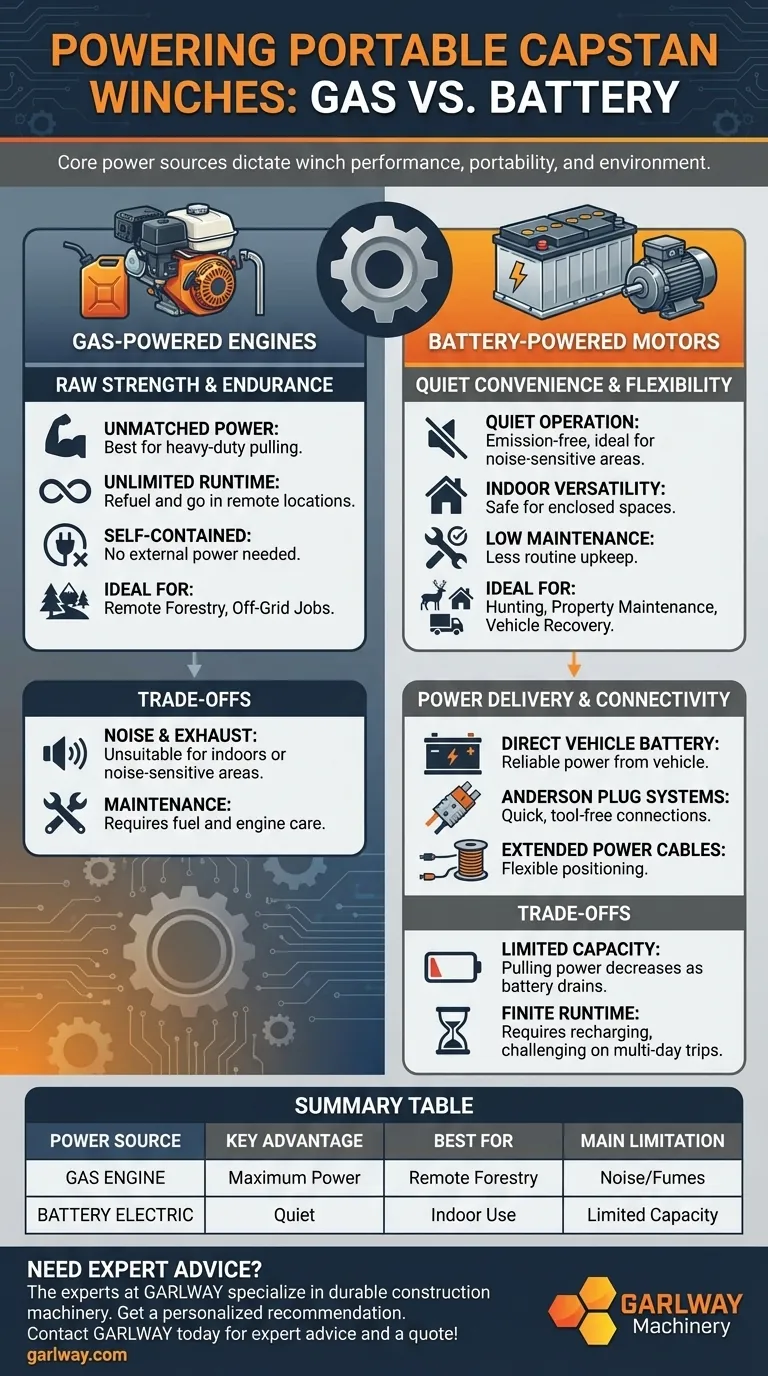
Visual Guide
Related Products
- Portable Small Trailer Winch
- Quick Windlass Portable Winch for Truck and Boat Best Boat Winch
- Small Electric Winch 120V and 240V for Compact Applications
- Electric and Hydraulic Winch for Heavy Duty Applications
- Electric Hoist Winch Boat Anchor Windlass for Marine Applications
People Also Ask
- What features were incorporated into the upgraded portable winch system? Boost Your Recovery Power & Safety
- What are some uses mentioned for portable winches beyond vehicle recovery? Essential Versatility for Property & Work
- How could the twisting issue with a portable winch be mitigated? Achieve Safe, Centered Pulls with Proper Rigging
- What is the significance of trailer winches in the boating industry? Ensure Safe and Efficient Boat Recovery
- What should be considered when mounting a winch on a trailer? Ensure a Safe, Aligned Installation


