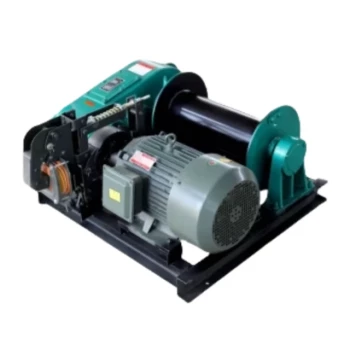
The primary advantages of a windlass-type anchor winch are its compact on-deck footprint and its ability to deploy the anchor in a rapid "freefall." This design saves valuable deck space while allowing for precise, fast anchoring, which is a significant tactical advantage in challenging wind or current conditions.
A windlass is a specialized tool. It excels at rapid, precise anchor deployment for operators who understand its specific installation and equipment requirements, contrasting with the simpler, all-in-one nature of a drum winch.
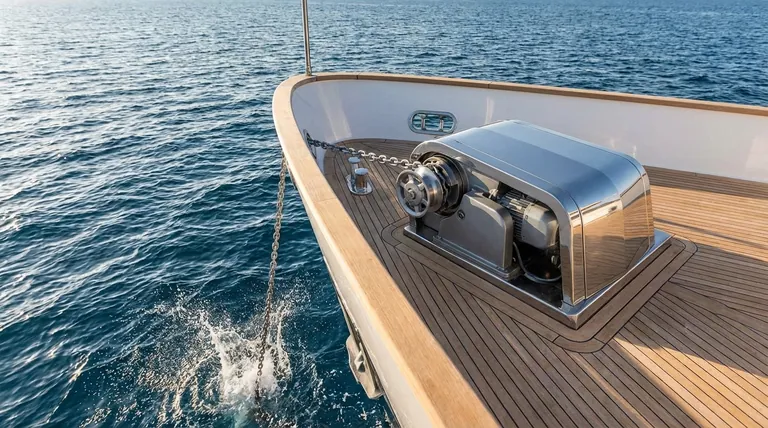
The Core Advantages Explained
A windlass offers two distinct benefits that set it apart from other winch systems, particularly the common drum winch.
Minimal On-Deck Footprint
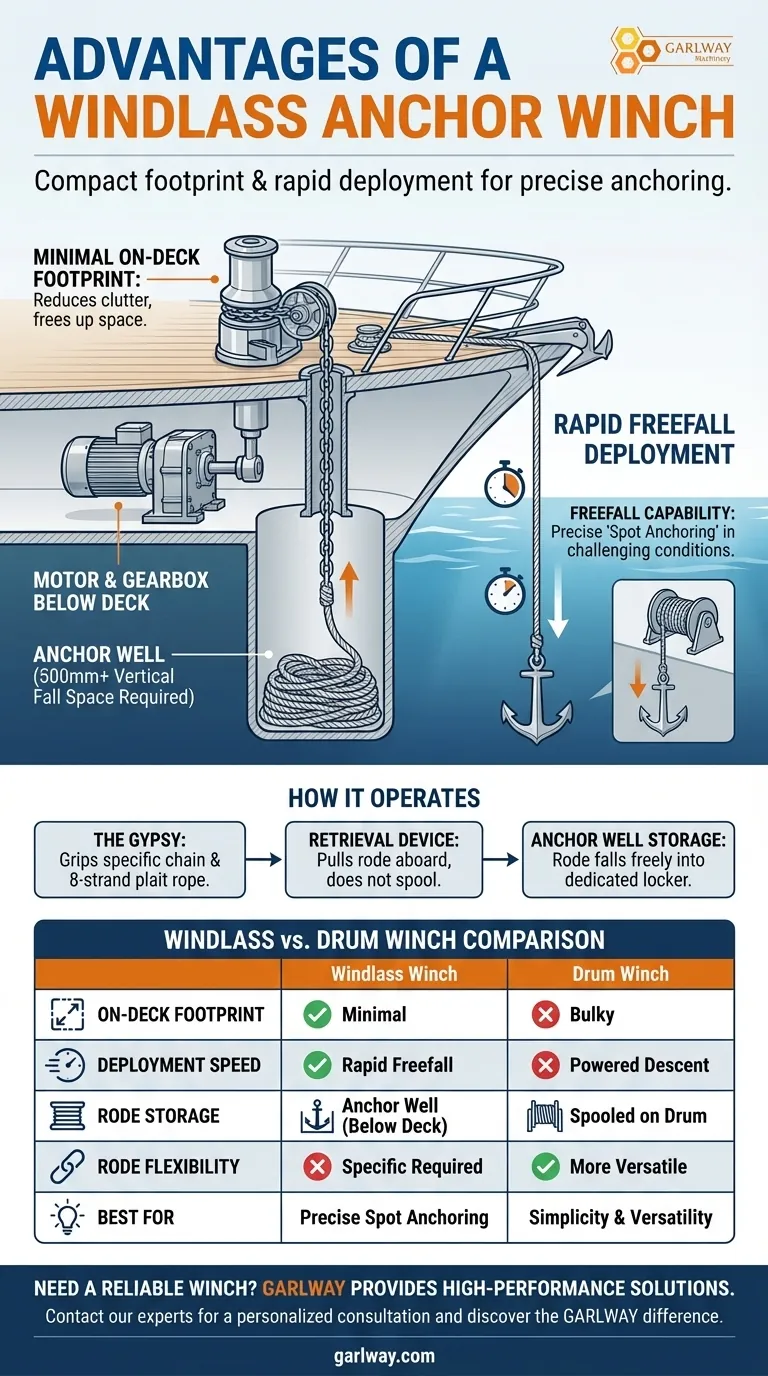
A vertical windlass is designed so that the motor and gearbox sit below the deck.
Only the top part of the unit, which includes the specialized wheel called a gypsy, is visible. This frees up critical space on the bow, reducing clutter and potential trip hazards.
Rapid Freefall Deployment
Windlasses operate with an adjustable clutch. When loosened, this clutch allows the anchor and rode (the line or chain) to drop freely and quickly.
This freefall capability is invaluable for "spot anchoring." It enables an operator to drop anchor at the precise moment they are over a target, like a fishing spot or reef, without being pushed off by wind or tide during a slow, powered descent.
How a Windlass System Operates
Understanding how a windlass works is key to appreciating its requirements. Unlike a drum winch that stores the rope, a windlass is a retrieval device.
The Role of the Gypsy
The core of the windlass is the gypsy, a notched wheel specifically designed to grip either an anchor chain or a particular type of rope.
As the windlass turns, the gypsy grabs the rode and pulls it aboard, feeding it down into the anchor well below. It does not spool or store the line itself.
The Importance of the Anchor Well
Because the windlass simply drops the rode through a hole (the hawsepipe), you must have a dedicated storage locker directly beneath it.
This anchor well must have sufficient depth to allow the rope and chain to pile up neatly without jamming the retrieval mechanism. A minimum of 500mm of vertical fall space is a standard requirement.
Understanding the Trade-offs
The specialized nature of a windlass brings specific requirements and limitations that are crucial to consider.
Space Below Deck is Non-Negotiable
While a windlass saves space on deck, it demands significant, unobstructed vertical space below deck.
A boat without a deep and suitable anchor locker cannot properly accommodate a windlass system, making a drum winch a more practical alternative.
Specific Rode is Required
The gypsy is engineered for a precise chain link size and a specific rope type, typically an 8-stand plait nylon rope.
Using an incorrectly sized or constructed rode will cause slippage or jamming, rendering the winch ineffective. This is less flexible than a drum winch, which can typically spool various line types.
Comparison to Drum Winches
Drum winches are often considered more hassle-free because the entire system is self-contained. The rode is spooled directly onto the drum itself.
This makes them an excellent choice for smaller boats or vessels without a dedicated, deep anchor well. While the unit itself may be bulkier on deck, its installation is often simpler.
Making the Right Choice for Your Vessel
Choosing between a windlass and another system comes down to your boat's design and how you use it.
- If your primary focus is precise anchoring and a clear bow: A windlass is the superior tool, provided you have the necessary anchor well depth and use the correct rode.
- If your primary focus is simplicity and versatility: A drum winch is often the more economical and hassle-free solution, especially on boats with limited below-deck space.
Ultimately, selecting the right anchor winch is about matching the equipment's strengths to your specific vessel and operational needs.
Summary Table:
| Feature | Windlass Winch | Drum Winch |
|---|---|---|
| On-Deck Footprint | Minimal | Bulky |
| Deployment Speed | Rapid Freefall | Powered Descent |
| Rode Storage | Anchor Well (Below Deck) | Spooled on Drum |
| Rode Flexibility | Specific Chain/Rope Required | More Versatile |
| Best For | Precise Spot Anchoring | Simplicity & Versatility |
Need a reliable anchor winch for your vessel?
GARLWAY specializes in high-performance marine and construction machinery. Our robust winches are engineered for demanding conditions, providing the durability and precision that commercial operators and contractors depend on globally.
Let us help you select the perfect winch for your specific needs. Contact our experts today for a personalized consultation and discover the GARLWAY difference in quality and performance.
Visual Guide
Related Products
- Electric Hoist Winch Boat Anchor Windlass for Marine Applications
- Heavy Duty Electric Boat Winch Windlass Anchor
- 12000 lb Electric Boat Trailer Winch with Windlass Anchor Warn
- Warn Winch Windlass Boat Trailer Winch
- Quick Windlass Portable Winch for Truck and Boat Best Boat Winch
People Also Ask
- How does a boat anchor winch work? A Guide to Reliable Anchor Handling
- What are the differences in lifting height between single-drum and double-drum electric hoists? Choose the Right Hoist for Your Project's Height Needs
- What is the general user satisfaction with boat anchor winches? A Game-Changer for Boaters
- What are the operational differences between electric hoists and winches? A Guide to Safe Lifting vs. Pulling
- What are the main benefits of a boat anchor winch? Boost Safety & Efficiency for Your Vessel