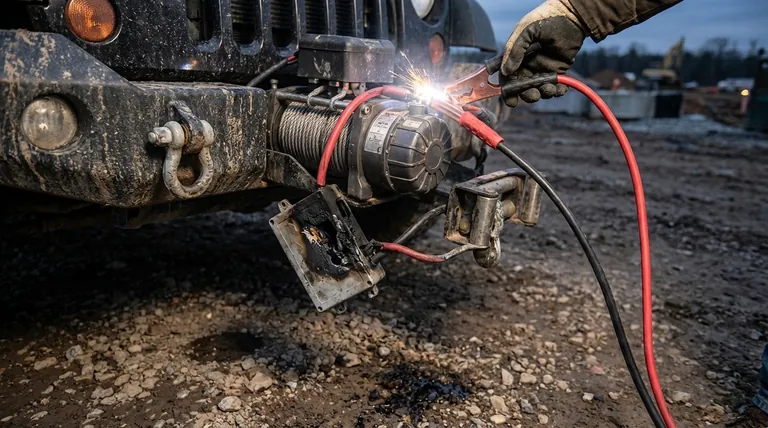
In short, the winch's control system was modified out of necessity. After the original control switch failed by melting, it was replaced with a direct connection method using jumper cables to operate the motor for "in" and "out" functions.
This evolution from a dedicated switch to direct-cabling represents a common field-expedient repair. It solves the immediate problem of a non-functional winch but does so by bypassing critical safety and control features, introducing significant operational risks.
The Catalyst for Change: System Failure
To understand the modification, we must first look at the failure of the original component. A winch's control system is simple in principle but handles immense electrical loads.
The Role of the Original Switch
The "switch" in a heavy-duty winch is typically not a simple toggle. It's a high-amperage contactor or a pack of solenoids.
Its job is to act as a heavy-duty remote relay. Your handheld controller sends a small electrical signal to the solenoid, which then closes a much larger internal circuit, allowing hundreds of amps to flow from the battery to the winch motor.
Why Control Switches Melt
Melting is a classic sign of catastrophic overload. This happens when the electrical current drawn by the winch motor exceeds what the solenoid contacts are designed to handle for a sustained period.
This can be caused by overloading the winch, operating it beyond its duty cycle (running it for too long without a cool-down period), or an internal short circuit.
The "Jumper Cable" Modification Explained
The solution implemented was a direct, manual replacement for the failed solenoid pack. It is a brute-force method to complete the electrical circuit.
How Direct Connection Works
A winch motor is a simple, high-torque DC motor. By connecting a power source (like a battery via jumper cables) directly to the motor's electrical posts, you bypass the entire control box.
This creates a direct circuit from the battery to the motor, causing it to run.
Achieving "In" and "Out" Functionality
The direction of a DC motor's rotation is determined by the polarity of the electricity supplied to it.
To power the winch "in," the jumper cables were connected one way (e.g., positive to post A, negative to post B). To reverse the winch and power it "out," the cable connections on the motor posts were simply swapped (positive to post B, negative to post A).
Understanding the Critical Trade-offs
While this modification makes the winch operational, it comes at a steep price in terms of safety and control. It should only be considered a last-resort, temporary measure.
Bypassing All Safety Features
The original solenoid is a safety device. It's designed to contain the high-current connection within a sealed unit. Using jumper cables exposes live, high-amperage connection points.
High Risk of Electrical Arcing
Connecting or disconnecting jumper cables to a live motor post under load will create a significant electrical arc. This spark is intensely hot and can cause severe burns, damage the terminals, and poses a fire or explosion risk near a battery or fuel source.
Complete Lack of Overload Protection
With a direct connection, the only fuse in the system is the motor itself. There is no mechanism to stop the flow of current in an overload situation, dramatically increasing the risk of burning out the winch motor windings permanently.
Making the Right Choice for Your Goal
This situation presents a classic conflict between an immediate need and a long-term, safe solution.
- If your primary focus is emergency, last-resort recovery: Using jumper cables can get the winch working, but it must be done with extreme caution, a clear plan, and an understanding of the arcing danger.
- If your primary focus is safe and reliable operation: The only correct course of action is to replace the melted solenoid pack with a new, appropriately-rated unit designed for the winch.
Ultimately, a functional control system is not a convenience; it is a core component of operating the winch safely and effectively.
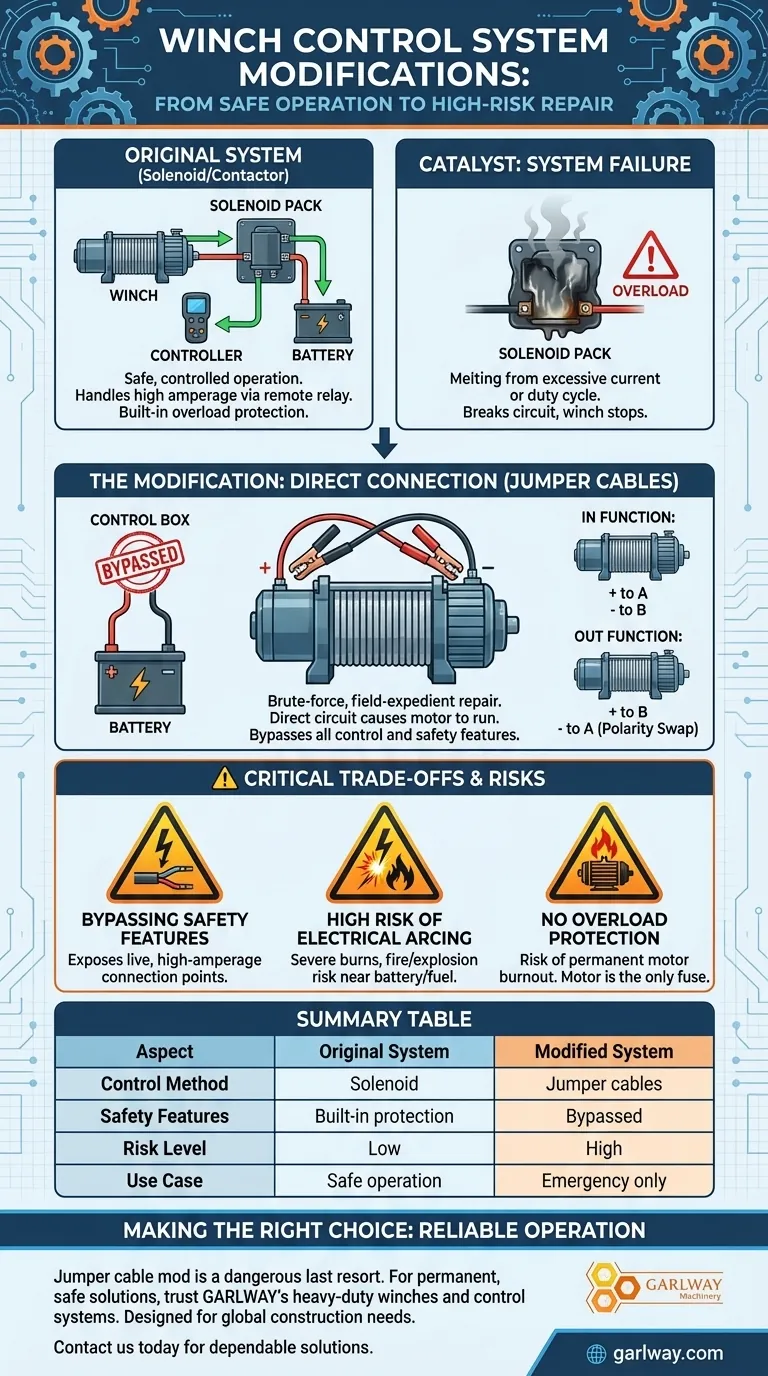
Summary Table:
| Aspect | Original System | Modified System |
|---|---|---|
| Control Method | Solenoid switch/contactor | Direct jumper cables |
| Safety Features | Built-in overload protection | Bypassed; no protection |
| Risk Level | Low (designed for high loads) | High (risk of arcing, fire) |
| Use Case | Safe, reliable operation | Emergency, last-resort only |
Ensure your winch operates safely and reliably. The jumper cable modification is a dangerous last resort. For a permanent, safe solution, trust GARLWAY's heavy-duty winches and control systems. We specialize in construction machinery, offering robust winches, concrete mixers, and batching plants designed for the demanding needs of construction companies and contractors globally. Contact us today to get a winch system you can depend on, without the risks.
Visual Guide
Related Products
- Small Electric Winch 120V and 240V for Compact Applications
- Electric and Hydraulic Winch for Heavy Duty Applications
- Electric Hoist Winch Boat Anchor Windlass for Marine Applications
- Electric 120V Boat Winch by Badlands
- Heavy Duty Electric Boat Winch Windlass Anchor
People Also Ask
- What makes electric winches suitable for off-road use? Key Features for Reliable Vehicle Recovery
- What are the common applications of electric winches? Power Your Lifting & Pulling Tasks
- What are the common uses of an electric winch? A Guide to Safe and Efficient Heavy Lifting
- What are the uses of electric winches in mining and tunneling? Enhance Safety and Efficiency Underground
- How do electric winches contribute to energy savings? Maximize Efficiency and Lower Costs