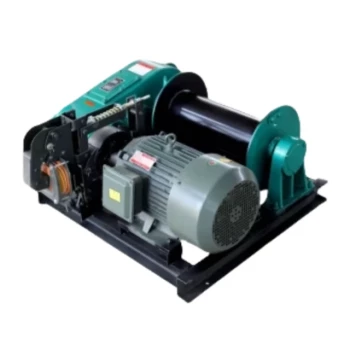
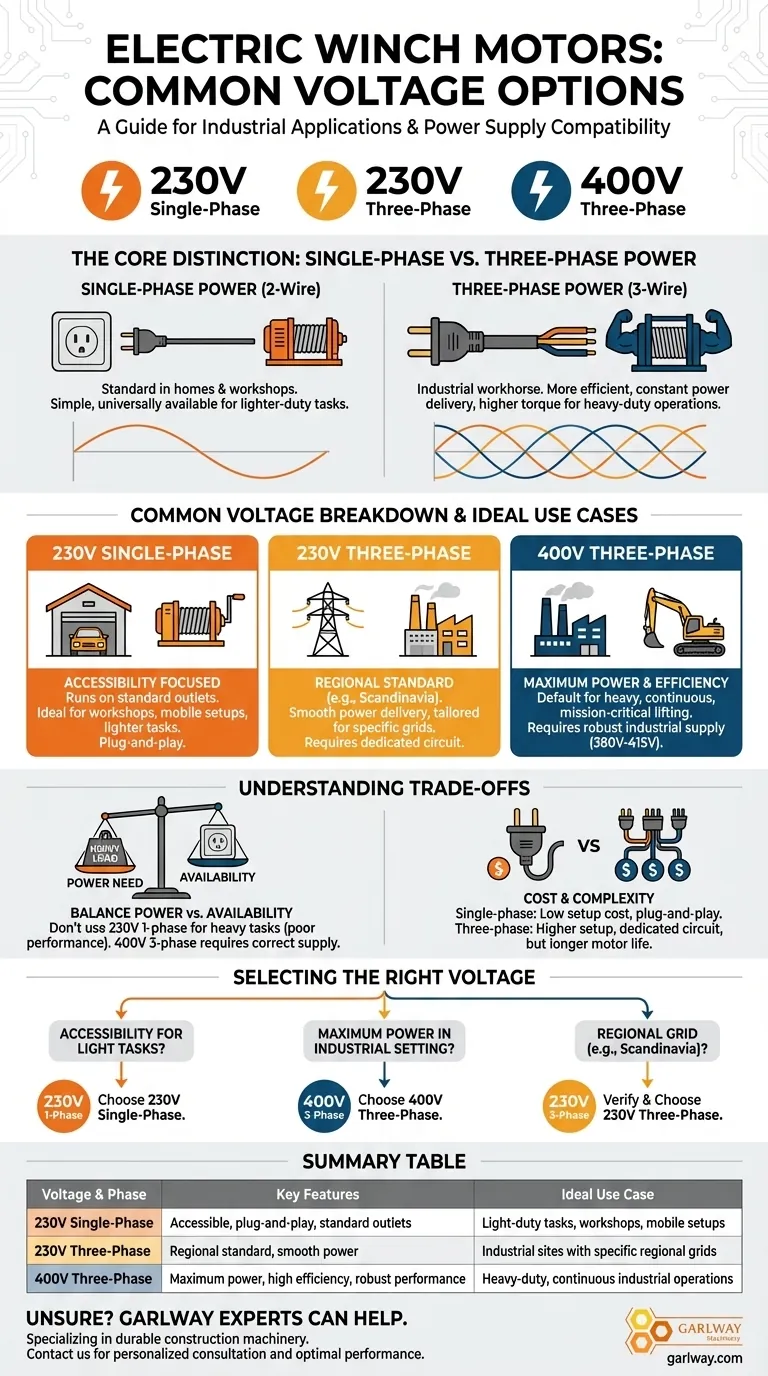
The most common voltage options for industrial electric winch motors are 230V single-phase, 230V three-phase, and 400V three-phase. While other configurations exist, these three standards cover the vast majority of applications, from smaller workshops to heavy-duty industrial sites.
Choosing the right winch motor is less about a specific voltage number and more about understanding the fundamental difference between your available electrical supply: single-phase for accessibility and three-phase for superior power and efficiency.
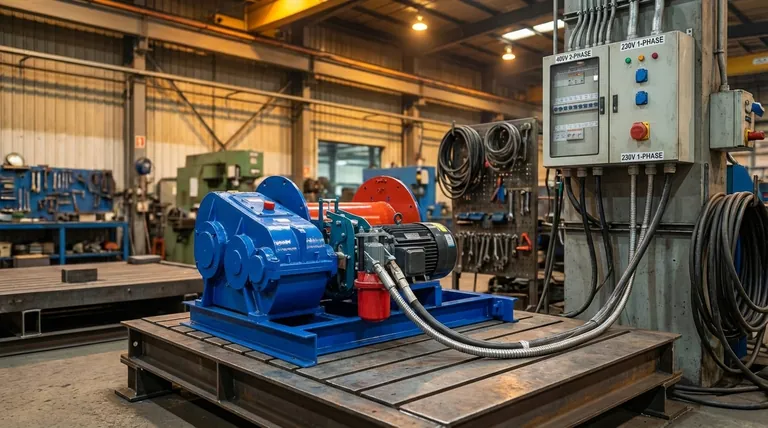
The Core Distinction: Single-Phase vs. Three-Phase Power
Before analyzing specific voltages, it's critical to understand the type of power your facility provides. This is the single most important factor in your decision.
What is Single-Phase Power?
Single-phase is the standard electrical service found in homes and light commercial buildings. It provides power through a simpler, two-wire system (a power wire and a neutral wire).
It is universally available, making it a convenient choice for smaller-scale operations or mobile setups that plug into a standard wall outlet.
What is Three-Phase Power?
Three-phase power is the workhorse of industrial and large commercial facilities. It delivers power more efficiently across three separate wires.
This configuration provides a constant, rotating power delivery, resulting in smoother motor operation, higher torque, and greater overall power output compared to a single-phase motor of a similar size.
A Breakdown of Common Winch Voltages
Each standard voltage option is designed for a specific environment and performance requirement.
230V Single-Phase
This is the most accessible option, designed to run on the standard power supply available in most workshops and residential garages.
It is ideal for lighter-duty winches where convenience and the ability to use existing electrical infrastructure are the primary concerns.
230V Three-Phase
While less common globally, 230V three-phase power is a standard in certain regions, particularly in Scandinavian countries.
Functionally, it offers the same benefits of smooth power delivery as other three-phase systems but is tailored to a specific regional power grid standard.
400V Three-Phase
This is the most powerful and common standard for industrial winches across Europe and many other parts of the world. The operational voltage typically ranges from 380V to 415V.
This option delivers the maximum power and efficiency, making it the default choice for heavy, continuous, or mission-critical lifting and pulling operations in factories, processing plants, and construction sites.
Understanding the Trade-offs
Selecting a motor is about balancing power needs against the reality of your electrical supply.
The Power vs. Availability Dilemma
The most powerful winch motor is useless if you cannot supply it with the correct power. A 400V three-phase motor cannot be run on a single-phase supply without a costly and complex phase converter.
Conversely, using a 230V single-phase winch for a heavy industrial task will lead to poor performance, overheating, and potential motor failure.
Cost and Installation Complexity
Single-phase winches are typically "plug-and-play," requiring minimal setup.
Three-phase systems require a dedicated circuit installed by a qualified electrician, which adds to the initial setup cost and complexity. However, the motors themselves are often more robust and have a longer operational life under heavy load.
Selecting the Right Voltage for Your Application
Base your choice on your facility's electrical infrastructure and the demands of the job.
- If your primary focus is accessibility for light tasks: Choose a 230V single-phase motor that can run on existing, standard power outlets.
- If your primary focus is maximum power in an industrial setting: The 400V three-phase motor is the definitive choice for performance and durability.
- If you are operating in a region with a specific grid (e.g., Scandinavia): Verify if 230V three-phase is your site's standard before purchasing equipment.
Ultimately, matching the motor to your available power supply is the first and most critical step to ensure safe and effective operation.
Summary Table:
| Voltage & Phase | Key Features | Ideal Use Case |
|---|---|---|
| 230V Single-Phase | Accessible, plug-and-play, standard outlets | Light-duty tasks, workshops, mobile setups |
| 230V Three-Phase | Regional standard (e.g., Scandinavia), smooth power | Industrial sites with specific regional grids |
| 400V Three-Phase | Maximum power, high efficiency, robust performance | Heavy-duty, continuous industrial operations |
Unsure which winch motor voltage is right for your project? GARLWAY specializes in construction machinery, offering a full range of durable winches, concrete mixers, and batching plants for construction companies and contractors globally. Our experts can help you select the perfect equipment for your power supply and performance requirements. Contact GARLWAY today for a personalized consultation and ensure optimal performance for your lifting and pulling operations!
Visual Guide
Related Products
- Electric 120V Boat Winch by Badlands
- Small Electric Winch 120V and 240V for Compact Applications
- Electric and Hydraulic Winch for Heavy Duty Applications
- 12000 lb Electric Boat Trailer Winch with Windlass Anchor Warn
- Electric Hoist Winch Boat Anchor Windlass for Marine Applications
People Also Ask
- How do electric boat winches work? Unlock Effortless Launching & Retrieval
- How much current does an electric boat winch draw? Plan Your Electrical System for Peak Performance
- Can I run a winch straight from a battery? Essential Power Setup for Safe Operation
- What are the types of electric winches available? Choose the Right Winch for Your Job
- What are the uses of electric winches in mining and tunneling? Enhance Safety and Efficiency Underground