
Proper maintenance for a flat mouth mixer truck centers on three critical areas: rigorous daily cleaning to prevent concrete hardening, pre-trip fluid checks for operational integrity, and regular mechanical inspections of core mixing components. These practices are not merely suggestions; they are essential for ensuring consistent concrete quality, preventing costly breakdowns, and maximizing the equipment's service life.
The core principle of flat mouth mixer truck maintenance is shifting from reactive repair to proactive care. It’s less about fixing what’s broken and more about creating a disciplined routine that guarantees equipment reliability and the quality of your final product.
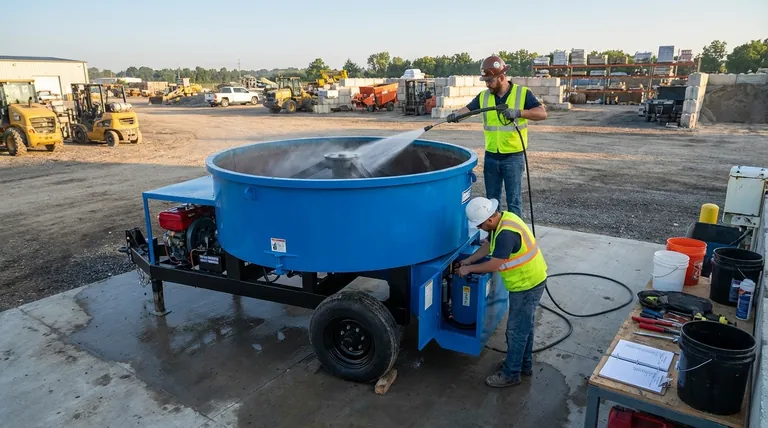
The Daily Pre- and Post-Operation Checklist
A disciplined daily routine is the foundation of a reliable mixer truck. These non-negotiable checks prevent the most common and costly failures.
Pre-Trip Fluid Inspection
Before each trip, checking the hydraulic oil level is essential. The hydraulic system powers the mixer's core functions, and low fluid levels can lead to poor performance, component overheating, and catastrophic failure.
Post-Use Cleaning Protocol
This is the single most important maintenance task. Immediately after discharging the concrete, you must clean the mixing drum thoroughly to prevent residual material from hardening. Hardened concrete drastically reduces mixing efficiency, can damage blades, and is extremely difficult and costly to remove.
The Importance of Abrasives
For a complete cleaning, a simple water rinse is often insufficient. Using abrasive materials, such as gravel and water, scours the interior of the drum and blades, removing the cement paste film that water alone leaves behind.
Core Mechanical Integrity: Beyond Daily Checks
While daily routines prevent immediate problems, periodic mechanical inspections ensure the long-term health and performance of the mixer. These checks should be part of a regular service schedule.
Inspecting the Mixer Blades
The blades are the heart of the mixing action. They must be checked regularly for wear, warping, or damage. Worn or improperly shaped blades cannot mix materials uniformly, directly resulting in poor-quality concrete that may fail to meet project specifications.
Maintaining the Bearing System
The bearings allow the mixing assembly to rotate smoothly under immense weight and force. Proper lubrication and regular inspection are critical. A failed bearing can seize the entire mixer, leading to major downtime and expensive repairs.
Servicing the Lubrication System
The truck's overall lubrication system, including grease points for the mixer and chassis, must be serviced according to the manufacturer's schedule. This prevents premature wear on all moving parts, from the drive system to the mixing components.
Common Pitfalls and Their Consequences
Understanding common mistakes is key to avoiding them. Neglecting these areas will invariably lead to increased costs and reduced efficiency.
Neglecting Post-Use Cleaning
The consequence is caked-on, hardened concrete inside the drum. This not only compromises every future batch of concrete but can also throw the drum off balance, putting extreme stress on bearings and the drive motor.
Ignoring "Minor" Leaks
A small hydraulic fluid leak is an early warning sign of a failing seal or hose. Ignoring it can lead to a sudden loss of hydraulic pressure, rendering the mixer useless in the field and potentially causing a hazardous spill.
Running with Worn Blades
Pushing worn blades "for one more job" directly impacts the final product. This leads to inconsistent concrete, potential project delays if the mix fails quality control, and damage to your professional reputation.
Making the Right Choice for Your Goal
Your maintenance strategy should align directly with your operational priorities.
- If your primary focus is Maximum Equipment Lifespan: Your non-negotiable task is meticulous, immediate post-use cleaning and adherence to the lubrication schedule.
- If your primary focus is Consistent Concrete Quality: Prioritize regular, detailed inspection of the mixer blades for wear and damage.
- If your primary focus is Minimizing Field Downtime: The daily pre-trip fluid check is your best defense against unexpected operational failure.
Ultimately, disciplined maintenance is an investment in operational excellence and asset protection.
Summary Table:
| Maintenance Area | Key Practice | Primary Benefit |
|---|---|---|
| Daily Routine | Post-use cleaning with abrasives; Pre-trip hydraulic oil check | Prevents concrete hardening; Avoids operational failure |
| Mechanical Integrity | Regular inspection of mixer blades and bearing systems | Ensures consistent concrete quality; Maximizes equipment lifespan |
| Common Pitfalls | Avoiding neglect of cleaning and ignoring minor leaks | Minimizes costly downtime and repairs |
Maximize the performance and lifespan of your construction equipment with GARLWAY. Our expertise in construction machinery, including durable winches, concrete mixers, and batching plants, is designed to support contractors and construction companies globally. Ensure your projects run smoothly with reliable equipment and expert support.
Contact GARLWAY today for a consultation on how our solutions can enhance your operational efficiency and protect your investment.
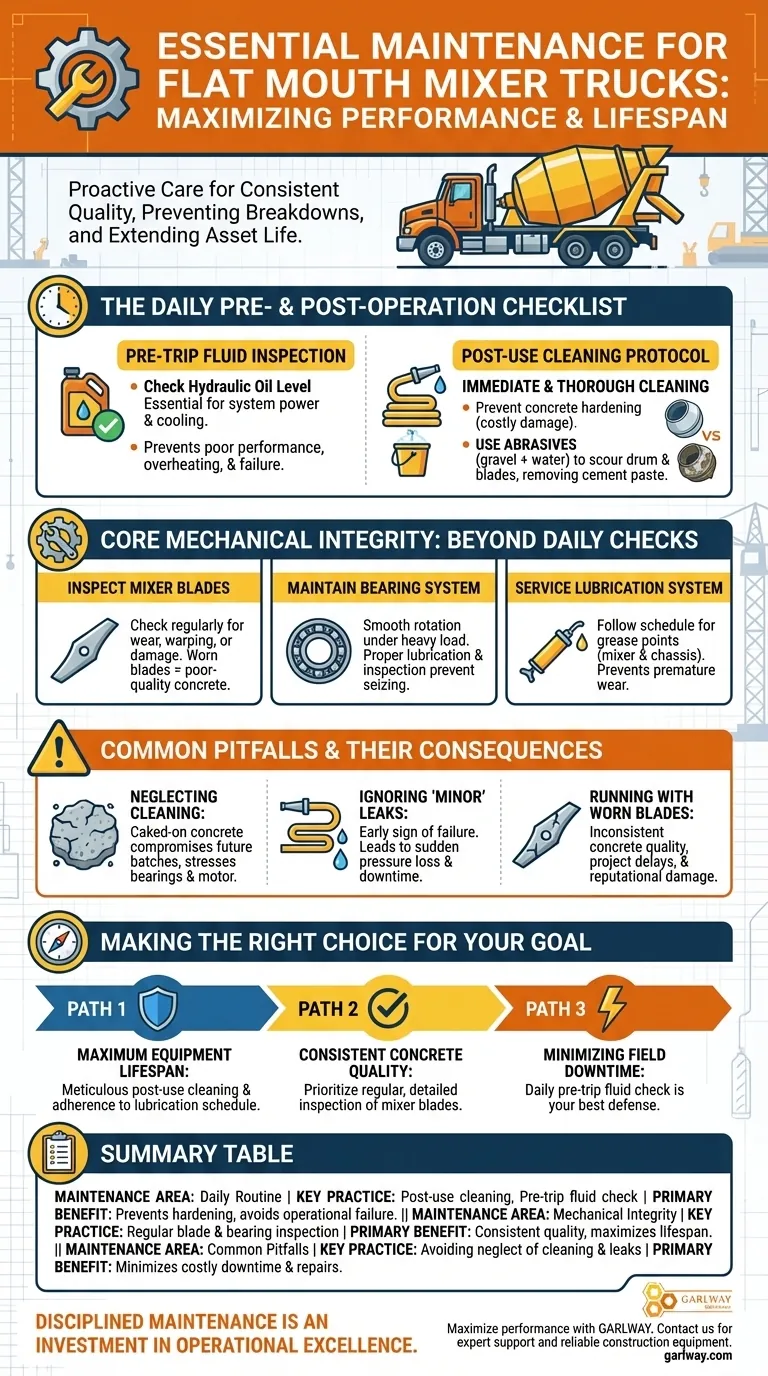
Visual Guide
Related Products
- Mini Cement Mortar Mixer Truck for Construction
- Ready Mixer Machine for Construction Ready Mix Machinery
- JW1000 Mobile Cement Mixer Concrete Mixer Truck and Batching Plant
- Portable Ready Mix Concrete Mixer Equipment
- Portable Concrete Mixer Machine Equipment for Mixing Concrete
People Also Ask
- Why might mixing mortar in a cement truck be problematic? Avoid Costly Mixing Mistakes
- What are the main types of construction cement mixers available? Choose the Right Mixer for Your Project
- What are the two primary methods for filling a cement mixer truck? Central vs. Transit Mix Explained
- What are the common uses of cement mixer trucks? Boosting Construction Efficiency and Quality
- What are the primary methods to fill a cement mixer truck? Central Mix vs. Transit Mix Explained


