The short answer is that manual winch maintenance revolves around three core activities: regularly inspecting the line for wear, keeping the mechanical parts clean and lubricated, and performing a more thorough internal check-up annually. These simple steps are crucial for preventing rust, ensuring smooth operation, and, most importantly, ensuring safety under load.
The key to manual winch longevity is not complex repair, but consistent, proactive care. A few minutes of simple maintenance prevents the two primary causes of failure: corrosion of the frame and wear on the internal gear system.
A Component-by-Component Maintenance Guide
A manual winch is a simple machine, and its maintenance is best understood by looking at its key parts. Each component has a specific need that contributes to the safety and reliability of the whole system.
The Winch Line (Strap or Cable)
The line is the most exposed component and requires frequent attention. A failure here happens under load, making it a critical safety check.
If you have a synthetic strap, always allow it to dry completely before spooling it back onto the drum to prevent mold, mildew, and rot. For a steel cable, apply a dedicated wire rope lubricant periodically to prevent corrosion and reduce internal friction between strands.
Most importantly, visually inspect the entire length of your line for fraying, cuts, or broken strands before every use. A compromised line must be replaced immediately.
The Gear Train and Brake System
This is the heart of the winch, providing the mechanical advantage to lift heavy loads. Its internal gears and brake mechanism require lubrication to function.
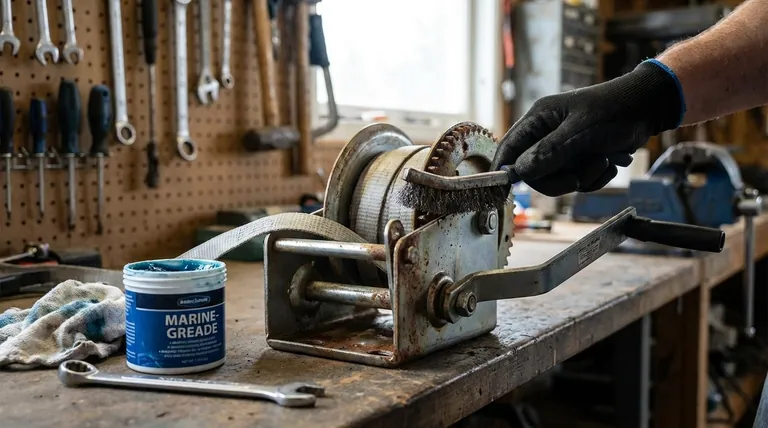
The gears, especially if they are ungalvanized steel, need a coat of quality marine-grade grease to protect them from moisture and ensure they turn smoothly. This reduces wear and makes cranking the winch significantly easier.
Proper lubrication also protects the ratchet or brake system, which is essential for holding a load securely in place without slipping.
The Frame and Drum
The winch's housing and drum are typically made of steel, making them vulnerable to rust, especially in wet environments.
Use a wire brush to remove any surface rust that appears on the frame, drum, or handle. This prevents the corrosion from penetrating deeper and weakening the winch's structure.
After removing rust, you can touch up the area with a corrosion-resistant paint to restore its protective coating.
The Annual Deep-Dive Inspection
Once a year, it is best practice to perform a more involved service. This requires partially or fully disassembling the winch according to the manufacturer's instructions.
This deep dive allows you to clean old, gritty grease from the internal components and inspect parts you cannot normally see. It is the only way to confirm the internal gears and brake pawls are free of damage or significant wear.
After a thorough cleaning and inspection, apply a fresh coat of marine grease to all internal moving parts before reassembly.
Common Pitfalls to Avoid
Neglecting these simple maintenance tasks can lead to predictable and dangerous outcomes. Understanding the risks underscores the importance of a consistent routine.
The Risk of Gradual Failure
Skipping lubrication introduces friction and grit into the gear train. This makes the winch harder to crank and accelerates the wear on the gear teeth, eventually leading to slippage or seizure.
The Danger of Sudden Failure
A frayed strap or a corroded steel cable can snap without warning when placed under load. This is the single greatest safety risk associated with poor winch maintenance and can result in serious injury or property damage.
Reduced Lifespan
Rust is the primary enemy of a manual winch. Allowing it to fester on the frame or handle will compromise the structural integrity of the unit, forcing a premature replacement.
How to Apply This to Your Project
Your maintenance schedule should adapt to your specific use case. The goal is to match your level of care to the demands you place on the equipment.
- If your winch is used frequently or in harsh conditions (e.g., a boat trailer): Inspect the line before every use and perform a full cleaning and lubrication check every few months.
- If your winch is used infrequently or in a clean environment (e.g., a shop hoist): A thorough inspection before each use and a complete annual service is sufficient.
Ultimately, a few moments of preventative care are all that stand between a reliable tool and a potential failure.
Summary Table:
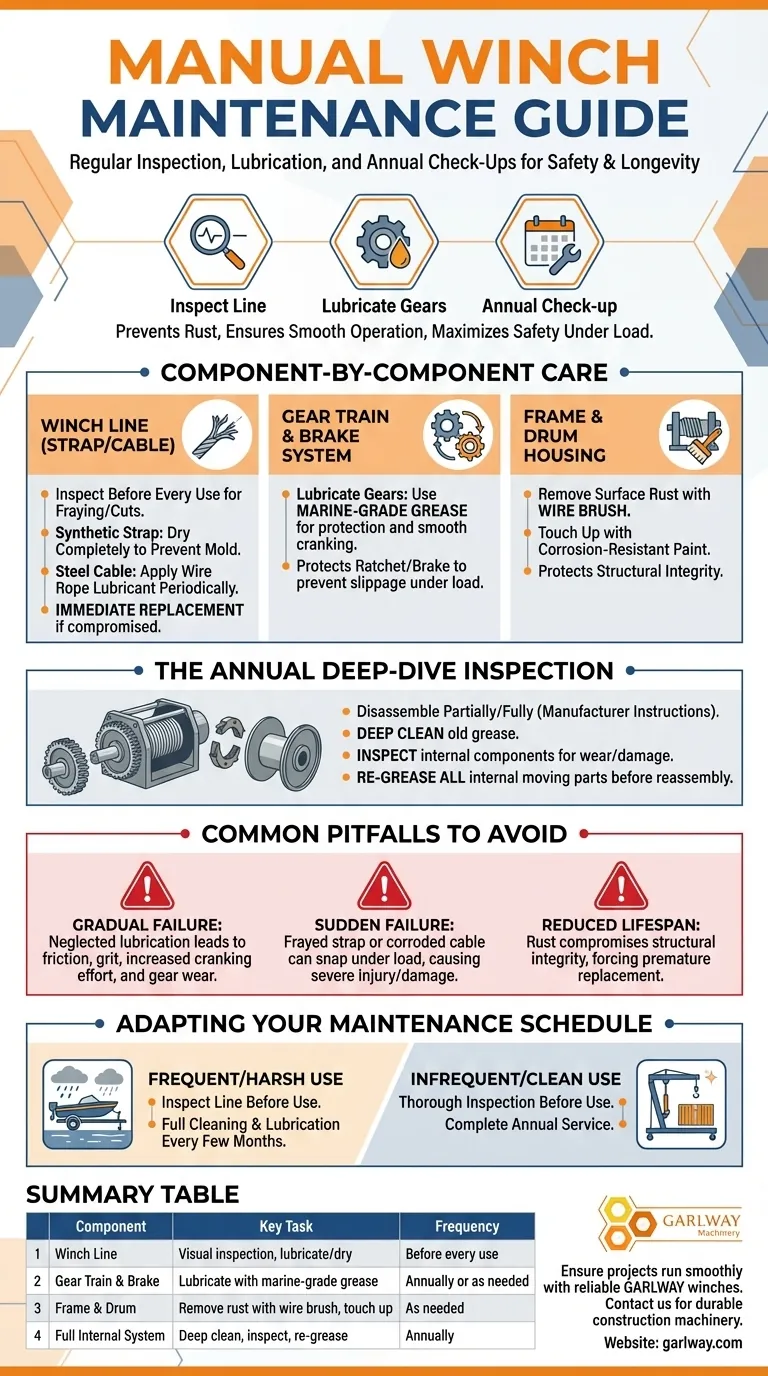
| Component | Key Maintenance Task | Frequency |
|---|---|---|
| Winch Line (Strap/Cable) | Visual inspection for wear/fraying; apply lubricant (cable) or allow to dry (strap). | Before every use |
| Gear Train & Brake | Lubricate with marine-grade grease to ensure smooth operation and prevent wear. | Annually or as needed |
| Frame & Drum | Remove surface rust with a wire brush; touch up with corrosion-resistant paint. | As needed, when rust appears |
| Full Internal System | Deep clean, inspect for wear, and re-grease all internal components. | Annually |
Ensure your projects run smoothly and safely with a reliable winch from GARLWAY.
Proper maintenance is key to performance, but it starts with a quality-built product. GARLWAY specializes in durable construction machinery, including manual winches, concrete mixers, and batching plants designed for the demands of construction companies and contractors worldwide.
Let us help you equip your team with machinery that stands up to the task. Contact GARLWAY today to discuss your equipment needs and discover the difference quality makes.
Visual Guide
Related Products
- Quick Windlass Portable Winch for Truck and Boat Best Boat Winch
- Portable Small Trailer Winch
- Electric and Hydraulic Winch for Heavy Duty Applications
- Small Electric Winch 120V and 240V for Compact Applications
- Hydraulic Winding Engine Harbor Freight Winch
People Also Ask
- What features were incorporated into the upgraded portable winch system? Boost Your Recovery Power & Safety
- What are some uses mentioned for portable winches beyond vehicle recovery? Essential Versatility for Property & Work
- How could the twisting issue with a portable winch be mitigated? Achieve Safe, Centered Pulls with Proper Rigging
- What are the primary uses of a portable winch for a truck? Boost Your Truck's Capability and Self-Reliance
- What is the single rope traction force of the quick winch without a pulley block? 0.5 to 40 Tons Explained