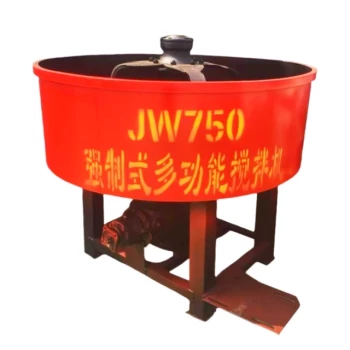
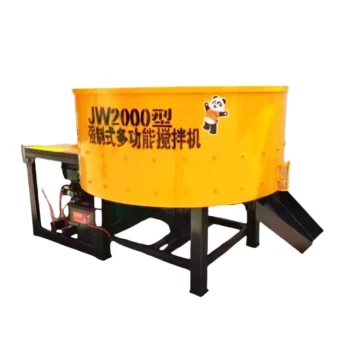
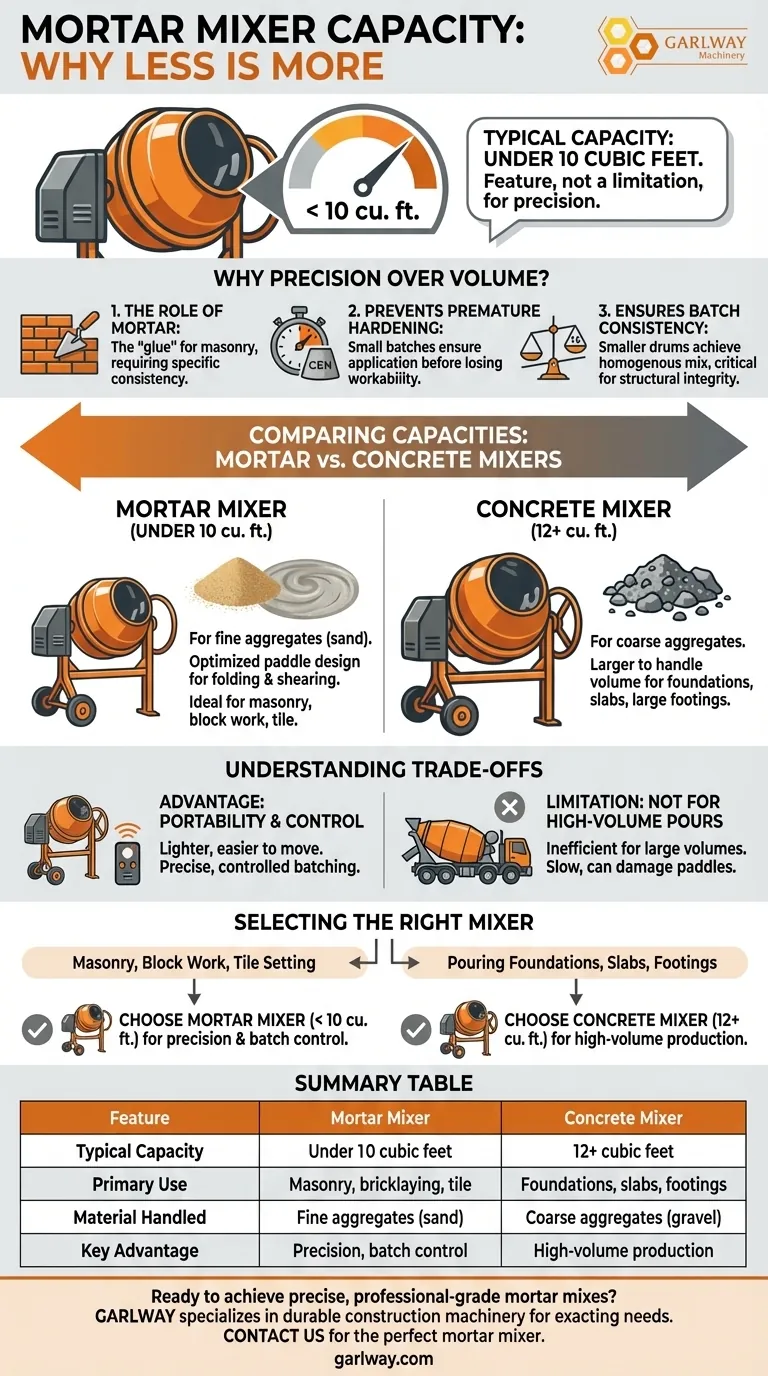
To put it directly, the typical capacity for a mortar mixer is generally less than 10 cubic feet. This smaller size is a deliberate design choice, making these machines ideal for small to medium-sized projects where material consistency and precision are more important than sheer volume.
The key takeaway is that a mortar mixer's smaller capacity is not a limitation but a feature. It is specifically engineered for the precise, controlled batching required for masonry, ensuring the material remains workable without waste.
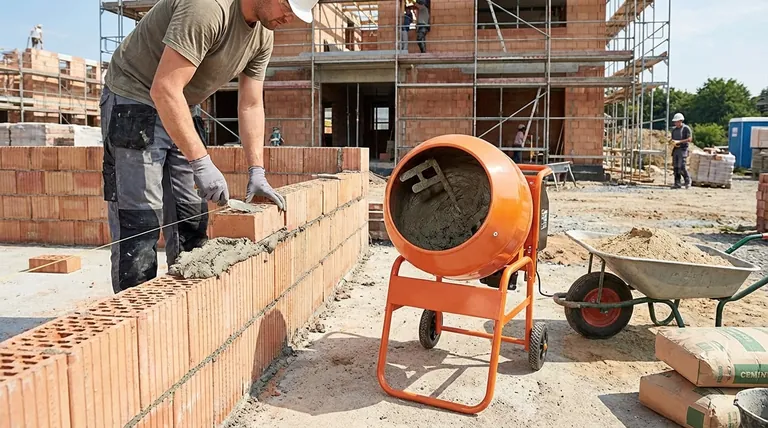
Why Mortar Mixers Prioritize Precision Over Volume
Understanding the purpose of mortar is key to understanding the equipment used to mix it. Unlike concrete, which is used for mass and structural volume, mortar is a binding agent that requires a very specific consistency.
The Role of Mortar
Mortar is the "glue" used in bricklaying, block work, and tile setting. Its primary job is to create a strong, uniform bond between masonry units.
Preventing Premature Hardening
Mortar begins to harden relatively quickly. Mixing in smaller, manageable batches ensures that all the material can be applied by a mason before it loses its workability and plasticity.
Ensuring Batch Consistency
A smaller drum makes it easier to achieve a completely homogenous mix. This prevents weak spots and ensures every part of the batch has the correct ratio of sand, cement, and lime, which is critical for structural integrity.
Comparing Capacities: Mortar vs. Concrete Mixers
The distinction between mixer types becomes clear when you compare their intended capacities and the materials they are designed to handle.
Mortar Mixer Capacity (Under 10 cu. ft.)
These mixers are designed for materials with fine aggregates, like sand. Their paddle design is optimized to efficiently fold and shear the mixture, creating the smooth consistency mortar requires.
Concrete Mixer Capacity (12+ cu. ft.)
In contrast, concrete mixers often have capacities of 12 cubic feet or more. They must be larger to accommodate the coarse aggregates (gravel, crushed stone) used in concrete and to produce the volume needed for foundations, slabs, and large footings.
Understanding the Trade-offs
Choosing a mortar mixer comes with a clear set of advantages and limitations that are tied directly to its size and design.
Advantage: Portability and Control
The smaller capacity makes mortar mixers significantly lighter and more portable than their concrete-mixing counterparts. Features like sturdy wheels and ergonomic handles allow them to be moved easily around a job site, right to the point of work.
Limitation: Not for High-Volume Pours
The primary limitation is obvious: a mortar mixer is inefficient and ill-suited for any project requiring large volumes of concrete. Attempting to mix concrete in one would be slow and could damage the machine's paddles.
Selecting the Right Mixer for Your Project
Your project's material requirements should be the deciding factor. The capacity of your mixer directly impacts workflow, material quality, and overall efficiency.
- If your primary focus is masonry, block work, or tile setting: A standard mortar mixer with a capacity under 10 cubic feet is specifically designed for the precision and batch control you need.
- If your primary focus is pouring foundations, slabs, or footings: You require a larger-capacity concrete mixer (12+ cubic feet) capable of handling coarse aggregate and producing material in bulk.
Choosing the right mixer capacity is the first step toward achieving a professional-grade finish.
Summary Table:
| Feature | Mortar Mixer | Concrete Mixer |
|---|---|---|
| Typical Capacity | Under 10 cubic feet | 12+ cubic feet |
| Primary Use | Masonry, bricklaying, tile setting | Foundations, slabs, footings |
| Material Handled | Fine aggregates (sand) | Coarse aggregates (gravel, stone) |
| Key Advantage | Precision, batch control, portability | High-volume production |
Ready to achieve precise, professional-grade mortar mixes? At GARLWAY, we specialize in durable and efficient construction machinery, including mortar mixers designed for the exacting needs of contractors and construction companies. Our equipment ensures consistent batch quality, saving you time and material on every project.
Contact GARLWAY today to find the perfect mortar mixer for your next masonry job!
Visual Guide
Related Products
- JDY350 Electric Hydraulic Mortar Mud Concrete Mixer
- JDC350 Small Cement Concrete Mortar Mixer
- Mini Cement Mortar Mixer Truck for Construction
- Belle Mixer Drum Self Loading Mortar Mixers JS3000
- JS1000 Volumetric Concrete Mortar Mixer for Sale Skid Steer Cement Mixer
People Also Ask
- When are electric mortar mixers typically used? Find the Perfect Tool for Small to Medium-Sized Jobs
- What are hydraulic concrete mixers used for? Powering Large-Scale Construction Projects
- How are mortar mixers utilized in concrete and grout projects? Maximize Your Mixing Efficiency
- What are the benefits of electric concrete mixers? Quiet, Clean, and Low-Maintenance Mixing
- What is a mortar mixer and what is its primary use? Master Masonry with the Right Equipment