
For any concrete mixing station, the single most critical issue for the water supply system in winter is preventing the water from freezing. When water freezes, it expands, which can easily rupture pipes, pumps, and water tanks, leading to catastrophic equipment failure and an immediate halt to all production.
The challenge of winter operation is not just about dealing with the cold; it is about implementing a proactive winterization strategy to prevent water from freezing, thereby protecting your equipment and ensuring operational continuity.
The Core Threat: Water Freezing and Its Consequences
Understanding why frozen water is so destructive is the first step in preventing damage. The problem goes beyond a simple blockage and can cause irreversible harm to your system.
Why Freezing is So Destructive
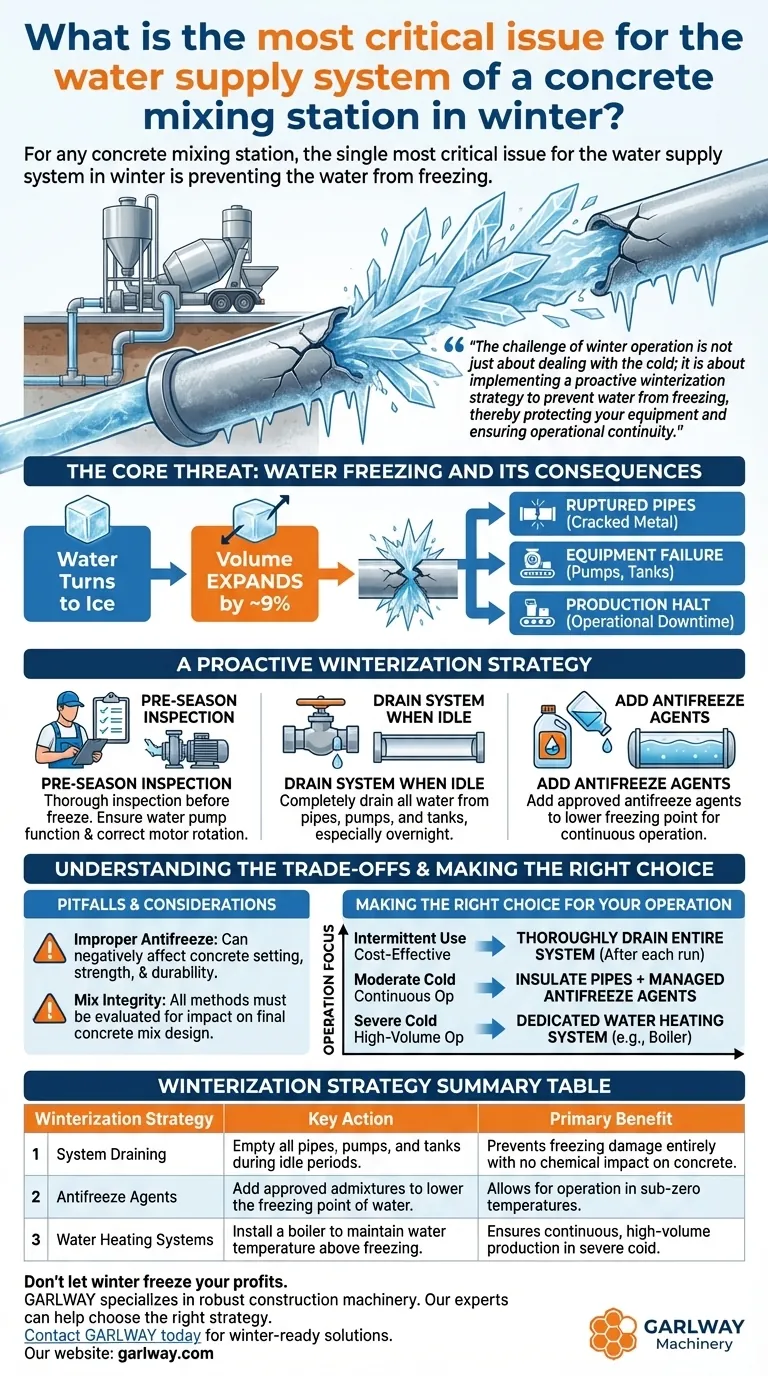
When water turns to ice, its volume expands by approximately 9%. This expansion exerts immense pressure on whatever is containing it, whether that is a copper pipe, a PVC line, or a steel water tank.
The Impact on Pipes and Equipment
The pressure from expanding ice is powerful enough to crack metal and rupture pipes from the inside out. This leads to costly repairs, significant water loss when the system thaws, and extended operational downtime.
The Effect on Production
A frozen water supply system means production stops completely. Without a reliable source of liquid water, you cannot mix concrete, effectively shutting down your entire operation until the system is thawed and repaired.
A Proactive Winterization Strategy
A reactive approach to frozen pipes is always more expensive and disruptive than a proactive one. A proper strategy involves inspection, physical protection, and operational adjustments.
Pre-Season System Inspection
Before the first freeze, conduct a thorough inspection. Ensure the water pump is functioning correctly and confirm the motor's rotation direction is accurate, as an incorrect rotation will prevent proper water flow.
Draining the System When Idle
The simplest and most effective preventative measure is to completely drain all water from pipes, pumps, and tanks during periods of inactivity, especially overnight. If there is no water in the system, it cannot freeze and cause damage.
Adding Antifreeze Agents
For systems that cannot be fully drained, adding approved antifreeze agents to the water can lower its freezing point. This helps ensure the water remains liquid even in sub-zero temperatures, allowing for continuous operation.
Understanding the Trade-offs
Simply preventing freezing is not enough; the method you choose has implications for your concrete mix and operational costs. You must consider the impact on the final product.
The Pitfall of Improper Antifreeze Use
While effective, antifreeze agents are chemical admixtures that become part of your concrete mix. Using the wrong type or an incorrect dosage can negatively affect the concrete's setting time, strength, and durability. Always follow technical specifications precisely.
The Alternative: Water Heating Systems
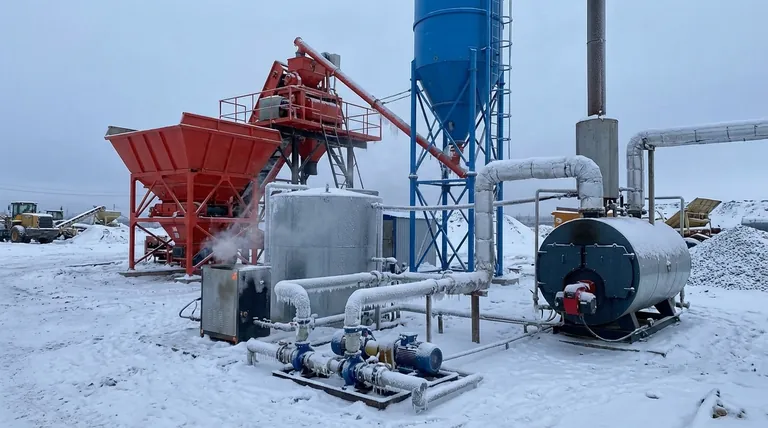
A common industrial solution is to install a water heating system, such as a boiler. This keeps the supply water at a consistent temperature above freezing, providing a reliable flow for production without introducing additional chemicals into the mix.
The Critical Consideration: Mix Integrity
Your primary goal is to produce high-quality concrete. Any winterization method, whether chemical or thermal, must be evaluated based on its impact on the final concrete mix design and performance specifications.
Making the Right Choice for Your Operation
The best strategy depends on your climate, production schedule, and operational budget. Tailor your approach to your specific needs.
- If your primary focus is cost-effectiveness for intermittent use: Your most reliable method is to thoroughly drain the entire water system after each production run.
- If your primary focus is continuous operation in moderate cold: A combination of insulating pipes and using carefully managed antifreeze agents is a viable strategy.
- If your primary focus is high-volume production in severe cold: Investing in a dedicated water heating system is the most robust and reliable solution to guarantee operational uptime.
Ultimately, preparing your water supply system for winter is a non-negotiable step for ensuring a safe, efficient, and profitable operation.
Summary Table:
| Winterization Strategy | Key Action | Primary Benefit |
|---|---|---|
| System Draining | Empty all pipes, pumps, and tanks during idle periods. | Prevents freezing damage entirely with no chemical impact on concrete. |
| Antifreeze Agents | Add approved admixtures to lower the freezing point of water. | Allows for operation in sub-zero temperatures. |
| Water Heating Systems | Install a boiler to maintain water temperature above freezing. | Ensures continuous, high-volume production in severe cold. |
Don't let winter freeze your profits.
GARLWAY specializes in providing robust construction machinery and solutions for construction companies and contractors globally. Our range of concrete batching plants and mixers are designed for reliability, but proper winterization is key to uninterrupted operation.
Let our experts help you choose the right strategy to protect your investment and keep your project on schedule.
Contact GARLWAY today for a consultation on winter-ready concrete mixing solutions.
Visual Guide
Related Products
- HZS90 Large Multiquip Concrete Mixers for Construction
- HZS75 Concrete Batching Plant Cement Mixer Price Concrete Mixer Bunnings Mixing Plant
- Portable Concrete Mixer Machine Equipment for Mixing Concrete
- Commercial Electric Concrete Mixer Machine HZS 50 Small Batch Plant for Sale
- HZS35 Small Cement Concrete Mixing Batch Plant
People Also Ask
- What are the types of concrete mixers used in batching plants? Choose the Right Mixer for Your Project
- What is the core component of a concrete batching plant? The Mixer Unit Defines Your Concrete Quality
- What are the different power sources for concrete mixers? Choose the Right Power for Your Project
- What are the main types of concrete mixers? A Guide to Batch, Continuous & More
- What are the main types of concrete mixers mentioned? Find the Perfect Mixer for Your Project





