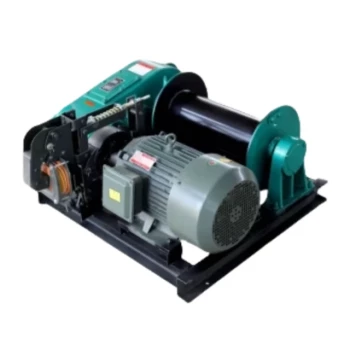
The fundamental challenge of a portable winch setup is not the winch itself, but establishing a temporary anchor point that can safely manage immense, multi-directional forces without the structural integrity of a permanent, frame-mounted installation. This often leads to critical failures in geometry and stability that negate the winch's power and introduce serious safety hazards.
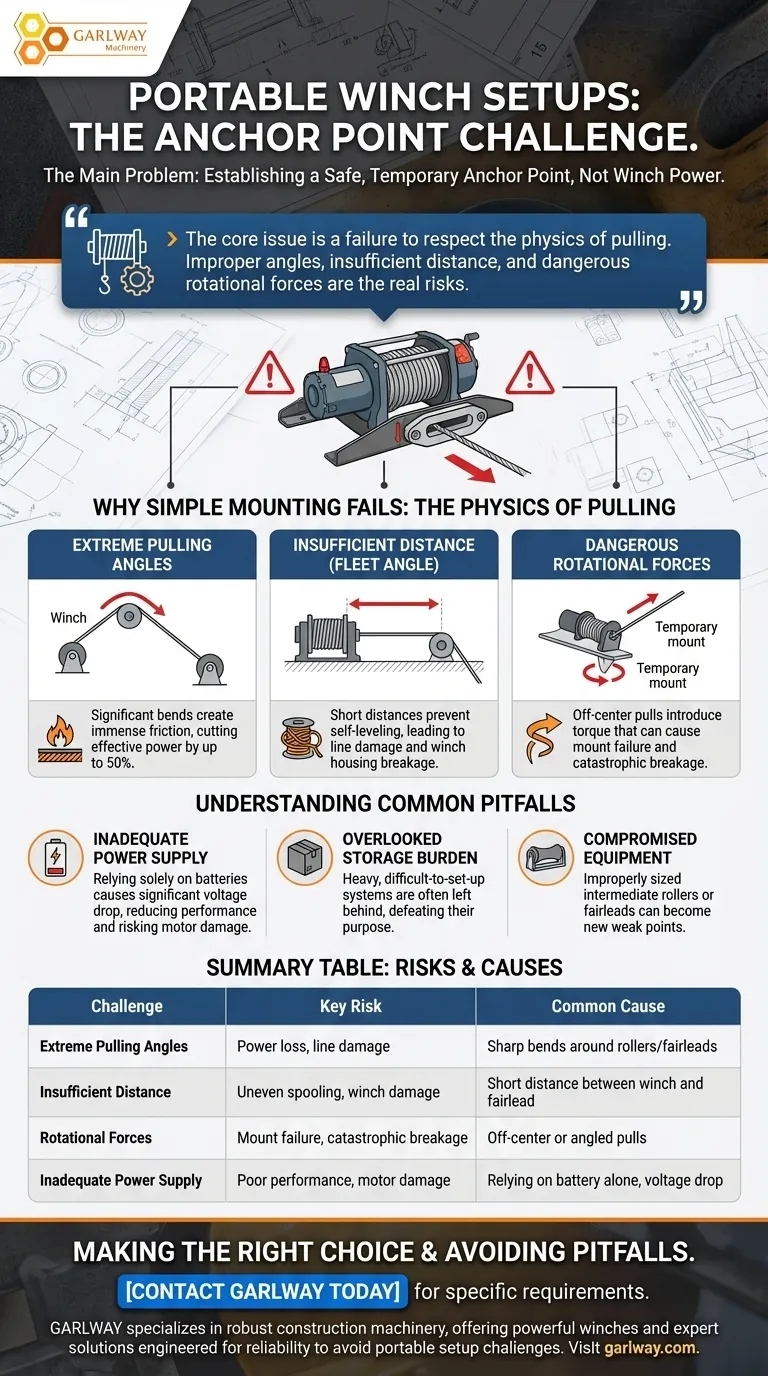
The core issue with most portable winch systems is a failure to respect the physics of pulling. Improper angles and insufficient distance between the winch and the fairlead drastically reduce power, damage equipment, and create dangerous rotational forces that a temporary mount may not withstand.
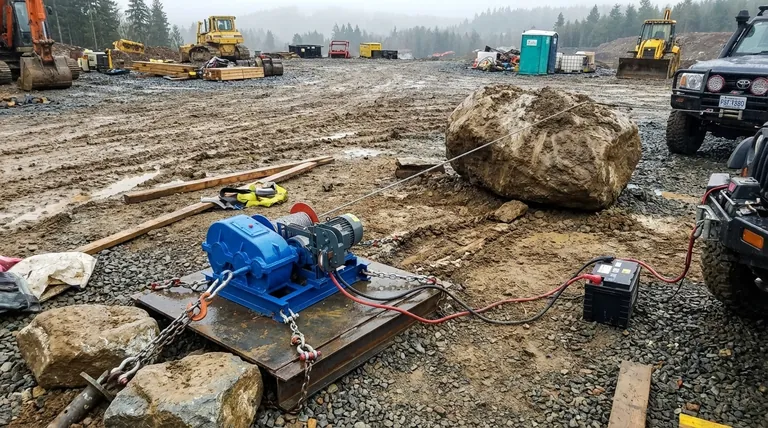
Why Simple Mounting Fails: The Physics of Pulling
A winch's rated capacity assumes an ideal, straight-line pull. Portable setups, often born of compromise, frequently violate the core principles required to achieve this, leading to poor performance and high risk.
The Problem of Extreme Pulling Angles
The angle of the winch line as it enters the fairlead or roller is critical. Any significant bend introduces immense friction and binds the system.
A line pulling at a sharp angle, such as 90 degrees around a roller, can cut the winch's effective power by half or more. The winch isn't just pulling the load; it's also fighting the friction of the bend itself.
The Critical Role of Distance
For a winch to spool line evenly across its drum, there must be adequate distance between the drum and the first fairlead. This is known as the "fleet angle."
When this distance is too short—a common issue in compact, portable setups—the line cannot self-level. It piles up on one side of the drum, which can damage the line and even break the winch housing under extreme load.
The Danger of Rotational Forces
A winch is designed to handle linear tension. Any off-center or angled pull introduces powerful rotational forces, or torque, on the winch and its mount.
A temporary mount, such as one on a receiver hitch, may not be able to resist this twisting force. This can cause the entire winch assembly to rotate, bend, or break free during a pull, turning it into a catastrophic failure.
Understanding the Common Pitfalls
Beyond the core physics, several practical challenges consistently undermine the reliability and safety of portable winch systems. Addressing these is essential for a functional design.
Inadequate Power Supply
Winches draw hundreds of amps under load, a demand typically met by a running vehicle's heavy-duty alternator.
A portable setup relying solely on a battery or a less robust power source may experience significant voltage drop, reducing winch performance and potentially damaging the motor. Managing long, heavy-gauge power cables also presents a logistical and safety challenge.
The Overlooked Storage Burden
A truly portable system must be practical to store and deploy.
A heavy winch on a cumbersome mounting plate can be difficult to handle, discouraging its use. A system that is too difficult to set up and break down often gets left behind, defeating its purpose.
Compromised Equipment
To solve the distance and angle problems, users sometimes add intermediate rollers or fairleads.
However, if these components are not properly sized and rated for the load, they can become a new weak point in the system. A narrow roller, for instance, can chafe and damage the winch line under load.
Making the Right Choice for Your Goal
The viability of a portable winch setup depends entirely on your intended use case and your commitment to proper engineering.
- If your primary focus is occasional, light-duty pulling: A receiver-hitch-mounted winch can be effective, but only if you can ensure a straight-line pull and have a plan for adequate power.
- If your primary focus is critical, heavy-duty vehicle recovery: A portable setup is a significant compromise. The safety and reliability of a permanent, frame-mounted winch are almost always the superior choice.
- If your primary focus is versatility for multiple tasks: Design your system around a universal anchor plate that prioritizes a straight line path and a standardized, safe power connection for any vehicle or anchor you use.
A successful portable winch system is a triumph of careful engineering, not just powerful hardware.
Summary Table:
| Challenge | Key Risk | Common Cause |
|---|---|---|
| Extreme Pulling Angles | Power loss, line damage | Sharp bends around rollers/fairleads |
| Insufficient Distance (Fleet Angle) | Uneven spooling, winch damage | Short distance between winch and fairlead |
| Rotational Forces (Torque) | Mount failure, catastrophic breakage | Off-center or angled pulls |
| Inadequate Power Supply | Poor performance, motor damage | Relying on battery alone, voltage drop |
Don't let improper setup compromise your project's safety and efficiency.
GARLWAY specializes in robust construction machinery, offering powerful winches and expert solutions designed for the demanding needs of construction companies and contractors globally. Our equipment is engineered for reliability and performance, helping you avoid the common pitfalls of portable setups.
Contact GARLWAY today to discuss your specific requirements and ensure your winch system is built for success.
Visual Guide
Related Products
- Quick Windlass Portable Winch for Truck and Boat Best Boat Winch
- Portable Small Trailer Winch
- Small Electric Winch 120V and 240V for Compact Applications
- Electric Hoist Winch Boat Anchor Windlass for Marine Applications
- Warn Winch Windlass Boat Trailer Winch
People Also Ask
- What features were incorporated into the upgraded portable winch system? Boost Your Recovery Power & Safety
- What are some uses mentioned for portable winches beyond vehicle recovery? Essential Versatility for Property & Work
- How could the twisting issue with a portable winch be mitigated? Achieve Safe, Centered Pulls with Proper Rigging
- What are the primary uses of a portable winch for a truck? Boost Your Truck's Capability and Self-Reliance
- What is the single rope traction force of the quick winch without a pulley block? 0.5 to 40 Tons Explained