
The primary advantages of a receiver hitch-mounted winch system are its exceptional portability, multi-directional pulling capability, and the ability to reduce your vehicle's daily weight. This design allows a single winch to be used on the front or rear of a vehicle, or even on a different vehicle or trailer entirely, offering a level of flexibility a permanent mount cannot match.
A receiver-mounted winch prioritizes versatility over the immediate readiness of a permanent installation. It's a strategic choice for those who value multi-purpose utility and don't need a winch affixed to their vehicle at all times.
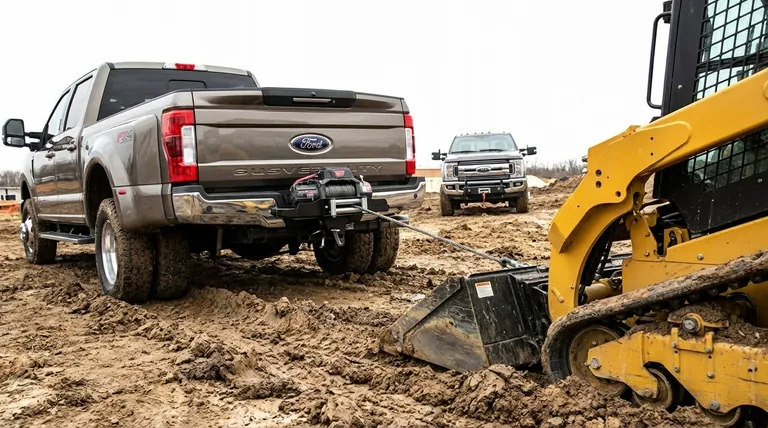
The Core Advantage: Unmatched Versatility
The fundamental benefit of a receiver hitch system is that the winch is not a permanent fixture. This simple fact unlocks several operational advantages.
Move Between Front and Rear
With hitch receivers on both the front and rear of your vehicle, you can choose your pulling direction based on the recovery situation. This eliminates the limitation of only being able to pull forward, which is a significant tactical advantage.
Transfer Between Vehicles
A single winch cradle can be moved between any vehicle or trailer equipped with a standard 2-inch receiver. This makes it a highly economical choice if you own multiple capable vehicles or trailers.
Secure Storage When Not in Use
You can easily remove the entire winch assembly for secure storage. This protects your investment from weather damage and theft, and keeps it clean and ready for when you actually need it.
Practical Benefits Beyond Pulling
The flexibility of a receiver mount extends to everyday vehicle use, offering practical perks that permanent systems lack.
Reduced Daily Weight
A winch and its mounting plate can easily add 100 pounds or more to the front of your vehicle. By removing it for daily driving, you restore your vehicle's original suspension dynamics and can see a minor improvement in fuel efficiency.
A Multi-Purpose Front Hitch
When the winch is not installed, a front-mounted receiver hitch is free for other tasks. It can be used for maneuvering a trailer in tight spaces, or for mounting other accessories like a bike rack or cargo carrier.
Understanding the Trade-offs
To make an informed decision, you must also consider the inherent compromises of a receiver-mounted system compared to a permanent, frame-mounted winch bumper.
Reduced Approach Angle
The hitch receiver and winch cradle protrude from the front of the vehicle, which can decrease your approach angle. This can be a significant liability in serious off-road situations where maximum clearance is critical.
Increased Frame Stress on Angled Pulls
During an angled pull, the receiver mount acts as a lever, putting more concentrated stress on a smaller area of the vehicle's frame. A permanent winch bumper distributes these forces more broadly across multiple mounting points.
The Challenge of Weight and Handling
While removable, a complete winch assembly is heavy and awkward. Moving and mounting a 100-pound piece of equipment can be a significant physical challenge, especially in poor conditions or on uneven ground.
Reliance on a Single Hitch Pin
The entire system is secured by a single, albeit strong, hitch pin. This contrasts with permanent mounts that use multiple large bolts to secure the winch directly to the vehicle's frame, offering a more rigid and integrated connection.
Is a Receiver Hitch Winch Right for You?
Choosing between a portable and permanent winch depends entirely on your intended use and priorities.
- If your primary focus is occasional use and multi-vehicle flexibility: A receiver-mounted winch is the most practical and cost-effective solution.
- If your primary focus is dedicated off-roading and immediate readiness: A permanent, frame-mounted winch offers superior strength, clearance, and instant access.
- If your primary focus is balancing daily driving with weekend recovery: The ability to remove the winch for everyday use makes the receiver system a compelling and versatile option.
Understanding these core trade-offs empowers you to select the recovery system that truly serves your operational needs.
Summary Table:
| Advantage | Key Benefit |
|---|---|
| Portability | Move the winch between front/rear hitches or different vehicles/trailers. |
| Multi-Directional Pulling | Recover from the front or rear, providing superior tactical flexibility. |
| Reduced Daily Weight | Remove the winch for daily driving to improve fuel efficiency and handling. |
| Secure Storage | Protect your investment from theft and weather when not in use. |
| Multi-Purpose Hitch | Use the empty receiver for bike racks, cargo carriers, or trailer maneuvering. |
Ready to add versatile, heavy-duty recovery power to your fleet?
GARLWAY specializes in robust construction machinery and winches designed for demanding work. Whether you're a construction company managing a fleet or a contractor needing reliable equipment, our solutions are built for your challenges.
Contact GARLWAY today to discuss how our winches and concrete machinery can enhance your operational flexibility and efficiency.
Visual Guide

Related Products
- Portable Small Trailer Winch
- Best 18000 Pound Drum Anchor Trailer Winch
- Warn Winch Windlass Boat Trailer Winch
- Electric Hoist Winch Boat Anchor Windlass for Marine Applications
- Quick Windlass Portable Winch for Truck and Boat Best Boat Winch
People Also Ask
- What features were incorporated into the upgraded portable winch system? Boost Your Recovery Power & Safety
- What are some uses mentioned for portable winches beyond vehicle recovery? Essential Versatility for Property & Work
- How could the twisting issue with a portable winch be mitigated? Achieve Safe, Centered Pulls with Proper Rigging
- What is the significance of trailer winches in the boating industry? Ensure Safe and Efficient Boat Recovery
- What should be considered when mounting a winch on a trailer? Ensure a Safe, Aligned Installation


