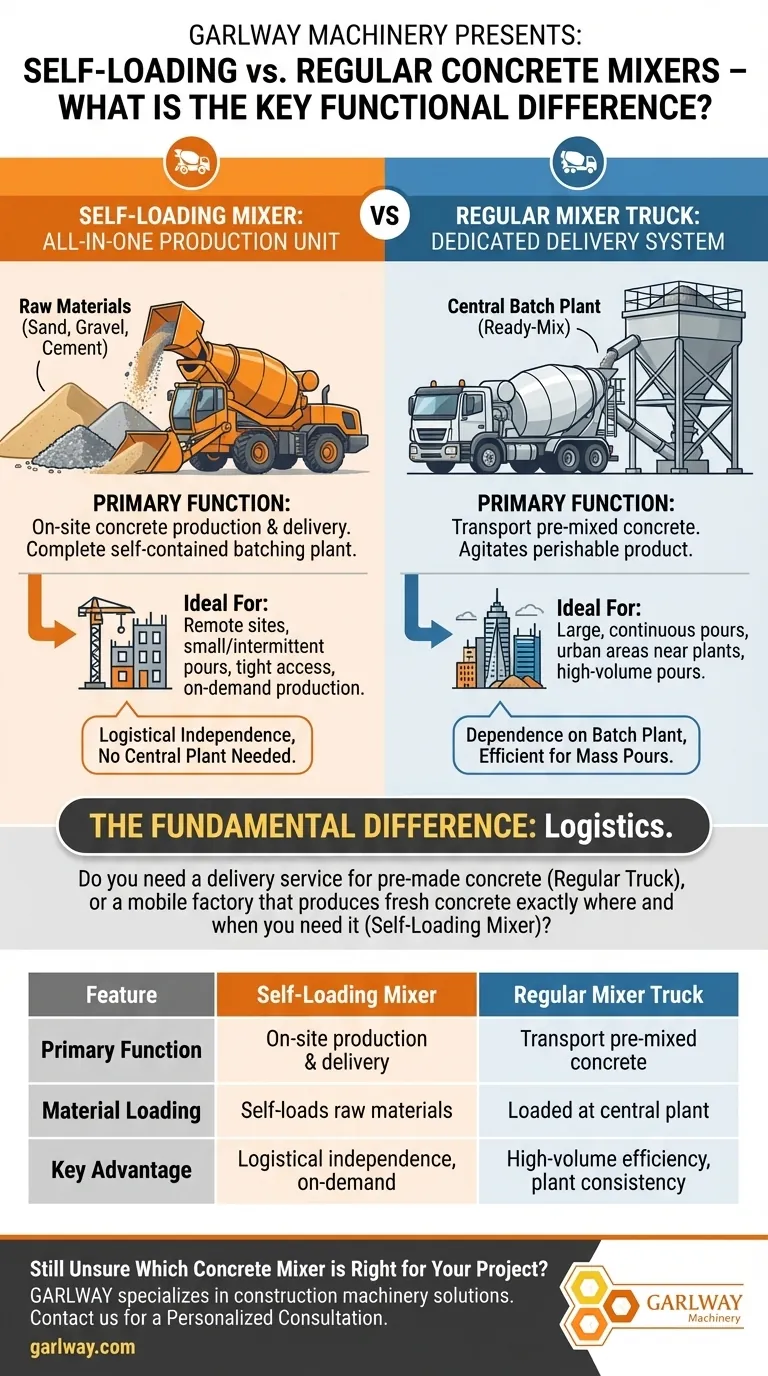
The fundamental difference is that a self-loading mobile concrete mixer is a complete, self-contained batching plant on wheels, capable of loading its own raw materials, mixing them, and delivering concrete on-site. In contrast, a regular mixer truck is simply a transportation vehicle designed to carry pre-mixed concrete from a central batching plant to a job site.
The choice between these two machines comes down to a simple question of logistics: Do you need a delivery service for pre-made concrete, or do you need a mobile factory that produces fresh concrete exactly where and when you need it?
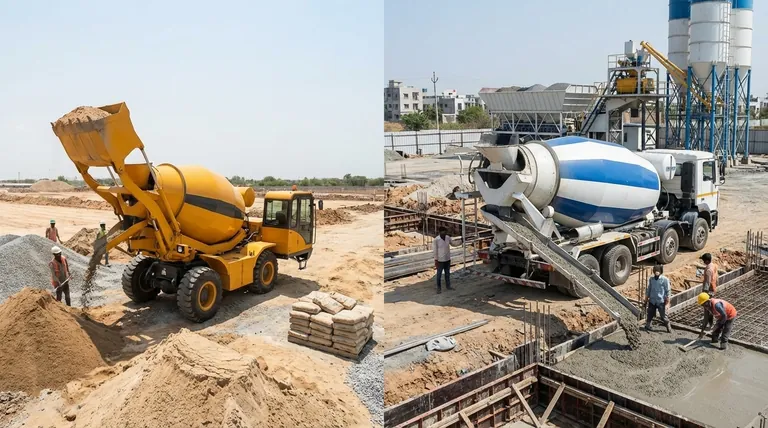
The Regular Mixer Truck: A Dedicated Delivery System
A regular mixer truck, often called a transit mixer or drum truck, is a familiar sight on any major construction project. Its role is highly specialized and is part of a larger, established process.
How It Works
These trucks are filled with "ready-mix" concrete at a central, stationary batching plant. This plant is a large-scale facility with precise controls for producing high volumes of consistent concrete.
Primary Function: Transport and Agitation
The truck's primary job is to transport this perishable product while constantly agitating it in its rotating drum. This rotation prevents the concrete from hardening (segregating and setting) during the journey from the plant to the pour site.
Dependence on the Batch Plant
The entire operation hinges on the batch plant. The truck is merely a link in the logistical chain. This system is incredibly efficient for large-scale, continuous pours where a fleet of trucks can be scheduled to arrive one after another.
The Self-Loading Mixer: An All-in-One Production Unit
The self-loading mixer represents a fundamentally different approach to concrete production, collapsing the entire supply chain into a single machine operated by one person.
A Paradigm Shift in Production
This machine is equipped with a front-mounted bucket or shovel. The operator can use this to scoop raw materials—like sand, gravel, and cement—directly from piles on-site and load them into the mixing drum.
Precision On-Site Batching
Integrated systems, such as electronic weighbatching equipment and precise water meters, allow the operator to create a specific mix design on the spot. This process turns the machine into a mobile, computer-controlled batch plant.
Eliminating Logistical Hurdles
Because it produces concrete exactly where it's needed, the self-loading mixer eliminates trips to and from a central plant. This makes it exceptionally valuable for projects where a plant is far away or for sites with restricted access.
Understanding the Trade-offs and Ideal Use Cases
Neither machine is universally better; they are tools designed for different logistical challenges. Choosing the right one is critical for project efficiency and budget control.
When to Use a Regular Mixer Truck
The traditional plant-and-truck model excels in urban and suburban areas with easy access to batch plants. It's the most cost-effective solution for large, uninterrupted pours like building foundations, slabs, or high-rise construction, where the volume required justifies a constant stream of deliveries.
The Strategic Advantage of a Self-Loading Mixer
A self-loading mixer is the ideal solution for remote or infrastructure-poor locations where no batch plant exists. It is also perfect for projects requiring multiple, smaller, or intermittent concrete pours throughout the day, as it can produce fresh batches on demand, eliminating waste from over-ordering or delays.
Cost and Quality Considerations
Regular mixer trucks benefit from the highly consistent quality control and economies of scale offered by a large batching plant. Self-loading mixers have a higher capital cost but can drastically reduce operational costs by saving on fuel, transport time, and wasted material. The quality of the mix, however, is dependent on the skill of the operator and the quality of the on-site raw materials.
Making the Right Choice for Your Project
Your project's location, scale, and timeline will determine the most effective solution.
- If your primary focus is high-volume, continuous pouring near a supplier: The efficiency and consistency of regular mixer trucks fed by a central plant cannot be beaten.
- If your primary focus is remote work or varied small pours: The self-loading mixer's independence and on-demand production provide unmatched flexibility.
- If your primary focus is navigating complex logistics or tight sites: The self-loading mixer eliminates reliance on external suppliers and can operate in constrained environments.
Ultimately, choosing the right equipment is about matching the tool to the specific logistical demands of the job.
Summary Table:
| Feature | Self-Loading Mobile Mixer | Regular Mixer Truck |
|---|---|---|
| Primary Function | On-site concrete production & delivery | Transport pre-mixed concrete |
| Material Loading | Self-loads raw materials (sand, gravel, cement) | Loaded with ready-mix at a central plant |
| Ideal For | Remote sites, small/intermittent pours, tight access | Large, continuous pours near a batch plant |
| Key Advantage | Logistical independence, on-demand production | High-volume efficiency, consistent quality from plant |
Still Unsure Which Concrete Mixer is Right for Your Project?
Choosing the right equipment is critical for your project's budget, timeline, and success. GARLWAY specializes in providing construction machinery solutions for contractors and construction companies globally.
We can help you analyze your specific needs—whether it's the logistical independence of a self-loading concrete mixer or the high-volume efficiency of mixer trucks—to ensure you get the most cost-effective and productive solution.
Let our experts guide you to the perfect machine for your job site.
➤ Contact GARLWAY Today for a Personalized Consultation
Visual Guide
Related Products
- Skid Steer Self Loading Concrete Mixers for Construction
- Belle Mixer Drum Self Loading Mortar Mixers JS3000
- Portable Cement Mixer with Lift Concrete Machine
- Portable Concrete Mixer Machine Equipment for Mixing Concrete
- JW1000 Mobile Cement Mixer Concrete Mixer Truck and Batching Plant
People Also Ask
- How does the control system improve production efficiency in a self loading concrete mixer? Automate Mixing for Speed & Quality
- What is the purpose of keeping the drum rotating during transportation in a self loading concrete mixer? Ensure Quality & Consistency
- How does the weighing process work in a self loading concrete mixer? Achieve Precise, On-Site Concrete Batching
- What components are involved in the loading process of a self loading concrete mixer? A Guide to the Key Systems
- How should materials be loaded into a self-loading concrete mixer? Master the Step-by-Step Process