Choosing the right concrete mixer is a foundational decision that directly dictates the quality, efficiency, and structural integrity of a construction project. Its importance lies in producing a uniformly consistent mix, which is the bedrock of strong, durable concrete, while simultaneously optimizing labor, time, and material resources on the job site.
A concrete mixer is more than a tool—it is a quality control system. Selecting the correct type and size ensures the final structure is sound and durable, preventing costly material waste and rework that can compromise an entire project.
The Core Pillars of a Successful Mix
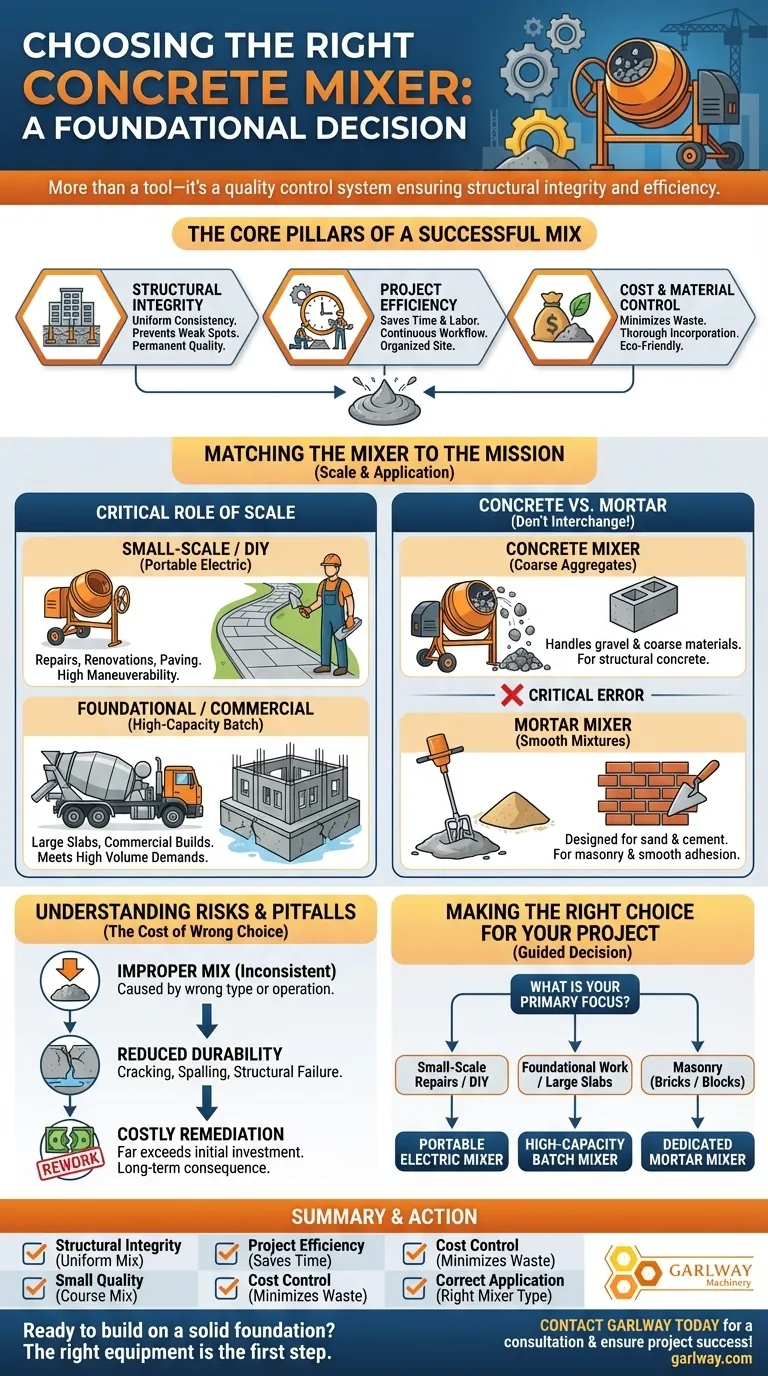
The impact of the right mixer extends beyond simple convenience. It fundamentally influences the three most critical aspects of any concrete-related work: structural quality, project efficiency, and financial control.
Ensuring Structural Integrity
A proper mix ensures that cement, water, and aggregates are homogeneously distributed. This uniform consistency is non-negotiable for achieving the concrete's designed compressive strength.
Without it, you risk creating weak spots or voids within the structure. For foundations and slabs, which are difficult or impossible to modify after pouring, this initial quality is permanent.
Maximizing Project Efficiency
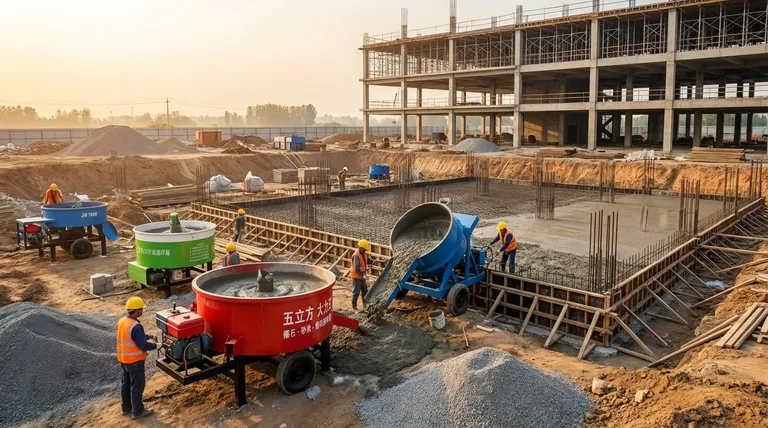
The right mixer dramatically reduces labor and saves time. Manual mixing is physically demanding and slow, while a correctly sized machine produces large volumes of consistent concrete on demand.
This allows for a continuous workflow, keeping masons and laborers productive and the project on schedule. On-site mixing also contributes to a neater, more organized work environment.
Preventing Material Waste
An appropriately chosen mixer ensures that all materials are thoroughly incorporated, minimizing the waste of expensive cement and aggregates.
This precise control over quantities and ratios not only saves money but also promotes more environmentally friendly construction practices by reducing the project's overall material footprint.
Matching the Mixer to the Mission
The term "concrete mixer" covers a range of equipment designed for different scales and materials. Selecting the wrong type is a common and costly error that directly compromises the quality of the work.
The Critical Role of Scale
The volume of concrete needed is the first consideration. A portable electric mixer is indispensable for small repairs, renovations, or DIY paving projects.
For foundational work, large slabs, or commercial builds, a larger-capacity batch mixer is required to meet the high volume demands without causing delays or inconsistent mixes between pours.
Concrete vs. Mortar: A Common Error
It is critical to understand that concrete mixers and mortar mixers are not interchangeable. Concrete mixers are built to handle coarse aggregates like gravel.
Mortar mixers, on the other hand, are designed for the smoother mixtures of sand, water, and cement used in masonry. Using the wrong machine will result in a poor-quality mix and potential damage to the equipment.
Understanding the Risks and Pitfalls
Choosing a mixer based on price or availability alone introduces significant risks. An improper mix is one of the most fundamental failures in construction and has long-term consequences.
The High Cost of an Improper Mix
An inconsistent mix leads directly to reduced structural durability. Weaknesses in the concrete may not be immediately apparent but can lead to cracking, spalling, and eventual structural failure over time.
The cost of remediating a bad concrete pour far exceeds the initial investment in the correct mixing equipment.
Operational Demands and Safety
Even the right mixer requires proper operation to be effective. The machine must be placed on stable, level ground to prevent tipping.
Operators must be trained on correct material ratios, loading procedures, and safety protocols. Regular maintenance is also essential to ensure the mixer performs consistently and safely throughout the project's duration.
Making the Right Choice for Your Project
Your decision should be guided by the specific demands of your job.
- If your primary focus is small-scale repairs or DIY projects: A portable electric mixer offers the best balance of maneuverability, cost, and capacity for small batches.
- If your primary focus is foundational work or large slabs: A high-capacity batch mixer is non-negotiable to ensure consistent quality and meet high volume demands without costly delays.
- If your primary focus is masonry work with bricks or blocks: You must use a dedicated mortar mixer to achieve the necessary smooth consistency for proper adhesion.
By treating the selection of your concrete mixer as a critical project milestone, you lay the groundwork for a successful and enduring build.
Summary Table:
| Key Factor | Why It Matters |
|---|---|
| Structural Integrity | Ensures a uniform mix for maximum compressive strength, preventing weak spots and failures. |
| Project Efficiency | Saves time and labor, enabling continuous workflow and keeping the project on schedule. |
| Cost Control | Minimizes material waste and prevents costly rework, protecting your budget. |
| Correct Application | Matching the mixer type (concrete vs. mortar) and size to the project scale is essential for quality results. |
Ready to build on a solid foundation? The right equipment is the first step to a successful project. GARLWAY specializes in construction machinery, offering a range of durable and efficient concrete mixers, winches, and batching plants designed for construction companies and contractors globally. Let us help you choose the perfect mixer for your specific needs. Contact GARLWAY today for a consultation and ensure your next project's success from the ground up!
Visual Guide
Related Products
- Portable Concrete Mixer Machine Equipment for Mixing Concrete
- Construction Products Concrete Plant Machine Mixing Concrete Mixer
- Portable Electric Concrete Mixer Machine for Cement Mixing
- JZC400 Mobile Small Concrete Mixer Cement Mixer Machine
- Hydraulic Concrete Mixer Machine Cement Mixing Equipment for Mixture Concrete
People Also Ask
- Why is it necessary to use a portable concrete mixer? Gain Total Control & Efficiency
- How much concrete can you pour with a portable mixer? Find the Perfect Fit for Your Project
- What types of projects are portable concrete mixers suitable for? Ideal for DIY & Small-Scale Construction
- How much does a portable concrete mixer hold? A Guide to Choosing the Right Capacity
- What types of portable concrete mixers exist? Find the Perfect Mixer for Your Project