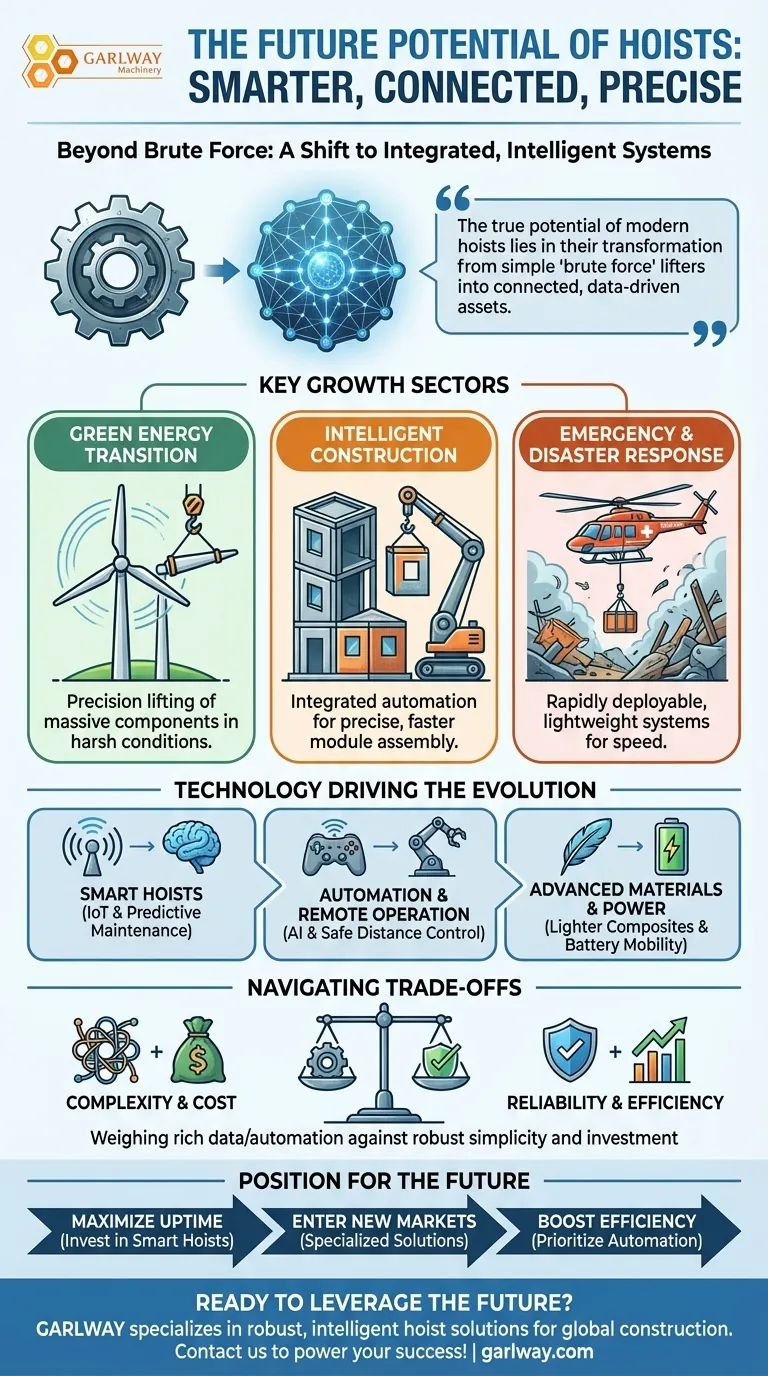
In short, the future of hoists is not just about lifting heavier loads. It's about lifting smarter, with greater precision, and in entirely new environments. The core evolution is a shift from standalone mechanical tools to integrated, intelligent systems that are becoming critical components in high-growth sectors like green energy, automated construction, and rapid-response operations.
The true potential of modern hoists lies in their transformation from simple "brute force" lifters into connected, data-driven assets. This evolution is enabling industries to tackle complex challenges with unprecedented safety and efficiency.
Beyond the Factory Floor: Key Growth Sectors
The traditional image of a hoist is tied to manufacturing and warehouses. While these remain core markets, the most significant future growth is happening in specialized, high-tech fields where generic lifting solutions are no longer sufficient.
Powering the Green Energy Transition
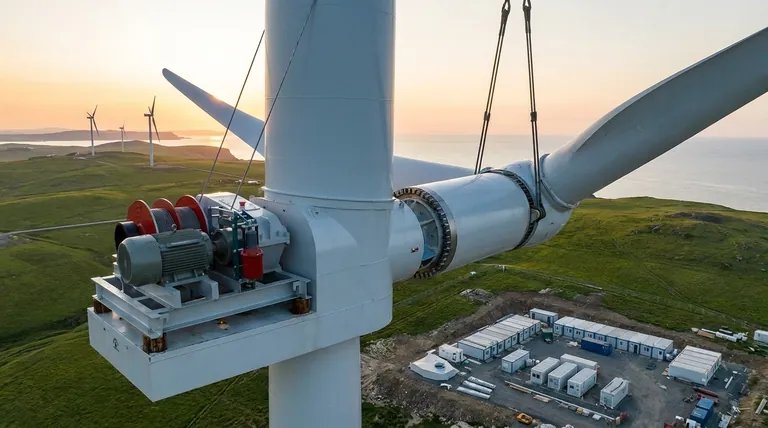
The global shift to renewable energy is heavily reliant on advanced hoist technology. Building and maintaining wind turbines involves lifting massive components—like nacelles and blades weighing many tons—to extreme heights with pinpoint accuracy, often in harsh weather conditions. This requires specialized, high-capacity hoists designed for resilience and precision.
Enabling Intelligent Construction
The construction industry is moving towards modular, off-site fabrication. This "intelligent construction" model depends on hoists to precisely place large, pre-built modules on-site. The future here involves hoists integrated with automation and robotics, allowing for faster, safer, and more accurate assembly with minimal human intervention.
Enhancing Emergency and Disaster Response
In disaster scenarios, speed and portability are paramount. The future potential includes the development of lightweight, rapidly deployable hoists. These systems can be used by emergency response teams for search and rescue operations, clearing heavy debris, and quickly establishing temporary infrastructure like bridges or shelters.
The Technology Driving the Evolution
This expansion into new industries is not happening by chance. It is being driven by fundamental advancements in the technology embedded within the hoists themselves.
The Rise of the Smart Hoist
Modern hoists are increasingly equipped with IoT (Internet of Things) sensors. These sensors monitor everything from load weight and stress to motor temperature and usage cycles. This data enables predictive maintenance, alerting operators to potential failures before they happen, which dramatically increases safety and minimizes downtime.
Automation and Remote Operation
Integration with AI and sophisticated software allows for fully automated lifting sequences. This is crucial for repetitive tasks where precision is key. Furthermore, remote operation capabilities allow a skilled technician to control a hoist from a safe distance, a vital feature when working in hazardous environments.
Advancements in Materials and Power
Innovation isn't just digital. The use of lighter, stronger composite materials makes hoists more portable and energy-efficient. Simultaneously, improvements in battery technology are untethering hoists from fixed power sources, making them viable for remote field applications like telecom tower maintenance or emergency response.
Understanding the Trade-offs
This technological leap forward is not without its challenges. Adopting next-generation hoist technology requires a clear understanding of the new complexities involved.
Complexity vs. Reliability
A "smart" hoist with numerous sensors and network connectivity has more potential points of failure than a simple mechanical one. The benefit of rich data and automation must be weighed against the need for robust, failsafe simplicity, especially in critical applications.
The High Cost of Innovation
Advanced, specialized hoists represent a significant capital investment compared to traditional models. The justification for this cost must be rooted in a clear return on investment, calculated through gains in efficiency, improved safety records, and access to new operational capabilities.
The Emerging Skill Gap
Operating and maintaining an IoT-enabled, automated hoist requires a different skill set than traditional rigging. Technicians will need training in software, network diagnostics, and data analysis, creating a potential skills gap that companies must proactively address.
How to Position for the Future
The right hoist strategy depends entirely on your primary goal. Use these points to guide your thinking.
- If your primary focus is maximizing uptime and safety: Invest in smart hoists with predictive maintenance and remote diagnostic features to prevent failures and reduce risk.
- If your primary focus is entering high-growth markets: Explore specialized hoist solutions designed for the unique demands of sectors like wind energy or modular construction.
- If your primary focus is boosting operational efficiency: Prioritize hoists with automation capabilities to streamline repetitive tasks and reduce manual labor costs.
Ultimately, embracing the technological evolution of the hoist is essential for staying competitive in a rapidly changing industrial landscape.
Summary Table:
| Future Potential | Key Technology | Key Industries |
|---|---|---|
| Smarter, Precise Lifting | IoT Sensors & Predictive Maintenance | Green Energy (Wind Turbines) |
| Automated Operations | AI & Remote Control | Intelligent Construction |
| Rapid Deployment | Lightweight Materials & Battery Power | Emergency & Disaster Response |
Ready to leverage the future of hoist technology for your projects? GARLWAY specializes in advanced construction machinery, offering robust and intelligent hoist solutions for construction companies and contractors globally. Our expertise in winches, concrete mixers, and batching plants ensures your operations are safer, more efficient, and ready for high-growth sectors. Contact us today to discuss how our solutions can power your success!
Visual Guide
Related Products
- Electric Hoist Winch Boat Anchor Windlass for Marine Applications
- Electric and Hydraulic Winch for Heavy Duty Applications
- Hydraulic Winding Engine Harbor Freight Winch
People Also Ask
- How does an electric anchor winch work? Power, Safety, and Reliable Operation Explained
- What are the advantages of installing an electric anchor winch on a boat? Boost Safety & Ease for Boaters
- What are the operational differences between electric hoists and winches? A Guide to Safe Lifting vs. Pulling
- What are the main benefits of a boat anchor winch? Boost Safety & Efficiency for Your Vessel
- How does a boat anchor winch work? A Guide to Reliable Anchor Handling