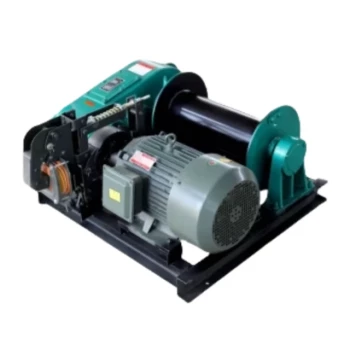
The two primary forms of winches are mechanical and electric. Mechanical winches, also commonly called manual winches, are operated by hand. Electric winches, the more common type for vehicles, are powered by a vehicle's electrical system.
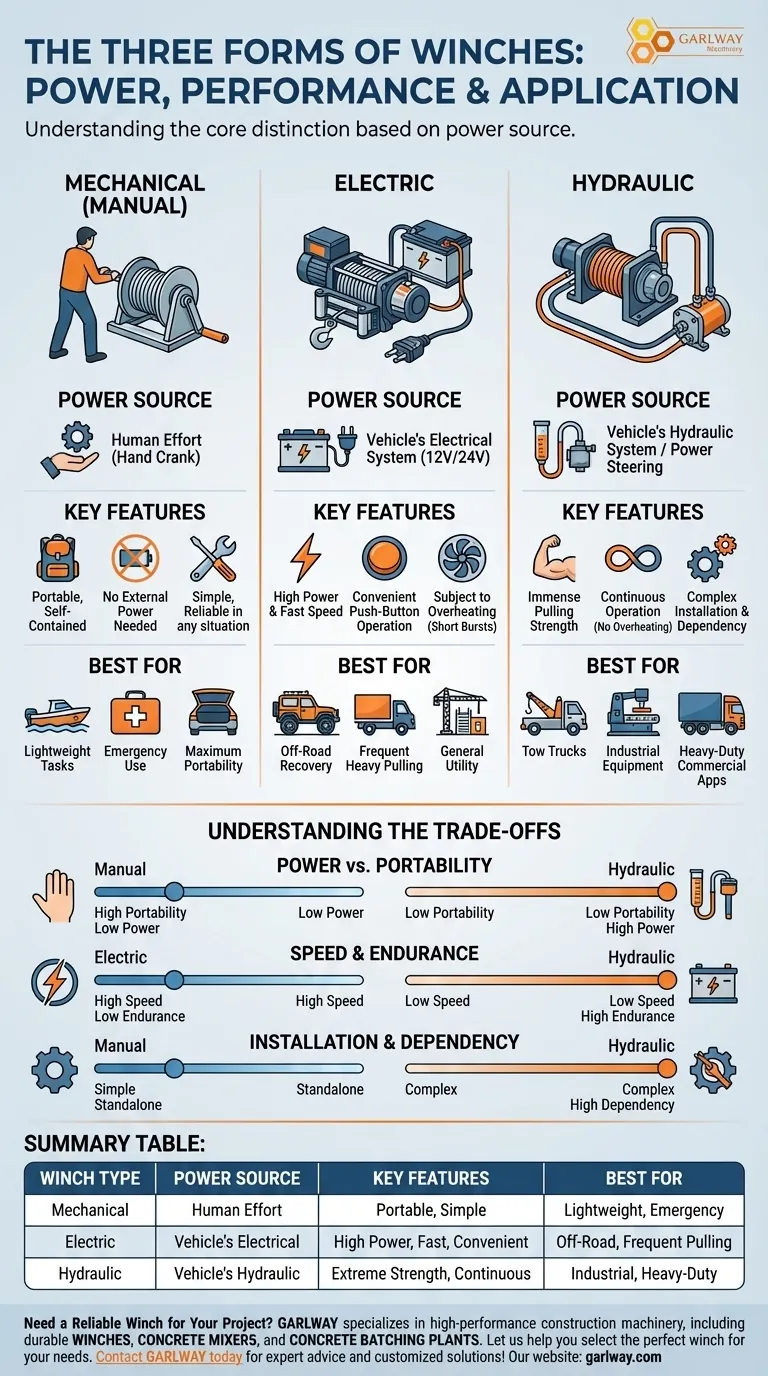
The fundamental difference between winch types lies in their power source. This distinction dictates their power, speed, portability, and ideal application, from simple manual tasks to heavy-duty industrial work.
The Core Distinction: How They Are Powered
The most important factor separating winch types is where they get the energy to pull. This single characteristic influences every other aspect of their performance and use.
Mechanical (Manual) Winches
A mechanical winch is powered by human effort, typically through a hand crank or lever. It uses a system of gears to multiply the force you apply, allowing you to move heavy objects.
These winches are completely self-contained. They require no external power source, making them highly portable and reliable in any situation.
Electric Winches
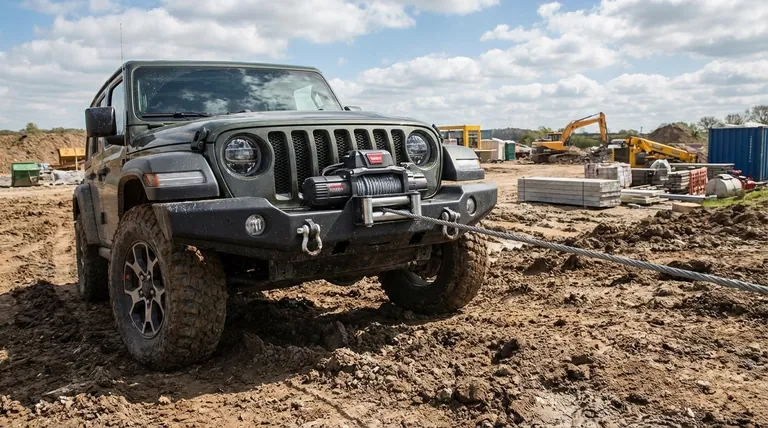
An electric winch connects directly to a vehicle's battery and uses an electric motor to turn the winch drum. They are the most common choice for off-road vehicles and utility trucks.
This design offers significant power and speed at the touch of a button, but it is dependent on the vehicle's electrical system and can drain the battery quickly under heavy load.
Expanding the View: The Third Major Type
While manual and electric are the most common categories, a third type exists for heavy-duty commercial and industrial applications.
Hydraulic Winches
Hydraulic winches tap into a vehicle's power steering pump or a dedicated hydraulic system for their power. They are known for their immense pulling strength and ability to run continuously without overheating.
Because they can handle extreme duty cycles, you will often find them on tow trucks, industrial equipment, and large commercial vehicles where constant, reliable power is non-negotiable.
Understanding the Trade-offs
Choosing a winch involves balancing power, portability, and complexity. No single type is best for every scenario.
Power vs. Portability
A manual winch offers ultimate portability but has the lowest pulling capacity, limited by your own strength.
Electric and hydraulic winches are permanently mounted to a vehicle, trading portability for immense pulling power that far exceeds any manual option.
Speed and Endurance
Electric winches are generally the fastest for short-duration pulls, making them ideal for vehicle recovery. However, they can overheat and must be used in short bursts with cooling periods.
Hydraulic winches may be slightly slower, but they can pull for long periods without the risk of overheating the motor, making them superior for continuous, demanding work.
Installation and Dependency
Manual winches require no installation. They are a simple, standalone tool.
Electric winches require a robust electrical connection to the vehicle's battery. Hydraulic winches demand a more complex installation, tapping into the vehicle's hydraulic systems. Both are dependent on the vehicle's engine being running to operate effectively.
Making the Right Choice for Your Application
Your final decision should be based entirely on the job you need to accomplish.
- If your primary focus is emergency use, lightweight tasks, or maximum portability: A manual winch is the most reliable and straightforward choice.
- If your primary focus is off-road vehicle recovery or frequent heavy pulling: An electric winch provides the best balance of power, speed, and convenience.
- If your primary focus is industrial work or continuous, heavy-duty operation: A hydraulic winch is the only option that provides the necessary power and endurance.
Ultimately, selecting the correct winch means matching the tool's power source to the demands of your specific task.
Summary Table:
| Winch Type | Power Source | Key Features | Best For |
|---|---|---|---|
| Mechanical (Manual) | Human effort (hand crank) | Portable, no external power, simple to use | Lightweight tasks, emergency use, maximum portability |
| Electric | Vehicle's electrical system | High power, fast speed, convenient operation | Off-road vehicle recovery, frequent heavy pulling |
| Hydraulic | Vehicle's hydraulic system | Extreme pulling strength, continuous operation | Industrial work, heavy-duty commercial applications |
Need a Reliable Winch for Your Project?
Choosing the right winch is critical for safety and efficiency in construction, vehicle recovery, or industrial tasks. At GARLWAY, we specialize in providing high-performance construction machinery, including durable winches, concrete mixers, and concrete batching plants tailored for construction companies and contractors worldwide.
Our winches are engineered for power, durability, and ease of use—ensuring you get the job done right, whether you're recovering a vehicle or handling heavy loads on-site.
Let us help you select the perfect winch for your needs. Contact GARLWAY today for expert advice and customized solutions!
Visual Guide
Related Products
- Small Electric Winch 120V and 240V for Compact Applications
- Warn Winch Windlass Boat Trailer Winch
- Electric and Hydraulic Winch for Heavy Duty Applications
- Quick Windlass Portable Winch for Truck and Boat Best Boat Winch
- Hydraulic Winding Engine Harbor Freight Winch
People Also Ask
- What makes electric winches suitable for off-road use? Key Features for Reliable Vehicle Recovery
- What are the common applications of electric winches? Power Your Lifting & Pulling Tasks
- What are the common uses of an electric winch? A Guide to Safe and Efficient Heavy Lifting
- What are the uses of electric winches in mining and tunneling? Enhance Safety and Efficiency Underground
- How do electric winches contribute to energy savings? Maximize Efficiency and Lower Costs