
At its core, the control system is the central nervous system of a concrete batching plant. It is the automated brain that manages the entire production process, from weighing raw materials to mixing and discharging the final product, ensuring every batch meets the precise specifications of the mix design.
The function of the control system goes beyond simple automation. Its true purpose is to guarantee unwavering consistency and precision, translating a theoretical concrete recipe into a high-quality physical product, batch after batch, while minimizing waste and human error.
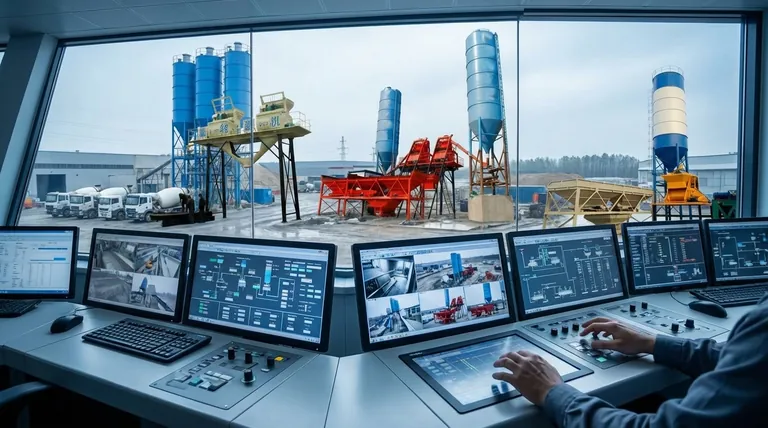
The Control System as the Plant's Brain
Think of the control system as the command center that orchestrates every other component of the plant. It ensures all parts work in perfect synchronization to achieve a single goal: producing concrete of a specified, repeatable quality.
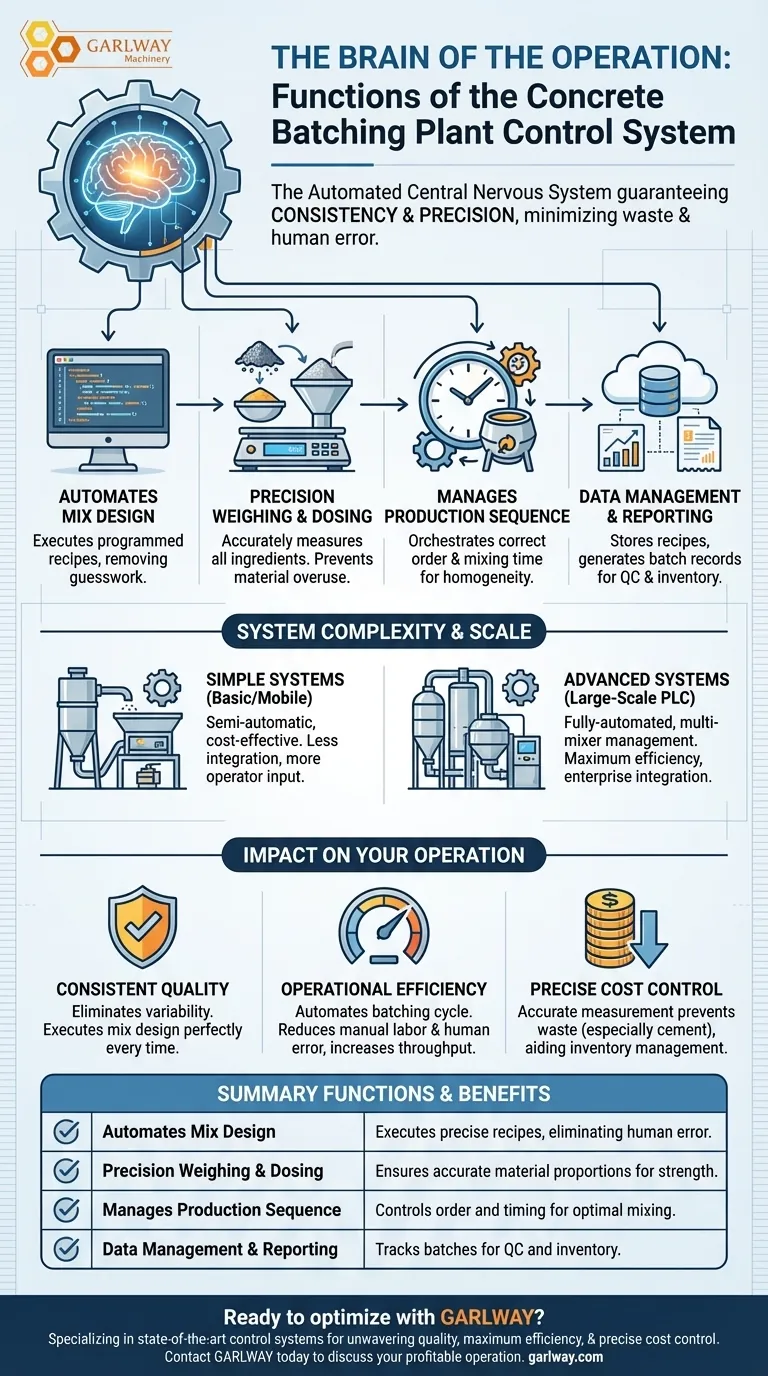
Automating the Mix Design
The process begins with a mix design or recipe. This recipe is programmed into the control system, which then takes over all subsequent operations.
This removes the guesswork and manual adjustments that can lead to inconsistencies between batches.
Precision Weighing and Dosing
The system's most critical task is the accurate measurement of all ingredients. It controls the gates and conveyors for aggregates and the valves and pumps for powders (cement, fly ash), water, and chemical admixtures.
This precision is fundamental to the concrete's final strength and durability and directly prevents the costly overuse of materials.
Managing the Production Sequence
The control system dictates the entire operational sequence. It ensures materials are added to the mixer in the correct order and for the correct duration.
It also controls the mixing time itself, a critical parameter for ensuring the homogeneity and workability of the concrete.
Data Management and Reporting
Modern control systems also serve as a data hub. They can store hundreds of mix recipes for quick recall.
Furthermore, they generate detailed reports for each batch, providing a crucial record for quality control, project documentation, and inventory management.
Understanding the Trade-offs: System Complexity
Not all control systems are created equal. Their complexity is directly tied to the scale of the operation and the specific requirements of the user.
Simple Systems for Basic Operations
Smaller or mobile batching plants often use simpler, semi-automatic control systems. These systems manage the core weighing and mixing functions but may require more operator intervention to start and stop various stages.
They are cost-effective and straightforward but offer less data integration and automation.
Advanced Systems for Large-Scale Production
Large commercial plants rely on highly complex, fully-automated systems, often based on Programmable Logic Controllers (PLCs).
These advanced systems can manage multiple mixers, intricate recipes with numerous admixtures, and integrate with enterprise software for scheduling and billing. They offer maximum efficiency and minimal operator input.
How This Impacts Your Operation
Understanding the control system's function is key to optimizing your plant's output. Its role directly influences the three pillars of concrete production: quality, efficiency, and cost.
- If your primary focus is consistent quality: The control system is your most important asset, eliminating variability by precisely executing the mix design every single time.
- If your primary focus is operational efficiency: It automates the entire batching cycle, reducing manual labor, minimizing the potential for human error, and increasing throughput.
- If your primary focus is cost control: Its precise measurement of materials, especially expensive cement and admixtures, prevents waste and provides accurate data for inventory management.
Ultimately, mastering your plant's control system is the key to mastering the quality and profitability of your entire operation.
Summary Table:
| Function | Key Benefit |
|---|---|
| Automates Mix Design | Executes precise recipes, eliminating human error. |
| Precision Weighing & Dosing | Ensures accurate material proportions for strength and durability. |
| Manages Production Sequence | Controls the order and timing of operations for optimal mixing. |
| Data Management & Reporting | Tracks batches for quality control and inventory management. |
Ready to optimize your concrete production with a reliable control system?
At GARLWAY, we specialize in construction machinery, including advanced concrete batching plants with state-of-the-art control systems. Our solutions are designed for construction companies and contractors globally who demand unwavering quality, maximum efficiency, and precise cost control.
We can help you:
- Achieve perfect batch consistency for superior project results.
- Boost your plant's throughput and reduce operational costs.
- Gain valuable production data to streamline your entire operation.
Contact GARLWAY today to discuss how our batching plants and control systems can be the brain of your profitable operation.
Visual Guide
Related Products
- HZS120 Ready Mix Concrete Batching Plant Commercial Mud Cement Mixer
- Commercial Electric Concrete Mixer Machine HZS 50 Small Batch Plant for Sale
- HZS35 Small Cement Concrete Mixing Batch Plant
- HZS90 Large Multiquip Concrete Mixers for Construction
- HZS180 Ready Mix Concrete Plant for Foundations with Sand and Cement
People Also Ask
- What is a ready mix concrete batching plant? The Engine of Modern Construction
- What is the name of the machine used in ready mix? Unpacking the Complete Concrete System
- What is the core component of a concrete batching plant? The Mixer Unit Defines Your Concrete Quality
- What are the types of concrete mixers used in batching plants? Choose the Right Mixer for Your Project
- What are the advantages and disadvantages of concrete batching plants? Maximize Quality & Efficiency





