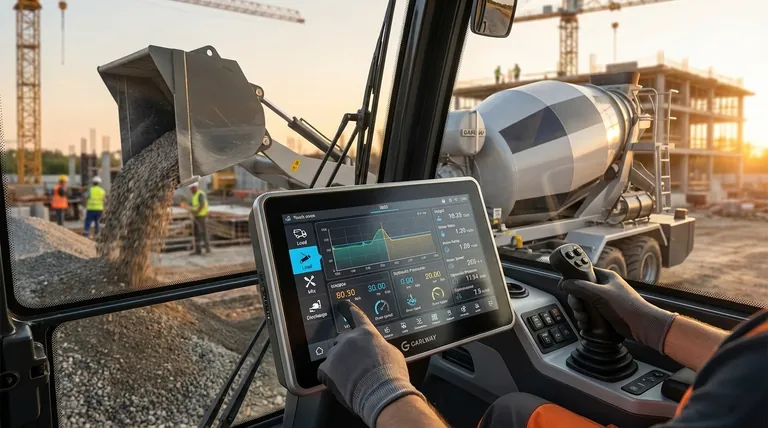
At the heart of a modern self-loading concrete mixer is a sophisticated electronic control system designed for precision and efficiency. These systems typically feature a central console, often with a touch-screen interface, that allows a single operator to manage every stage of the process—from loading aggregates and water to mixing and final discharge. Key features include automated weighing systems, real-time sensors for monitoring drum speed and material consistency, and integrated controls for all hydraulic functions.
The core purpose of a modern control system is to transform the mixer into a small, mobile batching plant. It achieves this by automating the most critical variables—material measurement and mixing consistency—to reduce labor costs, minimize waste, and guarantee a higher quality end product.
The Control System as the Central Nervous System
Think of the electronic control system as the brain of the machine. It coordinates the actions of the hydraulic system, loading mechanisms, and mixing drum to ensure a seamless and repeatable workflow.
The Operator Interface: Command Central
The operator manages all functions from the safety and comfort of the cabin. Modern interfaces provide intuitive access to every critical operation.
This includes direct control over the loading arm, mixing bucket, drum rotation, and discharge chute, centralizing what would otherwise be a multi-person job.
Automated Weighing and Dosing
This is arguably the most critical feature for ensuring concrete quality. The system integrates with an electronic weighing system to measure materials in real-time as they are loaded into the bucket.
The control panel displays these weights, allowing the operator to achieve precise and consistent mix proportions for every batch. The water filling system is also managed electronically, ensuring an exact water-to-cement ratio.
Real-Time Monitoring and Feedback
Automated sensors provide a constant stream of data to the control unit. This feedback loop is essential for maintaining optimal performance.
Operators can monitor key parameters like hydraulic pressure, drum speed, and overall material consistency, making real-time adjustments to ensure the mix meets specifications.
How the System Streamlines the Workflow
The control system integrates each step of the concrete production process, turning a complex sequence into a manageable, operator-led routine.
Loading and Measurement
Using the console, the operator guides the hydraulic loading arm to scoop materials. The integrated weighing system provides immediate feedback, ensuring the correct amount of aggregate is added before it enters the drum.
Mixing and Transport
Once loaded, the system controls the drum's rotation speed for thorough mixing. This continuous, controlled mixing can also be maintained while the vehicle is in transit, ensuring the concrete arrives ready for immediate use.
Precision Discharging
From the cabin, the operator can control the 270-degree rotation of the mixing drum and the adjustable discharge chute. This allows for precise, multi-directional unloading of concrete with minimal need for additional labor or machinery.
Understanding the Operational Realities
While highly advanced, these systems are tools that depend on proper operation and maintenance to deliver their full value.
The Need for Operator Training
The sophistication of the control system requires a trained operator. To maximize efficiency and safety, the operator must be familiar with the interface, all machine functions, and the manufacturer's emergency shutdown procedures.
Reliance on Sensors and Electronics
The system's accuracy is entirely dependent on its sensors and electronic components. Regular maintenance and inspections are not optional.
Checking for worn hydraulic hoses, loose connections, or damaged sensors is critical to prevent inaccurate batches and costly downtime.
Not a Replacement for Good Judgment
An automated system ensures consistency, but it does not replace the need for operator knowledge. The operator is still responsible for making key decisions based on site conditions and the specific requirements of the concrete mix.
Making the Right Choice for Your Goal
The right control system depends on your project's primary objective.
- If your primary focus is maximizing efficiency and reducing labor: Look for a system with fully automated weighing and water dosing to minimize manual input and the potential for human error.
- If your primary focus is consistent, high-quality concrete output: Prioritize systems with real-time feedback sensors for material consistency and precise, adjustable parameter controls.
- If your primary focus is versatility on complex job sites: Ensure the control system provides intuitive management of the 270-degree drum rotation and discharge chute for precise placement in tight spaces.
Ultimately, an advanced control system elevates the self-loading mixer from a simple piece of equipment to a highly efficient and accurate mobile production asset.
Summary Table:
| Feature | Key Benefit |
|---|---|
| Touch-Screen Console | Centralized, intuitive control for a single operator |
| Automated Weighing System | Precise material dosing for consistent mix quality |
| Real-Time Sensor Monitoring | Continuous feedback on drum speed and mix consistency |
| Integrated Hydraulic Controls | Seamless operation of loading, mixing, and discharging |
| 270-Degree Discharge Control | Precise concrete placement from the cabin |
Ready to transform your concrete production with a state-of-the-art self-loading mixer?
GARLWAY specializes in engineering high-performance construction machinery, including advanced self-loading concrete mixers. Our machines are designed for construction companies and contractors who demand precision, efficiency, and reduced labor costs on every project.
We can help you achieve:
- Consistent, high-quality concrete with automated batching and mixing.
- Significant labor savings through intuitive, single-operator control.
- Enhanced on-site versatility with precise placement capabilities.
Contact GARLWAY today to discuss your project needs and discover the right solution for your business.
Visual Guide

Related Products
- Skid Steer Self Loading Concrete Mixers for Construction
- Belle Mixer Drum Self Loading Mortar Mixers JS3000
- Portable Cement Mixer with Lift Concrete Machine
- Portable Concrete Mixer Machine Equipment for Mixing Concrete
- JW1000 Mobile Cement Mixer Concrete Mixer Truck and Batching Plant
People Also Ask
- How does the control system improve production efficiency in a self loading concrete mixer? Automate Mixing for Speed & Quality
- What is the purpose of keeping the drum rotating during transportation in a self loading concrete mixer? Ensure Quality & Consistency
- How does the weighing process work in a self loading concrete mixer? Achieve Precise, On-Site Concrete Batching
- What components are involved in the loading process of a self loading concrete mixer? A Guide to the Key Systems
- How should materials be loaded into a self-loading concrete mixer? Master the Step-by-Step Process