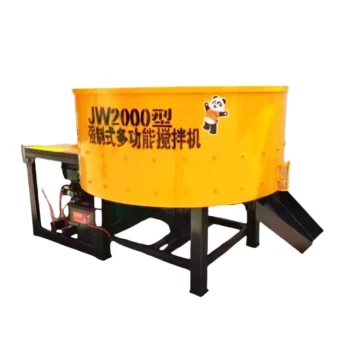
The primary environmental benefits of a mobile concrete mixer stem from its ability to eliminate waste and reduce carbon emissions. By producing the exact amount of concrete required directly at the job site, these mixers prevent the over-ordering and spoilage common with traditional ready-mix deliveries, thereby conserving raw materials and lowering the carbon footprint associated with both production and transportation.
At its core, a mobile concrete mixer fundamentally changes concrete production from a wasteful, centralized model to a precise, on-demand process. This shift to on-site manufacturing is the source of its significant environmental and operational advantages.

How On-Site Mixing Reduces Environmental Impact
The environmental case for mobile mixers is built on a foundation of efficiency. Unlike a central batch plant that sends out a fixed-volume truck, a mobile mixer is a self-contained plant on wheels, giving you complete control over the production process.
Slashing Material Waste to Zero
Traditional ready-mix concrete often results in significant waste. If a project requires 7 cubic yards, you might order 7.5 or 8 to be safe, with the excess being costly to dispose of.
A mobile mixer solves this by producing the exact volume needed. You mix what you need, when you need it, completely eliminating the problem of overages and the associated disposal of hardened concrete.
Preventing Spoilage and "Hot Loads"
Ready-mix concrete has a limited lifespan once water is added. Delays from traffic or on-site issues can result in a "hot load"—concrete that is no longer usable and must be rejected.
Mobile mixers blend materials on-site, meaning the concrete is always fresh. This entirely removes the risk of spoilage, ensuring no batch is ever wasted due to timing issues.
Lowering Transportation Emissions
Mobile mixers significantly cut down on vehicle miles. Instead of multiple trips from a distant batch plant for various small pours or top-offs, a single unit can be stocked with raw materials to service a job for an entire day or even multiple small jobs in one area.
This reduction in truck traffic directly translates to lower fuel consumption and a smaller carbon footprint for the project.
Conserving Raw Resources
The precision of on-site mixing has a direct impact on resource conservation. By preventing waste, you inherently conserve the raw ingredients of concrete: cement, aggregates, and water.
This reduces the environmental burden associated with quarrying aggregates and the energy-intensive process of manufacturing cement.
Understanding the Trade-offs
While highly beneficial, mobile mixers are not a universal solution. Understanding their limitations is key to using them effectively.
Not Designed for High-Volume Pours
For massive, continuous pours like a large building foundation, the output of a central batch plant and a fleet of ready-mix trucks is still more efficient. Mobile mixers excel at small to medium-sized jobs, repair work, and remote projects.
Requires On-Site Material Storage
The convenience of on-site production comes with a trade-off: you must manage the storage of raw materials. This requires having adequate space and logistics planned for sand, gravel, cement, and a water source at the job site.
Quality Control Is Operator-Dependent
A key advantage is the potential for superior quality control, as you can adjust the mix design on the fly. However, this places the responsibility squarely on the operator. Unlike a computer-controlled batch plant, the final quality depends on the operator's skill in managing the mix.
How to Apply This to Your Project
Choosing the right concrete solution depends entirely on your project's primary goals.
- If your primary focus is sustainability: The mobile mixer's ability to eliminate material waste and reduce transport emissions makes it an ideal choice for meeting green building standards.
- If your primary focus is cost-efficiency on smaller jobs: The key benefit is avoiding short-load fees and paying only for the exact amount of concrete you use, eliminating expensive overage and disposal costs.
- If your primary focus is logistical flexibility: The on-demand nature of a mobile mixer is perfect for remote sites, projects with uncertain schedules, or jobs requiring multiple, small, custom pours over time.
By aligning your equipment with your project's specific needs, you can achieve a more efficient, cost-effective, and environmentally responsible outcome.
Summary Table:
| Environmental Benefit | Key Impact |
|---|---|
| Zero Material Waste | Produces exact amount needed, eliminating over-ordering and disposal. |
| Reduced Emissions | Cuts truck trips and fuel use by mixing on-site. |
| Resource Conservation | Saves cement, aggregates, and water by preventing spoilage. |
| Fresh Concrete On-Demand | Avoids "hot loads" and ensures usable batches every time. |
Ready to build greener and smarter? GARLWAY specializes in construction machinery, offering robust mobile concrete mixers designed for construction companies and contractors who value efficiency and sustainability. Let us help you reduce waste, cut costs, and lower your project's carbon footprint. Contact our experts today to find the perfect mixer for your next job!
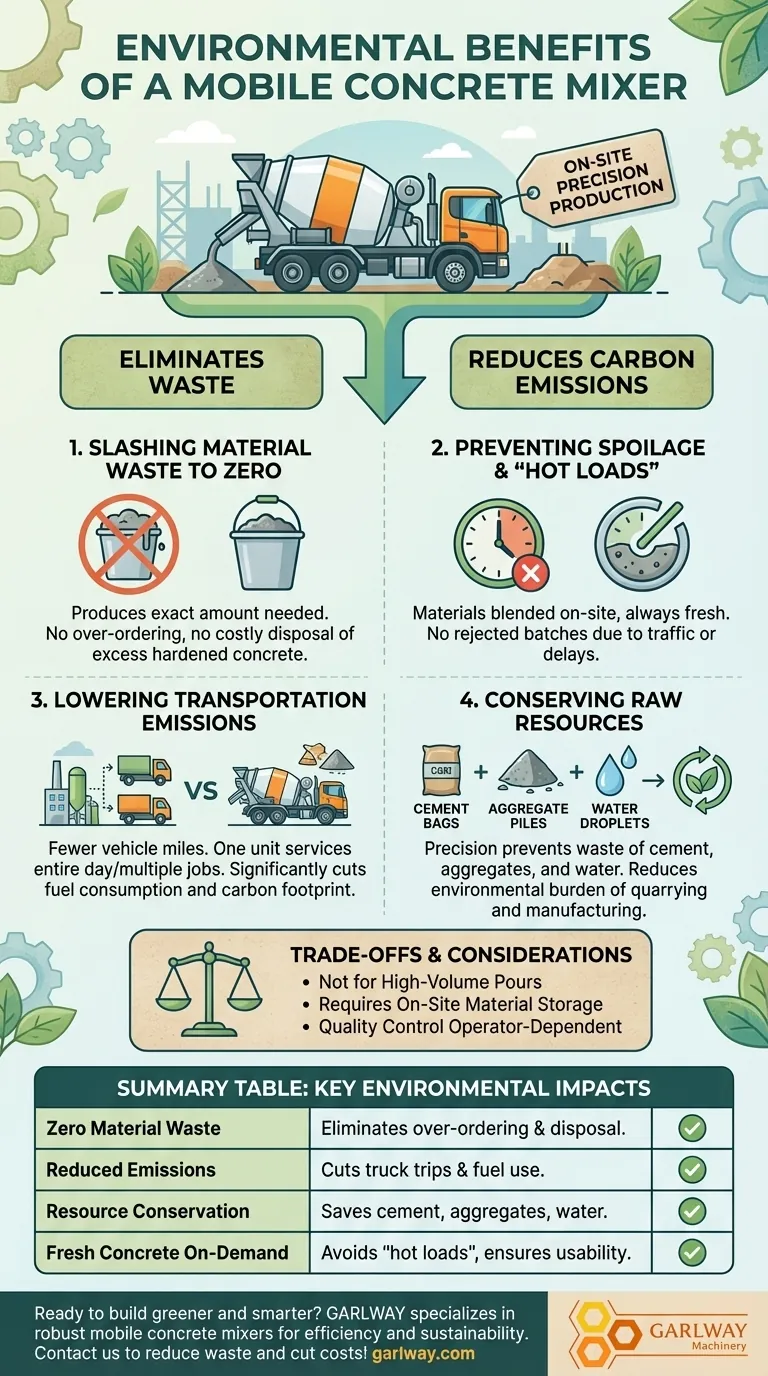
Visual Guide
Related Products
- JZC400 Mobile Small Concrete Mixer Cement Mixer Machine
- JW1000 Mobile Cement Mixer Concrete Mixer Truck and Batching Plant
- Portable Concrete Mixer Machine Equipment for Mixing Concrete
- Ready Mixer Machine for Construction Ready Mix Machinery
- Portable Ready Mix Concrete Mixer Equipment
People Also Ask
- What are the different names for mobile concrete mixing equipment? Understand Volumetric vs. On-Site Mixers
- In what way do mobile mixers enhance quality control? Achieve Superior Concrete Quality On-Site
- What is a mobile mixer? The Ultimate Guide to On-Site Concrete Production
- How do mobile mixers improve labor efficiency? Automate Concrete Production & Boost Productivity
- What flexibility do mobile mixers offer in terms of material mixing? Unlock On-Demand Concrete Production