Ultimately, a cement mixer's reliability stems from a deliberate engineering focus on three core elements: the quality of its materials, the strength of its motor, and the inherent simplicity of its design. These factors work together to create a machine that can withstand the abrasive, high-stress environment of mixing concrete while remaining easy to maintain and repair.
A truly reliable cement mixer is not just built to be strong, but engineered to be simple. Its longevity comes from a robust frame and powerful motor that minimize operational strain, combined with a straightforward design that eliminates common points of failure and simplifies upkeep.
The Pillars of Durability and Reliability
The long-term performance of any cement mixer is built on a foundation of specific design choices. Understanding these choices is key to identifying a machine that will not fail under pressure.
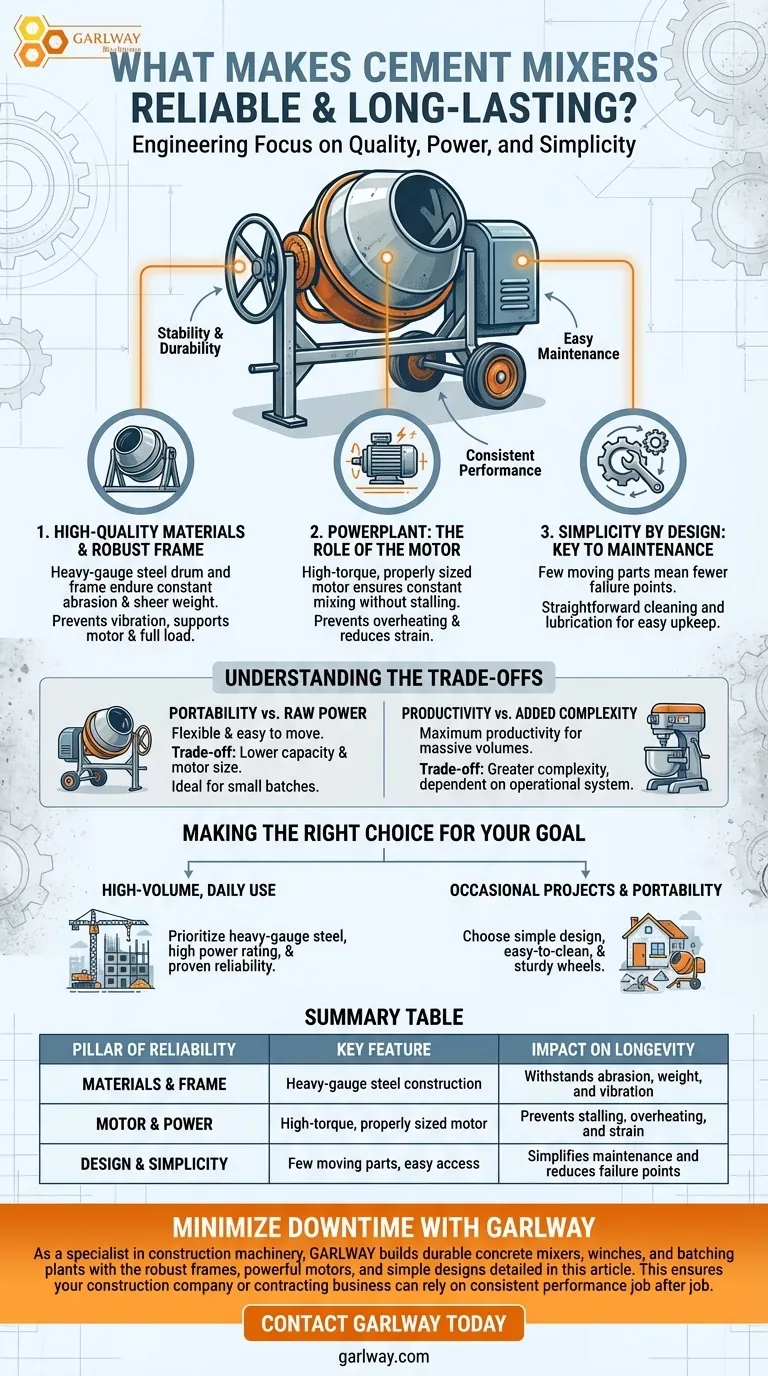
High-Quality Materials and a Robust Frame
The most fundamental element is the material used for construction. The mixing drum and frame must endure constant abrasion from sand and gravel, as well as the sheer weight of the concrete.
A robust frame is non-negotiable. It provides stability, prevents excessive vibration that can weaken joints and components over time, and supports the weight of the motor and a full drum without flexing.
The Powerplant: The Role of the Motor
A powerful, well-matched motor is critical for ensuring constant and uninterrupted mixing. Its primary role is to provide enough torque to turn a heavy, dense load without stalling.
An underpowered motor will constantly struggle, leading to overheating and premature failure. A properly sized motor operates well within its limits, reducing strain and significantly extending its operational life.
Simplicity by Design: The Key to Maintenance
The most reliable machines are often the simplest. Cement mixers are a prime example of this principle.
Their design involves few moving parts, which directly translates to fewer potential points of failure. This simplicity also makes routine maintenance, such as cleaning and lubrication, straightforward, ensuring the machine can be easily kept in optimal condition.
Understanding the Trade-offs
While the core principles of reliability are universal, different types of mixers prioritize different features, leading to important trade-offs you must consider.
Portability vs. Raw Power
Smaller, portable mixers are designed for flexibility and ease of use on a construction site. Their wheelbarrow-style bases make them easy to move and position.
However, this portability comes at the cost of capacity and often, motor size. They are highly reliable for their intended purpose—small batches—but would be quickly overwhelmed and worn out by the demands of high-volume commercial work.
Productivity vs. Added Complexity
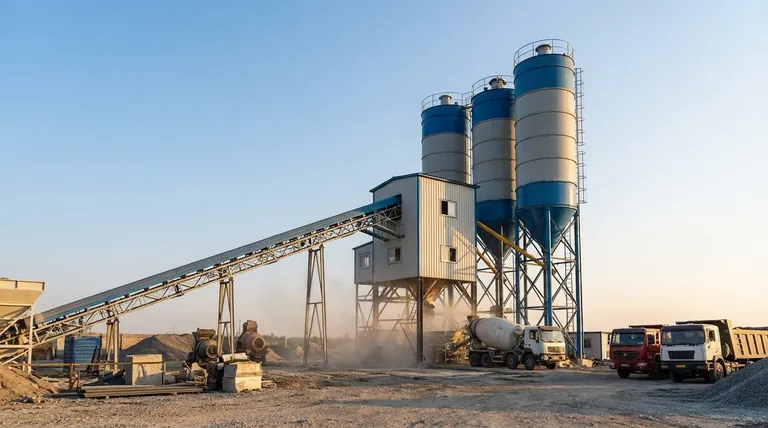
Large-scale commercial mixers are built for maximum productivity. They can handle massive volumes and are central to efficient project timelines.
This focus on productivity introduces greater complexity. Their performance is tied to factors like production organization, technical management, and the logistics of raw material delivery. While powerful, their reliability is dependent on a much larger operational system.
Making the Right Choice for Your Goal
Selecting a dependable mixer requires matching its design strengths to your specific needs.
- If your primary focus is high-volume, daily use: Prioritize a heavy-gauge steel frame, a motor with a high power rating, and proven brand reliability for long-term support.
- If your primary focus is occasional projects and portability: Choose a model with a simple, easy-to-clean design and sturdy wheels, as its long-term value will depend on its readiness for the next job.
A reliable mixer is an investment in minimizing downtime and ensuring consistent results on the job site.
Summary Table:
| Pillar of Reliability | Key Feature | Impact on Longevity |
|---|---|---|
| Materials & Frame | Heavy-gauge steel construction | Withstands abrasion, weight, and vibration |
| Motor & Power | High-torque, properly sized motor | Prevents stalling, overheating, and strain |
| Design & Simplicity | Few moving parts, easy access | Simplifies maintenance and reduces failure points |
Minimize downtime and maximize productivity with a GARLWAY cement mixer engineered for reliability.
As a specialist in construction machinery, GARLWAY builds durable concrete mixers, winches, and batching plants with the robust frames, powerful motors, and simple designs detailed in this article. This ensures your construction company or contracting business can rely on consistent performance job after job.
Contact GARLWAY today to discuss the right mixer for your project's volume and portability needs.
Visual Guide
Related Products
- HZS25 Best Cement Mixer for Quick Mix Concrete at Bunnings
- JDC350 Small Cement Concrete Mortar Mixer
- Concrete Cement Mixer Machine Drum Mixer for Construction
- JW1000 Mobile Cement Mixer Concrete Mixer Truck and Batching Plant
- JZC500 Large Cement Mixer Machine Price for Concrete Mix
People Also Ask
- How do cement mixers enhance safety on construction sites? Reduce Strain, Hazards, and Accidents
- What are the main components of a cement mixer? A Guide to Core Parts & Functions
- What are some tips for using a cement mixer effectively? Maximize Your Mixer's Performance & Concrete Quality
- How does cleaning a cement mixer after use benefit its performance? Maximize Lifespan and Mix Quality
- Why is it important to clean the cement mixer after use? Prevent Costly Damage and Ensure Quality Concrete