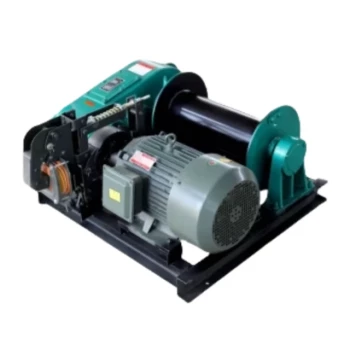
For modern off-road vehicles, the two primary types of winches are electric winches, which are powered by the vehicle's electrical system, and hydraulic winches, which run off the power steering pump. While manual winches also exist, electric and hydraulic models represent the vast majority of vehicle-mounted recovery systems used today.
The core decision between an electric and a hydraulic winch is a trade-off. You must choose between the straightforward installation and operational flexibility of an electric winch versus the immense, continuous pulling power and durability of a hydraulic system.
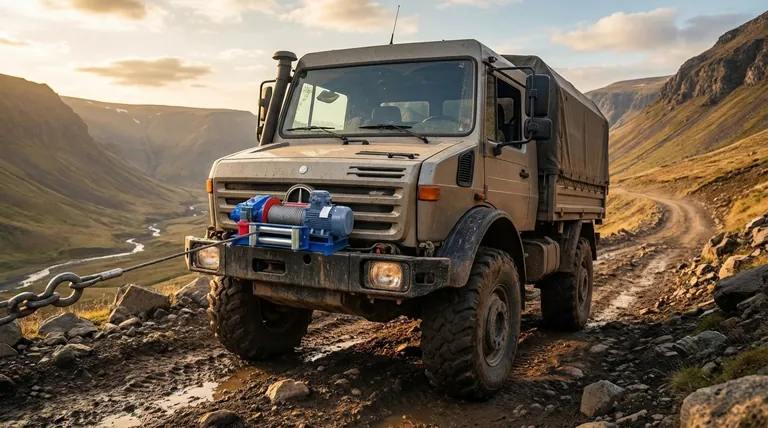
Why a Winch is a Critical Recovery Tool
Beyond Driving Skill
Even the most experienced driver in the most capable vehicle can get stuck. An unexpected mud hole, a shifted rock on a trail, or a simple miscalculation can leave you stranded miles from help.
The Self-Recovery Guarantee
A winch is your most reliable tool for self-recovery. It provides the controlled, immense pulling force needed to pull your vehicle—or another—out of a difficult situation, turning a potentially trip-ending disaster into a manageable delay.
Understanding Electric Winches
How They Work
An electric winch is powered directly by your vehicle's 12-volt electrical system. It connects to the battery and draws a significant amount of amperage when under load, relying on the alternator to replenish the battery during operation.
The Primary Advantage: Simplicity and Versatility
Electric winches are the most common type for a reason. They are relatively easy to install, widely available in various sizes and price points, and can function even if your vehicle's engine has stalled, as long as the battery has a charge.
The Key Limitation: Duty Cycle and Heat
The massive electrical draw generates significant heat in the winch's motor. This means electric winches have a limited duty cycle—they can only pull hard for a short period before needing to cool down. Continuous, heavy pulls can drain a battery quickly and potentially damage the winch motor.
Understanding Hydraulic Winches
How They Work
A hydraulic winch taps into your vehicle's power steering system. It uses the hydraulic pressure generated by the power steering pump to drive the winch motor, offering a fundamentally different power source.
The Primary Advantage: Unrelenting Power
Because it is powered by the engine's power steering pump, a hydraulic winch can pull continuously without overheating. As long as your engine is running, the winch can pull. This makes it ideal for heavy-duty, commercial, or prolonged recovery operations.
The Key Limitation: Engine Dependency
The hydraulic winch's greatest strength is also its main weakness. It requires the engine to be running to operate. If your engine dies, is flooded, or cannot be started, the hydraulic winch is completely inoperable. Installation is also more complex, as it involves tapping into hydraulic lines.
The Trade-offs: Electric vs. Hydraulic
Installation and Cost
Electric winches are the clear winner here. They are far simpler and less expensive to install, typically only requiring electrical wiring to the battery. Hydraulic winches require professional installation to correctly tap into power steering lines.
Power and Duty Cycle
For sheer endurance, hydraulic winches are superior. They are built for long, hard pulls without rest. Electric winches are designed for shorter, intermittent pulls and must be allowed to cool between efforts on a difficult recovery.
Failure Scenarios
This is the most critical consideration. If your vehicle stalls in deep water, an electric winch can still operate off battery power to pull you out. In the same situation, a hydraulic winch would be useless because the engine is not running.
What About Manual Winches?
Manual winches, often called hand winches or come-alongs, are operated entirely by hand-cranking a lever. While they are not a practical primary, vehicle-mounted solution, they are an excellent, lightweight, and reliable backup tool to have in any recovery kit.
Making the Right Choice for Your Goal
Ultimately, the best winch is the one that matches your specific needs and likely recovery scenarios.
- If your primary focus is recreational off-roading, overlanding, or general preparedness: An electric winch is the logical and most popular choice for its excellent balance of performance, versatility, and ease of installation.
- If your primary focus is commercial recovery, operating a heavy vehicle, or scenarios requiring long, sustained pulls: A hydraulic winch provides the uncompromising power and continuous duty cycle essential for professional-grade work.
- If your primary focus is a simple, non-vehicle-dependent backup: A manual hand winch is a valuable and inexpensive addition to your gear, providing a recovery option when all else fails.
Choosing the correct type of winch for your application is the first step toward confident and safe travel in challenging terrain.
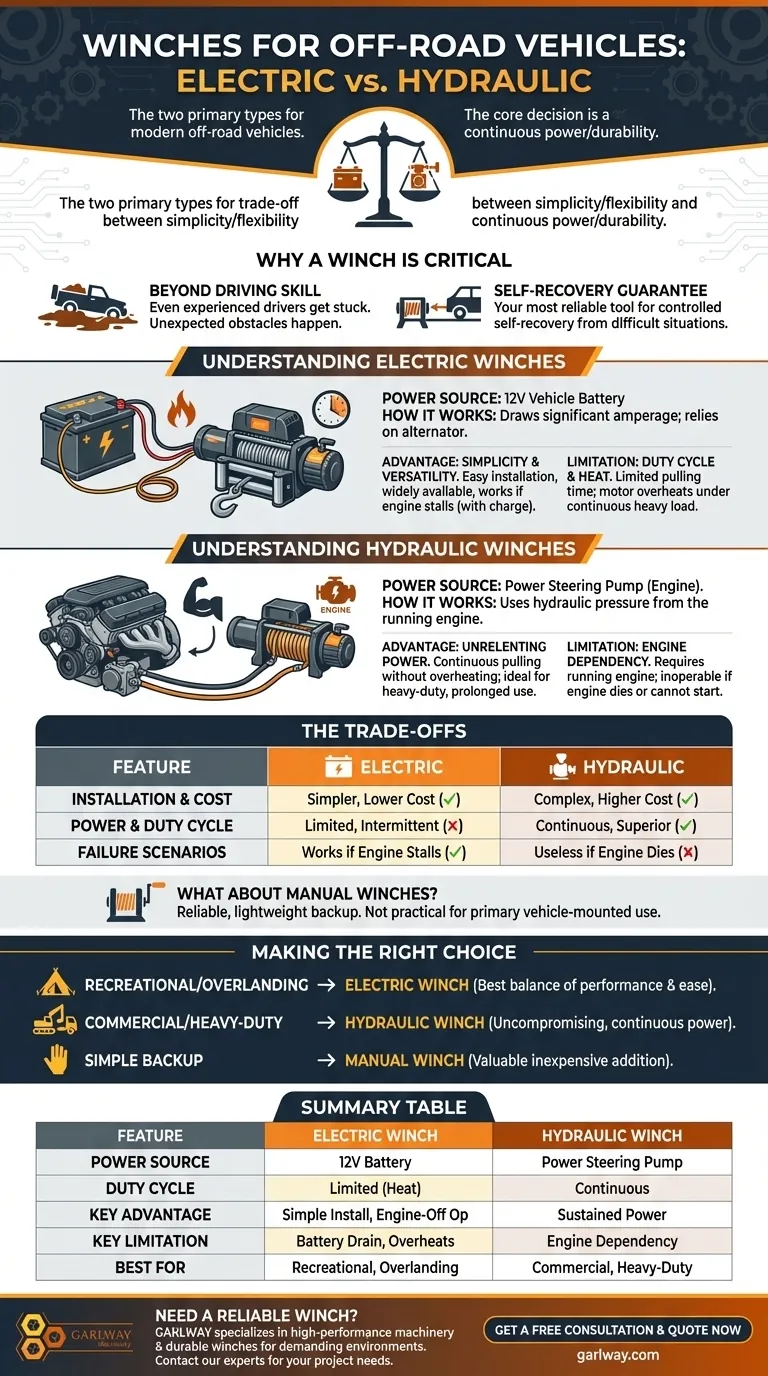
Summary Table:
| Feature | Electric Winch | Hydraulic Winch |
|---|---|---|
| Power Source | Vehicle's 12V Battery | Power Steering Pump (Engine) |
| Duty Cycle | Limited; requires cool-down | Continuous; no overheating |
| Key Advantage | Simple installation, works if engine stalls | Immense, sustained pulling power |
| Key Limitation | Can drain battery, motor heat | Requires engine running to operate |
| Best For | Recreational off-roading, overlanding | Commercial/heavy-duty recovery, sustained pulls |
Need a Reliable Winch for Your Off-Road or Construction Projects?
Choosing the right winch is critical for safe and effective vehicle recovery. GARLWAY specializes in high-performance construction machinery, including durable winches, concrete mixers, and batching plants designed for demanding environments.
Whether you're a construction company needing robust equipment or a contractor requiring dependable off-road recovery tools, we provide solutions built for power and endurance.
Contact our experts today to discuss your specific needs and find the perfect winch or machinery solution for your projects.
Get a Free Consultation & Quote Now
Visual Guide
Related Products
- Portable Small Trailer Winch
- Warn Winch Windlass Boat Trailer Winch
- Quick Windlass Portable Winch for Truck and Boat Best Boat Winch
- Best 18000 Pound Drum Anchor Trailer Winch
- Electric and Hydraulic Winch for Heavy Duty Applications
People Also Ask
- What features were incorporated into the upgraded portable winch system? Boost Your Recovery Power & Safety
- What are some uses mentioned for portable winches beyond vehicle recovery? Essential Versatility for Property & Work
- How could the twisting issue with a portable winch be mitigated? Achieve Safe, Centered Pulls with Proper Rigging
- What is the significance of trailer winches in the boating industry? Ensure Safe and Efficient Boat Recovery
- What should be considered when mounting a winch on a trailer? Ensure a Safe, Aligned Installation