The most critical maintenance steps for a boat trailer winch involve a disciplined routine of rinsing, drying, and lubricating its key components. Due to constant exposure to water, particularly corrosive saltwater, a winch requires proactive care focused on preventing rust on its gears and body while ensuring the integrity of its strap or cable.
Your boat trailer winch operates in one of the harshest environments possible. Therefore, maintenance isn't about fixing what's broken; it's a constant, preventative strategy to ensure safety and reliability every time you're at the ramp.
The Core Maintenance Routine
A consistent routine is the best defense against the damaging effects of the marine environment. These steps should become second nature after every trip.
Rinse After Every Use
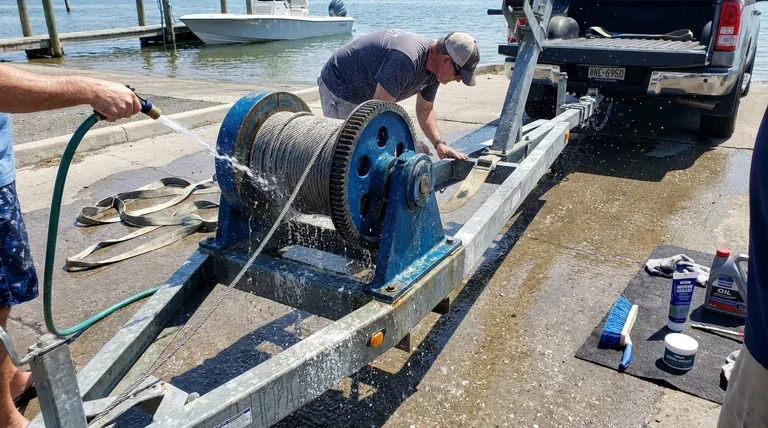
The single most destructive element is salt. After every use in saltwater, you must thoroughly rinse the entire winch with fresh water.
This simple act removes corrosive salt deposits that can quickly seize gears, weaken metal, and degrade the winch strap.
Inspect and Dry the Strap
A wet winch strap can develop mold and mildew, which will rot the fibers and severely compromise its strength.
After rinsing, pull the strap all the way out and allow it to air dry completely before spooling it back onto the winch. This is also the perfect time to inspect it for any frays, cuts, or sun damage.
Lubricate Moving Parts
Smooth operation depends on proper lubrication. Regularly apply a quality marine-grade grease to the winch gears, especially if they are ungalvanized.
Also, apply a light waterproof oil to the handle shafts and other moving parts to ensure they operate freely and do not seize up.
Check for Corrosion and Rust
Make a habit of visually inspecting the winch body, handle, and mounting bolts for any signs of rust or corrosion.
Catching these issues early allows you to clean the area and apply a protective coating before significant damage occurs.
Common Pitfalls to Avoid
Understanding what not to do is as important as knowing the proper maintenance steps. Many winch failures are a result of operational errors, not just environmental wear.
Mistaking a Winch for a Tie-Down
A winch is designed for one job: pulling the boat onto the trailer. It is not designed to secure the boat for transport.
Always use separate, heavy-duty transom and bow tie-down straps to secure the boat to the trailer for the road. Relying on the winch can lead to strap failure and a catastrophic accident.
Exceeding the Weight Rating
For a significant safety margin, your boat's total weight should not exceed 75% of the winch's rated capacity.
Overloading a winch puts immense strain on its gears and strap, accelerating wear and dramatically increasing the risk of failure at a critical moment.
Neglecting Vehicle and Trailer Security
Safe winching requires a stable foundation. Before operating the winch, ensure the tow vehicle's parking brake is set and the trailer wheels are secured with wheel chocks.
This prevents the trailer and vehicle from rolling on a slippery or sloped boat ramp, which is a common cause of accidents.
How to Apply This to Your Routine
Your specific maintenance frequency will depend on your environment and usage, but the principles remain the same.
- If you frequently launch in saltwater: Your routine is non-negotiable. You must rinse, dry, and inspect the winch after every single trip.
- If you primarily launch in freshwater: You have more leeway, but a monthly inspection and lubrication of gears and moving parts is a critical baseline for preventing problems.
- If your winch is already stiff or showing rust: It's time for a more thorough service. Disassemble what you can, clean all old grease and rust away, re-grease everything, and replace any frayed straps.
Consistent maintenance transforms your winch from a potential point of failure into a reliable tool you can trust.
Summary Table:
| Maintenance Step | Key Action | Purpose |
|---|---|---|
| Rinse After Use | Thoroughly rinse with fresh water, especially after saltwater. | Removes corrosive salt deposits. |
| Inspect & Dry Strap | Pull strap out completely to air dry; check for frays or damage. | Prevents mold, mildew, and fiber rot. |
| Lubricate Parts | Apply marine-grade grease to gears and light oil to moving parts. | Ensures smooth operation and prevents seizing. |
| Check for Corrosion | Regularly inspect winch body, handle, and bolts for rust. | Allows for early intervention and protective coating. |
Don't let a faulty winch ruin your day on the water. For construction companies and contractors who rely on durable, high-performance equipment, GARLWAY offers a range of robust winches and other construction machinery designed for tough conditions. Ensure your operations run smoothly and safely—contact our experts today to find the perfect winch solution for your needs!
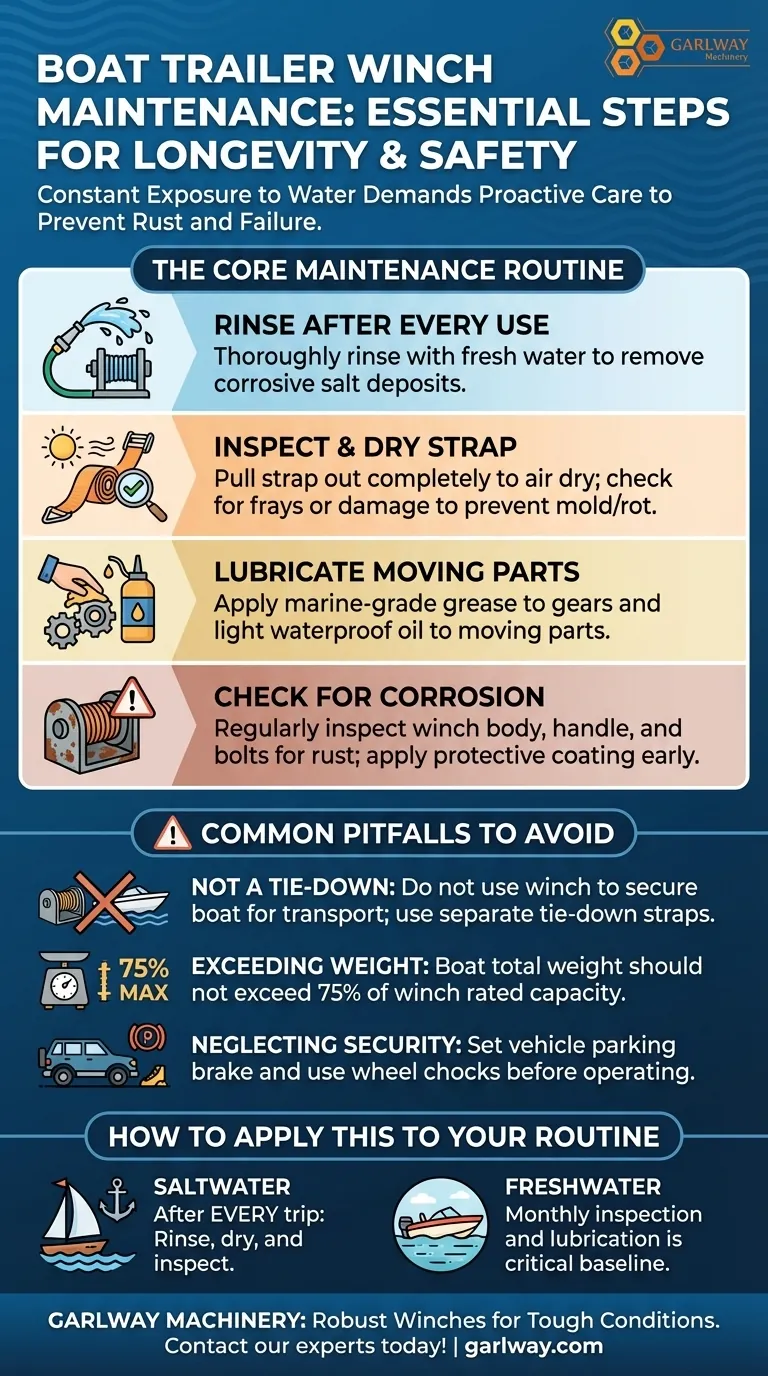
Visual Guide
Related Products
- 12000 lb Electric Boat Trailer Winch with Windlass Anchor Warn
- Warn Winch Windlass Boat Trailer Winch
- Quick Windlass Portable Winch for Truck and Boat Best Boat Winch
- Best 18000 Pound Drum Anchor Trailer Winch
- 12000 lb Heavy Duty Electric Boat Winch
People Also Ask
- How does an electric boat trailer winch differ from a manual one? Effort vs. Control Explained
- What size winch do I need for my boat? Get the Right Capacity for Safe Hauling
- How should a boat trailer winch be properly used? A Step-by-Step Guide for Safe Loading
- How strong of a winch do I need for my boat? Get the Right Pulling Power for Trailering & Anchoring
- Is installation of boat trailer winches difficult? A Guide to DIY vs. Pro Installation