
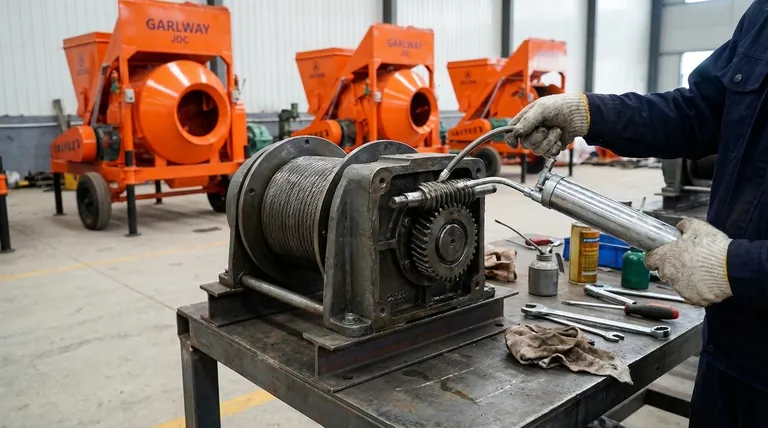
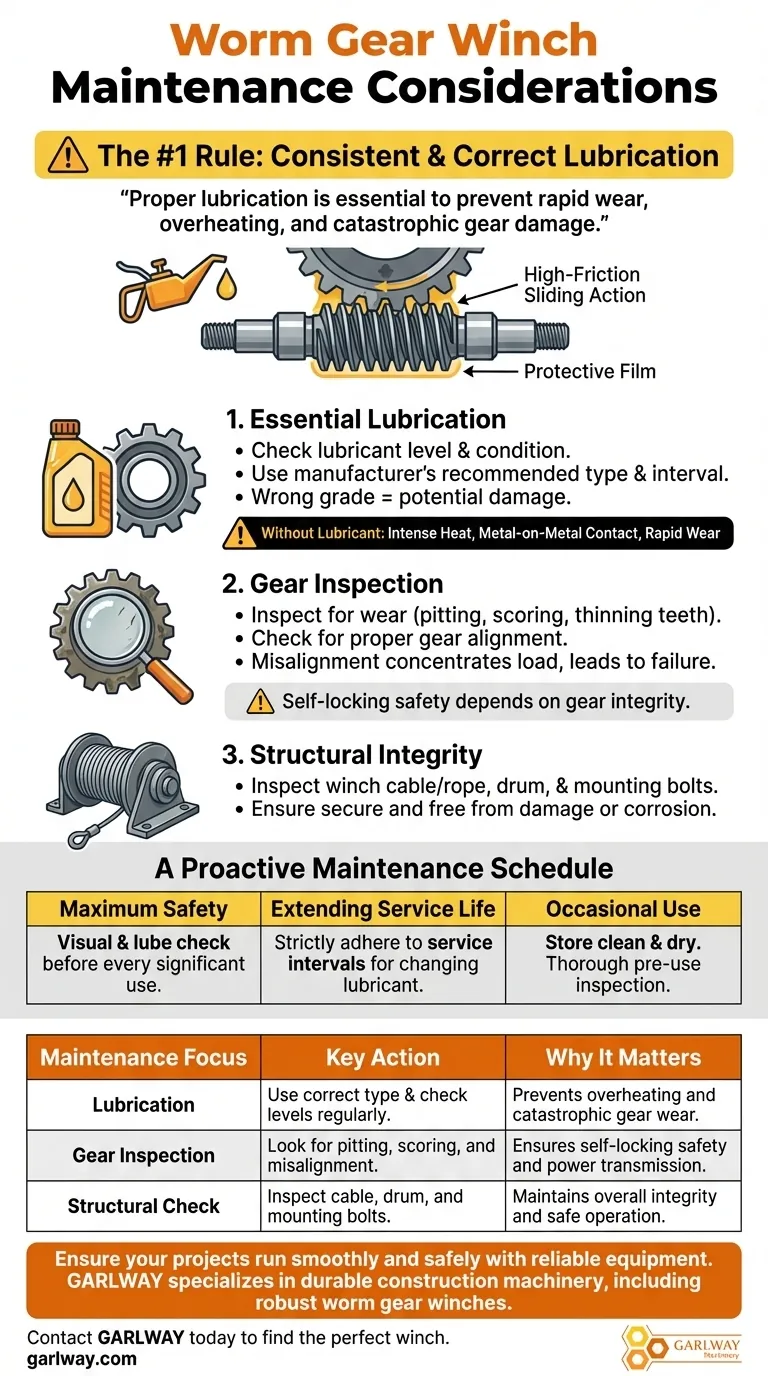
The single most important maintenance consideration for a worm gear winch is consistent and correct lubrication. Because of their design, which involves a high-friction sliding action between the worm and the gear, proper lubrication is not just a suggestion—it is essential to prevent rapid wear, overheating, and catastrophic gear damage.
A worm gear winch's defining strengths are its immense lifting power and inherent self-locking safety. Proactive maintenance is the discipline of preserving these two critical features, ensuring the winch operates as intended for its entire service life.
The "Why" Behind Worm Gear Maintenance
A worm gear winch generates torque through a screw-like shaft (the worm) turning a toothed wheel (the worm gear). This design creates immense mechanical advantage but also significant sliding friction.
The Impact of Friction
The constant sliding contact between the worm threads and the gear teeth is the source of the winch's power and its primary point of wear.
Without a protective film of lubricant, this metal-on-metal contact generates intense heat and friction, quickly grinding down the gear components.
Inherent Safety and Self-Locking
This high-friction design is also why most worm gear winches are self-locking. The angle of the gears makes it nearly impossible for the load to drive the winch backward.
This safety feature, however, depends entirely on the structural integrity of the gear teeth. Damaged or worn gears can compromise this self-locking capability.
Executing Essential Maintenance
A proper maintenance routine is simple but non-negotiable. It focuses on lubrication and inspection to prevent problems before they occur.
The Critical Role of Lubrication
Regularly check the lubricant level and condition. The manufacturer's recommendation for the type of lubricant and the service interval is your most important guide.
Using the wrong grade of oil or grease can be as damaging as using none at all, as it may not provide the necessary film strength under heavy load.
Inspecting Gear Condition
Periodically, you should inspect the gears themselves for signs of wear, such as pitting, scoring, or thinning teeth.
Also, check for proper gear alignment. Misalignment concentrates the entire load on a small part of the gear tooth, leading to rapid failure.
Checking Structural Integrity
Winch maintenance extends beyond the gearbox. Regularly inspect the winch cable or rope, the drum, and all mounting bolts to ensure they are secure and free from damage or corrosion.
Common Pitfalls and Considerations
While robust, worm gear winches are not immune to failure, which is almost always rooted in neglect or misunderstanding their design.
The High Cost of Neglect
The primary failure mode for a worm gear is insufficient or improper lubrication. This is not a gradual decline; it can lead to rapid gear destruction under load.
Starting with a Solid Foundation
Your maintenance routine begins on day one. When purchasing a winch, inspect the gear hardness and alignment. A well-manufactured unit will have precisely machined and properly hardened components, providing a reliable foundation for its service life.
Unapproved Modifications
Adding features like a hex nut to drive the winch with a drill can add convenience, but be cautious. Ensure any modification does not compromise the winch's housing or introduce stress to components in unintended ways.
A Proactive Maintenance Schedule
Your approach to maintenance should match your usage pattern and goals.
- If your primary focus is maximum safety and reliability: Perform a visual inspection and check lubrication before every significant use, especially in critical lifting applications.
- If your primary focus is extending service life: Strictly adhere to the manufacturer's recommended service intervals for changing the gear lubricant, not just topping it off.
- If your primary focus is occasional use: Ensure the winch is stored in a clean, dry environment and always perform a thorough pre-use inspection to check for corrosion and lubricant condition before placing it under load.
Ultimately, consistent maintenance ensures your worm gear winch delivers the power and safety it was designed for.
Summary Table:
| Maintenance Focus | Key Action | Why It Matters |
|---|---|---|
| Lubrication | Use correct type & check levels regularly. | Prevents overheating and catastrophic gear wear. |
| Gear Inspection | Look for pitting, scoring, and misalignment. | Ensures self-locking safety and power transmission. |
| Structural Check | Inspect cable, drum, and mounting bolts. | Maintains overall integrity and safe operation. |
Ensure your projects run smoothly and safely with reliable equipment. Proper maintenance is key, but it starts with a high-quality winch. GARLWAY specializes in durable construction machinery, including robust worm gear winches, concrete mixers, and batching plants designed for the demanding needs of construction companies and contractors globally.
Contact GARLWAY today to find the perfect winch for your application and get expert advice on keeping it running strong for years to come.
Visual Guide
Related Products
People Also Ask
- What are the main components of a boat trailer winch? A Guide to Safe & Efficient Boat Loading
- What factors should be considered when choosing a boat trailer winch? Ensure Safe and Effortless Boat Loading
- What is the purpose of boat trailer winches? Safely and Efficiently Load Your Boat
- What are the two main types of boat trailer winches? Manual vs. Electric Explained
- How often should a boat trailer winch be replaced? Your Guide to Safety and Longevity

