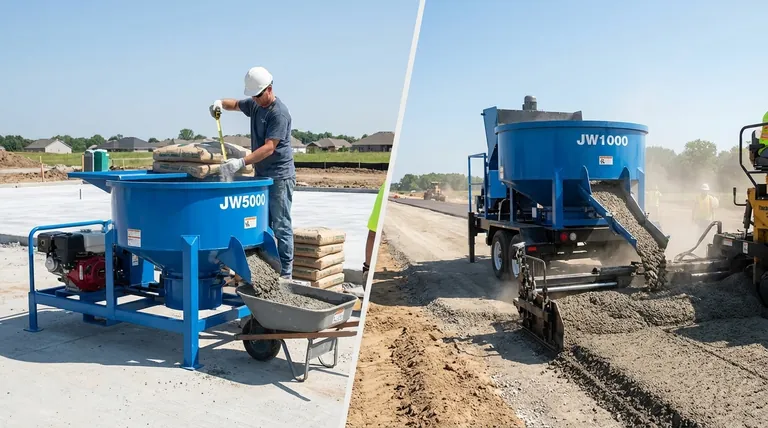
At its core, all concrete mixing technology is divided into two fundamental categories. These are batch mixers, which produce concrete in distinct, measured quantities, and continuous mixers, which produce a constant, uninterrupted flow of concrete. The choice between them is dictated entirely by the scale and requirements of the project.
The critical distinction is not the shape or size of the mixer, but its production philosophy. Batch mixing prioritizes precision and quality control for individual loads, while continuous mixing prioritizes high-volume output and speed. Every mixer, from a small portable unit to a large industrial plant, operates on one of these two principles.
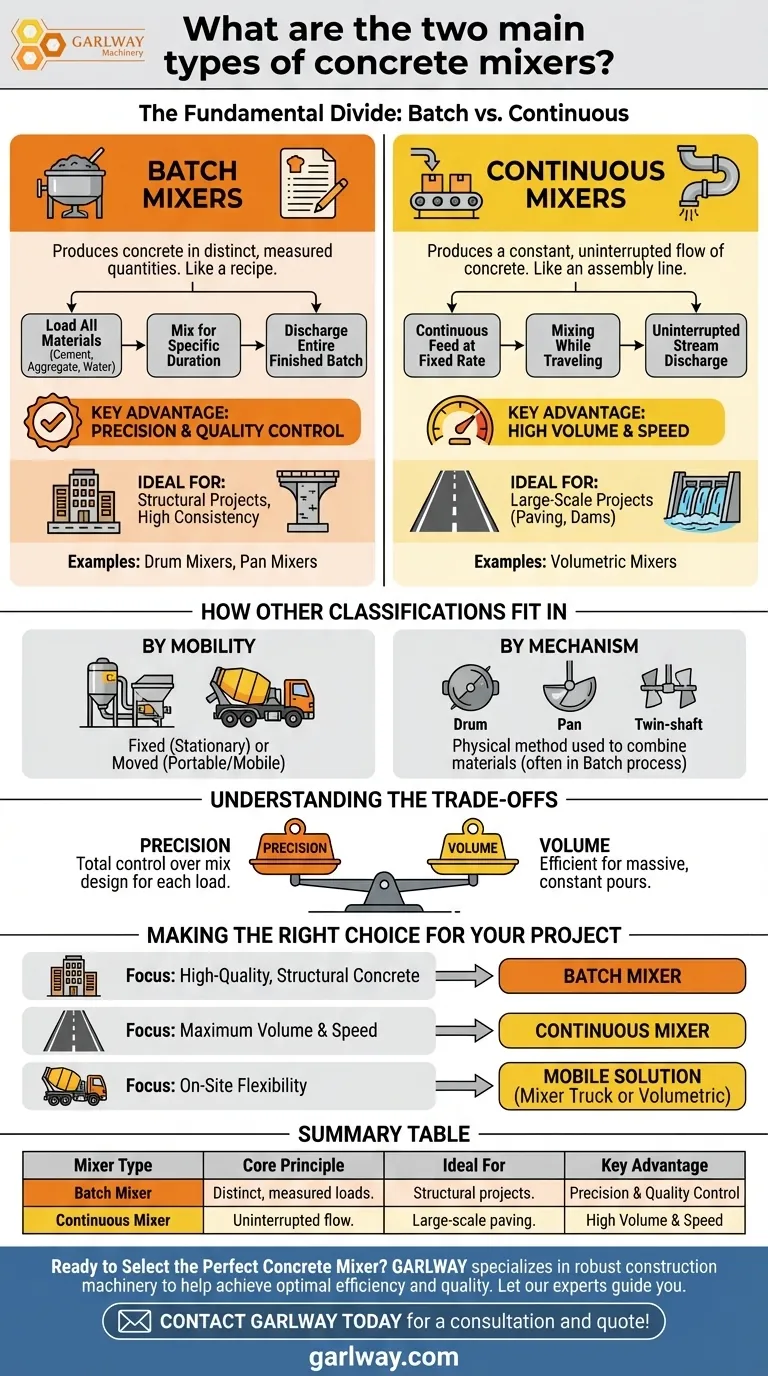
The Fundamental Divide: Batch vs. Continuous
To understand any piece of concrete equipment, you must first determine its core production method. This single factor influences its design, application, and limitations more than anything else.
Understanding Batch Mixers
A batch mixer functions like a recipe. All raw materials—cement, aggregate, sand, and water—are loaded into the mixer at once.
These materials are then mixed for a specific duration to ensure homogeneity. Once mixing is complete, the entire, finished batch is discharged.
This process allows for extremely high-quality control. Each batch can be precisely measured and tested before it's used, ensuring consistency and adherence to specific engineering standards. The most common types of batch mixers are drum mixers and pan mixers.
Understanding Continuous Mixers
A continuous mixer operates like an assembly line. Materials are fed into the machine continuously and at a fixed rate.
The mixing occurs as the materials travel through the length of the mixer, and the finished concrete is discharged in an uninterrupted stream.
This method is built for speed and high volume. It is ideal for large-scale projects like road paving or dam construction, where a constant supply of concrete is necessary to avoid interruptions. Volumetric mixers are a common example of a mobile continuous mixer.
How Other Classifications Fit In
You will often hear mixers described by other terms, such as "truck-mounted" or "portable." These are not fundamental types but rather classifications based on mobility or mixing action, which apply to the two core categories.
Classification by Mobility
This simply describes whether the mixer is fixed in one place or can be moved.
A stationary mixer, often part of a large batching plant, is a fixed installation designed for high output at a central location.
A portable mixer or mobile mixer is designed to be moved between or around job sites. A familiar concrete mixer truck, for example, is simply a mobile batch mixer.
Classification by Mixing Mechanism
Terms like pan mixer, drum mixer, or twin-shaft mixer describe the physical method used to combine the materials.
For instance, a drum mixer tumbles materials in a rotating drum, while a twin-shaft mixer uses powerful paddles for a more intense, shearing action. However, both of these are typically used in a batch process.
Understanding the Trade-offs
Neither method is inherently superior; they are simply tools for different tasks. Understanding their respective strengths and weaknesses is key to making an informed decision.
The Case for a Batch Mixer
The primary advantage is precision. Because each batch is a discrete event, you have total control over the mix design and quality. This makes it the standard choice for structural concrete where strength and consistency are non-negotiable. The trade-off is a slower overall production rate compared to continuous systems.
The Case for a Continuous Mixer
The primary advantage is volume. For massive projects requiring a constant pour, nothing is more efficient. This method minimizes cold joints and ensures a steady workflow. The trade-off is that fine-tuning mix designs on the fly is more complex, and quality control relies on the calibration of the continuous feed system rather than the verification of individual batches.
Making the Right Choice for Your Project
Your project's goal will point you directly to the correct mixing philosophy.
- If your primary focus is high-quality, structural concrete: A batch mixer is the definitive choice for its precision and quality control over each individual load.
- If your primary focus is maximum volume and speed for large-scale paving: A continuous mixer provides the uninterrupted, high-volume output necessary for such tasks.
- If your primary focus is on-site flexibility for varied, smaller pours: A mobile solution like a mixer truck (batch) or a volumetric mixer (continuous) is the most practical option.
Understanding the core difference between batch and continuous production empowers you to select the right tool for any construction challenge.
Summary Table:
| Mixer Type | Core Principle | Ideal For | Key Advantage |
|---|---|---|---|
| Batch Mixer | Produces concrete in distinct, measured loads. | Structural projects, high-quality concrete. | Precision & Quality Control |
| Continuous Mixer | Produces an uninterrupted flow of concrete. | Large-scale projects like road paving. | High Volume & Speed |
Ready to Select the Perfect Concrete Mixer?
Choosing between a batch and continuous mixer is critical for your project's success. GARLWAY specializes in providing robust construction machinery, including concrete mixers and batching plants, to help construction companies and contractors achieve optimal efficiency and quality.
Let our experts guide you to the ideal solution for your specific needs. Contact GARLWAY today for a consultation and get a quote tailored to your project!
Visual Guide
Related Products
- Portable Concrete Mixer Machine Equipment for Mixing Concrete
- Construction Products Concrete Plant Machine Mixing Concrete Mixer
- Portable Electric Concrete Mixer Machine for Cement Mixing
- JZC400 Mobile Small Concrete Mixer Cement Mixer Machine
- Hydraulic Concrete Mixer Machine Cement Mixing Equipment for Mixture Concrete
People Also Ask
- Why is it necessary to use a portable concrete mixer? Gain Total Control & Efficiency
- How much concrete can you pour with a portable mixer? Find the Perfect Fit for Your Project
- What types of projects are portable concrete mixers suitable for? Ideal for DIY & Small-Scale Construction
- How much does a portable concrete mixer hold? A Guide to Choosing the Right Capacity
- What types of portable concrete mixers exist? Find the Perfect Mixer for Your Project