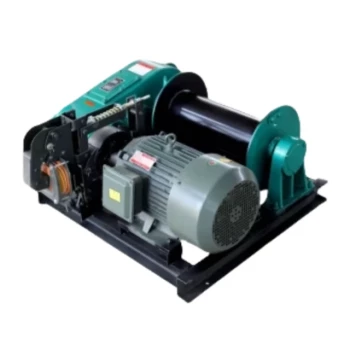
The most effective practices for hydraulic winch installation and maintenance revolve around three core principles: ensuring a clean and properly configured hydraulic system, conducting routine inspections of fluids and components, and using high-quality, manufacturer-recommended parts for any repairs. Proper installation focuses on providing adequate hydraulic flow and pressure, while diligent maintenance aims to prevent contamination and wear, which are the primary causes of failure.
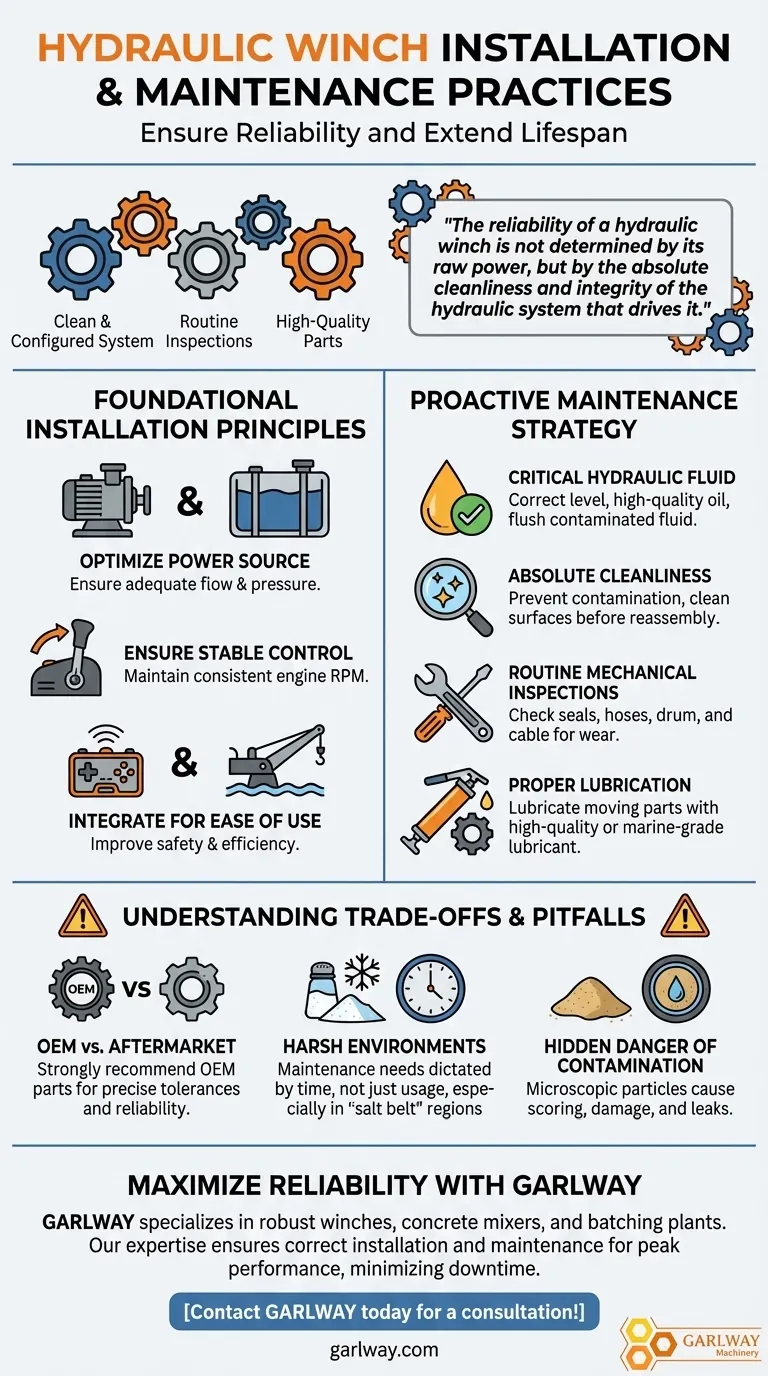
The reliability of a hydraulic winch is not determined by its raw power, but by the absolute cleanliness and integrity of the hydraulic system that drives it. Every maintenance and installation practice is fundamentally about preventing contamination and ensuring consistent fluid pressure.
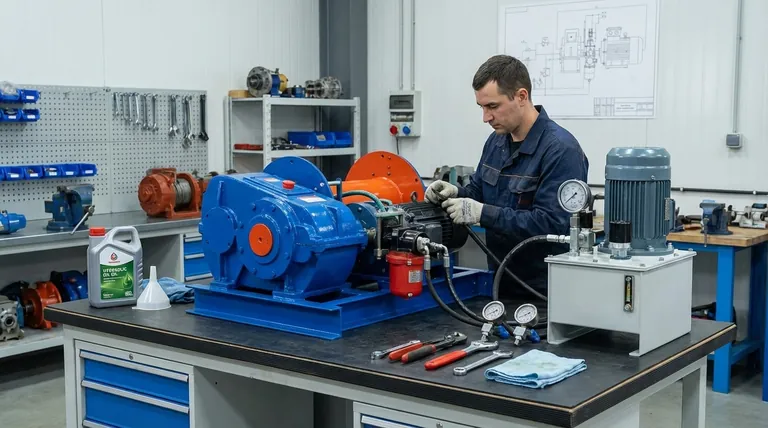
Foundational Principles of Installation
A hydraulic winch's performance is dictated by the quality of the hydraulic system powering it. The initial setup is a critical opportunity to optimize power, control, and efficiency for the long term.
Optimizing the Hydraulic Power Source
To achieve maximum performance, the winch requires a sufficient supply of hydraulic fluid at the correct pressure. This often involves upgrading the vehicle's stock components.
Consider using a larger, belt-driven or PTO-driven pump and an oversized reservoir. A larger pump ensures adequate flow, while a bigger reservoir helps dissipate heat and ensures the pump never runs dry. Adjusting the pump's pulley diameter can also increase its speed and output.
Ensuring Stable System Control
Winching operations demand sustained engine RPMs to power the hydraulic pump effectively. A standard foot throttle can be difficult to manage consistently during a pull.
A locking or friction hand throttle is a valuable addition. It allows the operator to set and maintain a specific engine speed, ensuring the hydraulic pump receives consistent power without requiring constant manual adjustment.
Integrating for Ease of Use
Consider how the winch will be operated in real-world scenarios. Accessories can significantly improve safety and efficiency.
For marine applications, a hinged or self-launching bow sprit can automate anchor deployment. For any winch, a remote control allows the operator to manage the pull from a safe distance with a better vantage point.
A Proactive Maintenance Strategy
Regular, preventative maintenance is the key to longevity. This strategy is less about fixing what's broken and more about preventing failures before they happen.
The Critical Role of Hydraulic Fluid
The hydraulic fluid is the lifeblood of the system. Its condition directly impacts every component.
Always ensure the oil level is correct—neither too high nor too low. Use a high-quality hydraulic oil that is compatible with your winch system's requirements. If the oil becomes contaminated, it must be replaced completely, and the entire system should be flushed to remove residual impurities.
The Mandate for Absolute Cleanliness
Contamination is the single greatest threat to a hydraulic system. Even microscopic particles can damage tight-tolerance components.
After any disassembly or repair, thoroughly clean all seals and installation surfaces to remove any debris. This simple step is crucial for preventing tiny, high-pressure leaks that can degrade performance and lead to catastrophic failure. Keep the external winch assembly clean and free of mud, salt, and debris.
Routine Mechanical Inspections
Visual inspection can catch developing problems early. Create a regular schedule for checking all critical components.
Examine seals and hoses for any signs of cracking, abrasion, or leaks. Inspect the winch drum, cable, and structural mounts for wear or damage.
Proper Lubrication
Moving mechanical parts require their own lubrication, separate from the hydraulic system.
Regularly lubricate all moving parts, such as gears and bearings, with a high-quality lubricant. In corrosive settings, such as coastal or winter road environments, use a marine-grade lubricant for enhanced protection against moisture and salt.
Understanding the Trade-offs and Pitfalls
While robust, hydraulic winches are not immune to failure. Understanding the common points of failure helps create a more effective maintenance plan.
The OEM vs. Aftermarket Decision
When replacing parts like seals or hoses, it can be tempting to use cheaper aftermarket options.
It is strongly recommended to use original equipment manufacturer (OEM) parts. OEM components are designed for the precise tolerances and material specifications of your system, ensuring perfect compatibility and reliable operation under load.
The Impact of Harsh Environments
The operational environment dramatically affects maintenance frequency. A winch used in a dry climate has very different needs from one exposed to road salt or saltwater.
In harsh environments, such as "salt belt" regions, maintenance needs are dictated by time, not just usage. Corrosion can seize components and degrade seals even on a winch that is rarely used. In these cases, service intervals must be shortened considerably.
The Hidden Danger of Contamination
It is easy to underestimate the damage a small amount of dirt can cause. In a high-pressure system, a single grain of sand can act like a cutting tool.
This particulate matter can score cylinder walls, damage pump internals, and create microscopic leaks in seals. These small leaks might not be visible initially but will cause a gradual loss of pressure and performance, eventually leading to component failure.
Making the Right Choice for Your Goal
Your maintenance and installation strategy should align with your primary use case.
- If your primary focus is maximum reliability for critical operations: Prioritize proactive fluid analysis, strict adherence to OEM parts, and a system with an oversized reservoir and cooler.
- If your primary focus is extending lifespan in a harsh environment: Emphasize frequent external cleaning, the use of marine-grade lubricants, and routine inspections of all seals and hoses.
- If your primary focus is optimizing performance for heavy, frequent use: Concentrate on the initial installation, ensuring you have an upgraded pump and a dedicated throttle control to provide consistent hydraulic power.
Ultimately, a proactive and diligent approach to cleanliness and fluid management is the most effective way to ensure your hydraulic winch operates safely and reliably for its entire service life.
Summary Table:
| Practice Category | Key Focus Areas |
|---|---|
| Installation | Adequate hydraulic flow/pressure, stable throttle control, remote operation accessories |
| Maintenance | Hydraulic fluid quality & cleanliness, routine seal/hose inspections, proper lubrication |
| Critical Considerations | Using OEM parts, adapting to harsh environments, preventing contamination |
Maximize the reliability and lifespan of your hydraulic winches with GARLWAY.
As a specialist in construction machinery, we provide robust winches, concrete mixers, and batching plants designed for the demanding conditions faced by construction companies and contractors worldwide. Our expertise ensures your equipment is installed correctly and maintained for peak performance, minimizing downtime and operational costs.
Contact GARLWAY today for a consultation on how our solutions can power your projects with unwavering reliability.
Visual Guide
Related Products
- Hydraulic Winding Engine Harbor Freight Winch
- Electric and Hydraulic Winch for Heavy Duty Applications
- Small Electric Winch 120V and 240V for Compact Applications
- Electric 120V Boat Winch by Badlands
- 12000 lb Electric Boat Trailer Winch with Windlass Anchor Warn
People Also Ask
- What role does hydraulic fluid play in hydraulic winches? It's the Lifeblood of Your Heavy-Duty Pulling Power
- What vehicles commonly use hydraulic winches? For Industrial Trucks Needing Unmatched Power
- What are the features of hydraulic winches? Unmatched Power and Continuous Duty for Heavy Loads
- What preventive measures can be taken to avoid oil leakage in hydraulic winches? Ensure Long-Term Reliability
- What does 'power out' mean in a hydraulic winch? Achieve Absolute Control When Lowering Heavy Loads