
At its core, a vehicle-mounted winch is your mechanical lifeline for self-recovery. It is an electric or hydraulic motor-driven drum that spools a steel or synthetic cable, used to pull a vehicle out of a situation where it has lost all traction and is completely immobilized by mud, sand, snow, or physical obstacles.
A winch is more than just a tool for getting unstuck; it's a fundamental piece of equipment that transforms your off-road capability. It provides the means for a controlled, safe extraction when driving skill and tire traction are no longer sufficient.
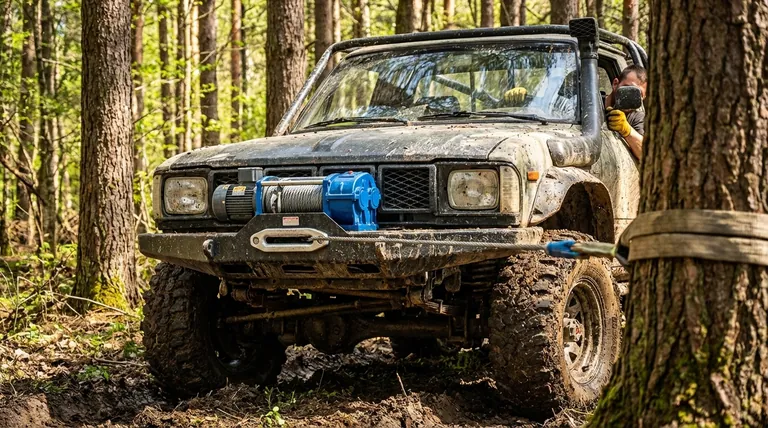
The Principle of Winching: Creating an External Pull
The Concept of Self-Recovery
When a vehicle is truly stuck, its wheels have lost the ability to generate forward momentum. Spinning the tires often makes the situation worse by digging the vehicle deeper into the terrain.
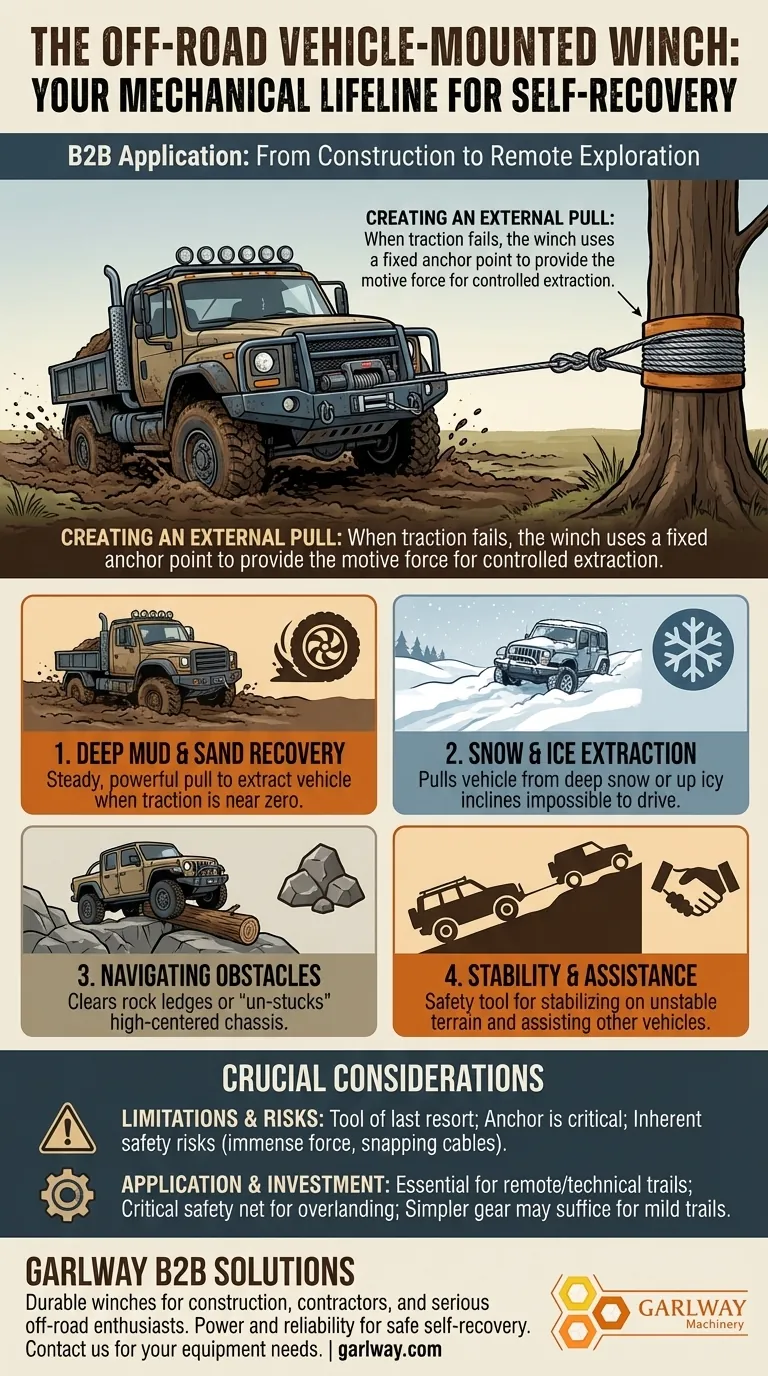
A winch bypasses the need for traction entirely. It allows you to create a pulling force from a fixed point external to your vehicle, providing the motive force needed for extraction.
How it Works
The process involves securing the winch line to a solid anchor point, such as another vehicle or a stout tree (using a tree-saver strap to protect the bark).
Engaging the winch motor then spools the cable onto the drum, pulling your vehicle towards the anchor point slowly and with immense control.
Common Scenarios Demanding a Winch
Deep Mud and Sand
These are the classic winch scenarios. Mud and sand can offer virtually zero traction, swallowing tires and bringing a vehicle to a complete halt. A winch provides the steady, powerful pull required to methodically extract the vehicle to more solid ground.
Snow and Ice
Similar to mud, deep snow or icy surfaces can render a vehicle’s drivetrain useless. A winch allows you to pull the vehicle out of a snowdrift or up an icy incline that would be impossible to drive.
Navigating Obstacles
A winch is invaluable for clearing physical obstacles. This includes pulling a vehicle up and over a rock ledge that is too steep to climb or getting the chassis "un-stuck" when it becomes high-centered on a log or rock.
Stabilizing on Unstable Terrain
In advanced scenarios, a winch can be used as a safety tool. On a steep, off-camber trail where a vehicle is at risk of sliding sideways or rolling over, a winch line can be used to stabilize the vehicle and prevent a dangerous "flop."
Assisting Other Vehicles
A winch isn't just for your own recovery. It's a critical tool for assisting other enthusiasts on the trail, making you a valuable asset to any off-road group.
Understanding the Limitations and Risks
A Tool of Last Resort
A winch should not be the first tool you reach for. Proper driving technique, correct tire pressure, and choosing a good line are your primary tools. A winch is for when all of those have been exhausted.
The Anchor Point is Critical
A winch is completely useless without a solid anchor. In environments without trees or other vehicles, such as an open desert, you may need a specialized land anchor, or the winch will be of no use.
Inherent Safety Risks
The forces involved in winching are immense and can be extremely dangerous. A snapping cable or failing recovery point can cause severe injury or death. Proper training, quality equipment (gloves, cable damper), and a slow, deliberate process are non-negotiable for safe operation.
How to Apply This to Your Off-roading
A winch is a significant investment, so its necessity depends entirely on your goals.
- If your primary focus is exploring remote or technically difficult trails: A winch is an essential piece of safety and self-reliance equipment that you should not travel without.
- If your primary focus is overlanding, especially solo or in small groups: A winch provides a critical safety net for unexpected situations far from assistance.
- If your primary focus is maintained forest service roads and mild trails: You can likely manage with simpler recovery gear like traction boards and a kinetic recovery rope.
Ultimately, a winch provides the confidence to safely explore challenging terrain and the absolute capability to get home when you do.
Summary Table:
| Primary Use Case | Key Benefit |
|---|---|
| Deep Mud/Sand Recovery | Provides steady pull when traction is zero. |
| Snow/Ice Extraction | Pulls vehicle from drifts or icy inclines. |
| Navigating Obstacles | Helps clear rock ledges and high-center situations. |
| Stabilizing on Unstable Terrain | Acts as a safety line on steep, off-camber trails. |
| Assisting Other Vehicles | Critical tool for group recovery on the trail. |
Ready to equip your off-road vehicle with a reliable winch?
At GARLWAY, we specialize in durable construction and recovery machinery, including high-performance winches designed for the toughest conditions. Whether you're a construction company, a contractor, or a serious off-road enthusiast exploring remote trails, our equipment provides the power and reliability you need for safe self-recovery.
Contact us today to find the perfect winch for your vehicle and adventure needs!
Visual Guide
Related Products
- Portable Small Trailer Winch
- Quick Windlass Portable Winch for Truck and Boat Best Boat Winch
- Warn Winch Windlass Boat Trailer Winch
- Electric and Hydraulic Winch for Heavy Duty Applications
- Best 18000 Pound Drum Anchor Trailer Winch
People Also Ask
- What features were incorporated into the upgraded portable winch system? Boost Your Recovery Power & Safety
- What are some uses mentioned for portable winches beyond vehicle recovery? Essential Versatility for Property & Work
- How could the twisting issue with a portable winch be mitigated? Achieve Safe, Centered Pulls with Proper Rigging
- What is the significance of trailer winches in the boating industry? Ensure Safe and Efficient Boat Recovery
- What should be considered when mounting a winch on a trailer? Ensure a Safe, Aligned Installation





