
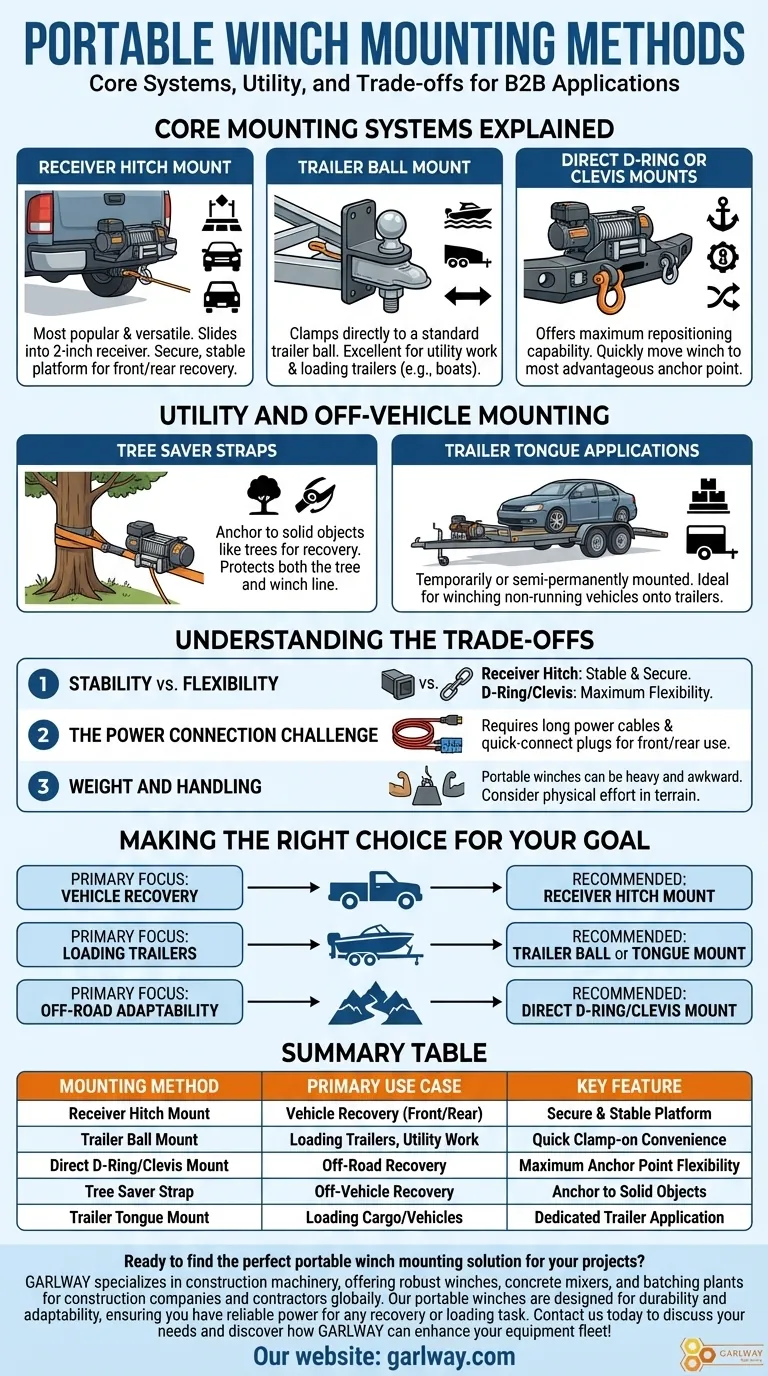
The most common mounting methods for portable winches include receiver hitch mounts, trailer ball mounts, and direct attachments to recovery points like D-rings or clevis hooks. These systems are designed for flexibility, allowing you to move the winch between different vehicles or to various anchor points on a single vehicle.
The core advantage of a portable winch isn't just its size, but its adaptability. The mounting method you choose directly dictates how and where you can apply that pulling power, transforming it from a simple recovery tool into a versatile workhorse.
Core Mounting Systems Explained
The primary mounting systems connect the portable winch directly to your vehicle's frame or a structurally sound point. The best choice depends on your vehicle's equipment and the tasks you plan to perform.
The Receiver Hitch Mount
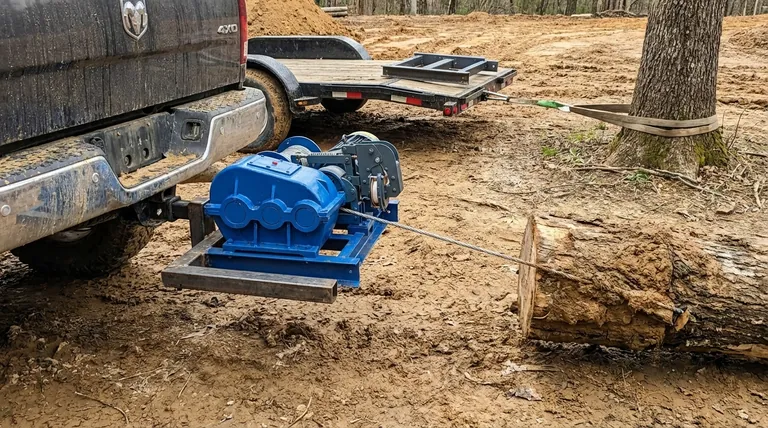
This is the most popular and versatile method. The winch is bolted to a steel plate or cradle that slides directly into your vehicle's 2-inch receiver hitch.
This setup allows you to easily mount the winch on the front or rear of the vehicle, provided you have the appropriate hitches. It offers a very secure and stable pulling platform.
The Trailer Ball Mount
Some portable winch plates are designed to clamp directly onto a standard trailer ball. This is an excellent option for utility work, like pulling a boat onto a trailer or loading heavy equipment.
While convenient, it's often intended for lighter, straight-line pulls and may not be the primary choice for complex off-road vehicle recovery.
Direct D-Ring or Clevis Mounts
This method offers maximum repositioning capability. The winch is attached directly to a robust recovery point, such as a D-ring shackle or clevis hook on a steel bumper or frame.
This allows you to quickly move the winch to the most advantageous anchor point on your vehicle for a specific recovery situation.
Utility and Off-Vehicle Mounting
A key benefit of portability is using the winch away from the vehicle itself. These methods rely on external anchor points.
Tree Saver Straps
For recovery or forestry work, a portable winch can be anchored to a solid object like a tree. This is done using a tree saver strap to protect both the tree and the winch line.
This method is essential when the recovering vehicle cannot get a direct line of sight to the stuck vehicle.
Trailer Tongue Applications
Portable winches can be temporarily or semi-permanently mounted on a trailer tongue. This is a common application for car haulers or utility trailers to winch non-running vehicles or heavy cargo onto the deck.
Understanding the Trade-offs
While flexible, each mounting system comes with practical considerations that affect its use in the real world.
Stability vs. Flexibility
A receiver hitch mount provides the most stable and secure connection for heavy pulls. However, a D-ring or clevis mount offers far more flexibility in choosing your pull angle and anchor point.
The Power Connection Challenge
A portable winch is useless without power. Your mounting strategy must account for this. Long power cables are a necessity, and quick-connect plugs (like an Anderson plug) are highly recommended for easily moving the winch between front and rear power sources.
Weight and Handling
"Portable" does not mean lightweight. A winch on a steel mounting plate can be heavy and awkward to carry, especially in mud, snow, or on uneven terrain. Consider your physical ability to move the winch from one end of the vehicle to the other during a stressful recovery.
Making the Right Choice for Your Goal
Your primary use case should dictate your mounting strategy.
- If your primary focus is vehicle recovery: A receiver hitch mount offers the best combination of strength and versatility for front or rear pulls.
- If your primary focus is loading trailers: A dedicated trailer ball or trailer tongue mount provides a simple and effective solution for utility work.
- If your primary focus is maximum off-road adaptability: Using direct D-ring or clevis attachments allows you to reposition the winch to the exact point needed for the pull.
Ultimately, selecting the right mounting method ensures you can deploy your winch's power safely and effectively wherever it's needed most.
Summary Table:
| Mounting Method | Primary Use Case | Key Feature |
|---|---|---|
| Receiver Hitch Mount | Vehicle Recovery (Front/Rear) | Secure & Stable Platform |
| Trailer Ball Mount | Loading Trailers, Utility Work | Quick Clamp-on Convenience |
| Direct D-Ring/Clevis Mount | Off-Road Recovery | Maximum Anchor Point Flexibility |
| Tree Saver Strap | Off-Vehicle Recovery | Anchor to Solid Objects |
| Trailer Tongue Mount | Loading Cargo/Vehicles | Dedicated Trailer Application |
Ready to find the perfect portable winch mounting solution for your projects? GARLWAY specializes in construction machinery, offering robust winches, concrete mixers, and batching plants for construction companies and contractors globally. Our portable winches are designed for durability and adaptability, ensuring you have reliable power for any recovery or loading task. Contact us today to discuss your needs and discover how GARLWAY can enhance your equipment fleet!
Visual Guide
Related Products
- Portable Small Trailer Winch
- Quick Windlass Portable Winch for Truck and Boat Best Boat Winch
- Small Electric Winch 120V and 240V for Compact Applications
- Electric and Hydraulic Winch for Heavy Duty Applications
- Electric Hoist Winch Boat Anchor Windlass for Marine Applications
People Also Ask
- What features were incorporated into the upgraded portable winch system? Boost Your Recovery Power & Safety
- What are some uses mentioned for portable winches beyond vehicle recovery? Essential Versatility for Property & Work
- How could the twisting issue with a portable winch be mitigated? Achieve Safe, Centered Pulls with Proper Rigging
- What is the significance of trailer winches in the boating industry? Ensure Safe and Efficient Boat Recovery
- What should be considered when mounting a winch on a trailer? Ensure a Safe, Aligned Installation


