
For small construction sites, your primary options for mixing concrete are using a portable concrete mixer or mixing it by hand. Portable mixers are machines designed for small-batch consistency and speed, while hand mixing in a wheelbarrow or on a tarp is a manual alternative suitable for only the smallest tasks.
The core decision hinges on volume and quality. A portable mixer is the standard for ensuring a consistent, quality mix for small projects, while hand mixing is a fallback reserved for minor repairs where speed and structural integrity are less critical.
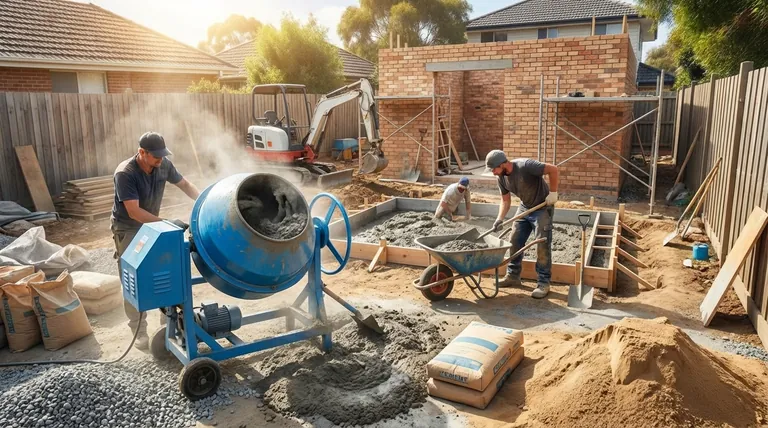
The Value of On-Site Mixing
Fresh Material on Demand
For smaller jobs, bringing the mixing process to the site is far more practical than ordering from a ready-mix plant.
This approach eliminates logistical challenges and ensures you have fresh, workable concrete exactly when and where you need it.
Accessing Difficult Areas
Portable equipment allows you to produce concrete in hard-to-reach locations, such as backyards or renovation sites, where a large concrete truck could never go.
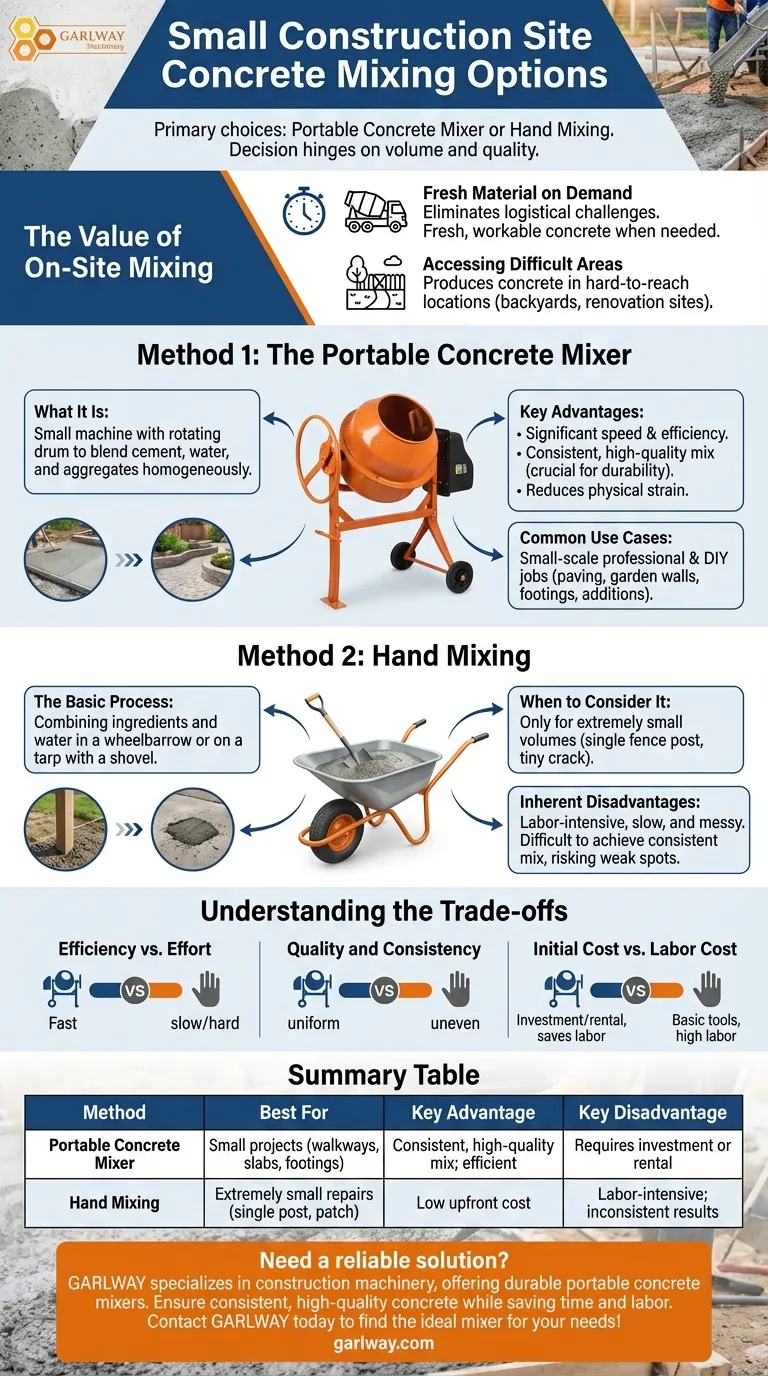
Method 1: The Portable Concrete Mixer
What It Is
A portable concrete mixer is a small, maneuverable machine designed to combine cement, water, and aggregates like sand and gravel.
It uses a rotating drum to ensure all ingredients are thoroughly blended into a homogenous mixture.
Key Advantages
The primary benefit of a mixer is the significant improvement in speed and efficiency over manual methods.
It also produces a far more consistent and high-quality concrete mix, which is crucial for the durability and strength of the final product. The machine does the hard work, reducing physical strain on workers.
Common Use Cases
These mixers are indispensable for small-scale professional and DIY jobs. This includes projects like paving small areas, building garden walls, pouring footings, or completing minor additions and renovations.
Method 2: Hand Mixing
The Basic Process
Hand mixing is the most rudimentary method, typically done by combining the dry ingredients and water in a wheelbarrow with a shovel or hoe.
Occasionally, a large tarp is used as a mixing surface.
When to Consider It
This method is only practical for extremely small volumes of concrete. Think setting a single fence post or patching a tiny crack.
Inherent Disadvantages
Hand mixing is labor-intensive, slow, and messy. It is very difficult to achieve a perfectly consistent mix, risking weak spots or an improper blend that can compromise the project's integrity.
Understanding the Trade-offs
Efficiency vs. Effort
A portable mixer dramatically reduces the time and physical effort required to produce concrete. What takes minutes in a machine can take much longer with significantly more work when done by hand.
Quality and Consistency
A machine's tumbling action guarantees a uniform blend. Hand mixing often results in an uneven distribution of water and cement, leading to a weaker, less reliable final product.
Initial Cost vs. Labor Cost
Hand mixing requires only basic tools, making its upfront cost virtually zero. A portable mixer is an investment or a rental expense, but it quickly pays for itself in saved labor and superior results on any project larger than a simple patch.
Making the Right Choice for Your Project
- If your primary focus is a tiny repair (like setting one post): Mixing by hand in a wheelbarrow is a sufficient and cost-effective solution.
- If your primary focus is a small project (like a walkway or small slab): A portable concrete mixer is the only practical choice for achieving a quality result efficiently.
- If your primary focus is maximizing quality and reducing labor: The portable mixer is the superior tool, ensuring consistency that manual methods cannot replicate.
Ultimately, selecting the right tool is about matching the method to the scale and requirements of your work.
Summary Table:
| Method | Best For | Key Advantage | Key Disadvantage |
|---|---|---|---|
| Portable Concrete Mixer | Small projects (walkways, slabs, footings) | Consistent, high-quality mix; efficient | Requires investment or rental |
| Hand Mixing | Extremely small repairs (single post, patch) | Low upfront cost | Labor-intensive; inconsistent results |
Need a reliable solution for your small construction site? GARLWAY specializes in construction machinery, offering durable and efficient portable concrete mixers perfect for contractors and construction companies. Ensure consistent, high-quality concrete for your projects while saving time and labor. Contact GARLWAY today to find the ideal mixer for your needs!
Visual Guide
Related Products
- Portable Concrete Mixer Machine Equipment for Mixing Concrete
- Portable Ready Mix Concrete Mixer Equipment
- Portable Electric Concrete Mixer Machine for Cement Mixing
- Portable Cement Mixer with Lift Concrete Machine
- Portable Electric Small Cement Mixer Concrete Machine
People Also Ask
- Why is it necessary to use a portable concrete mixer? Gain Total Control & Efficiency
- How much concrete can you pour with a portable mixer? Find the Perfect Fit for Your Project
- What types of projects are portable concrete mixers suitable for? Ideal for DIY & Small-Scale Construction
- How much does a portable concrete mixer hold? A Guide to Choosing the Right Capacity
- What types of portable concrete mixers exist? Find the Perfect Mixer for Your Project



