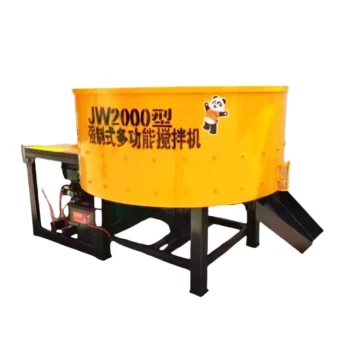
The primary benefits of an electric concrete mixer are its quiet, clean, and low-maintenance operation. Unlike gas-powered alternatives, electric models produce no exhaust fumes, making them the superior choice for indoor use, residential areas, and projects where noise is a concern.
The core advantage of an electric mixer isn't just about power; it's about the environment in which you work. They trade the raw, untethered power of gas engines for unparalleled convenience, cleanliness, and quietness in electrically accessible locations.
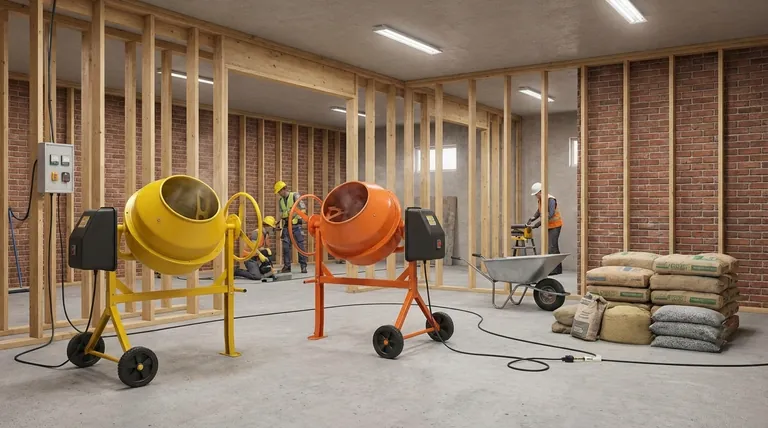
The Core Advantages of Electric Power
Electric mixers solve many of the common frustrations associated with small-engine equipment, making them highly practical for specific types of jobs.
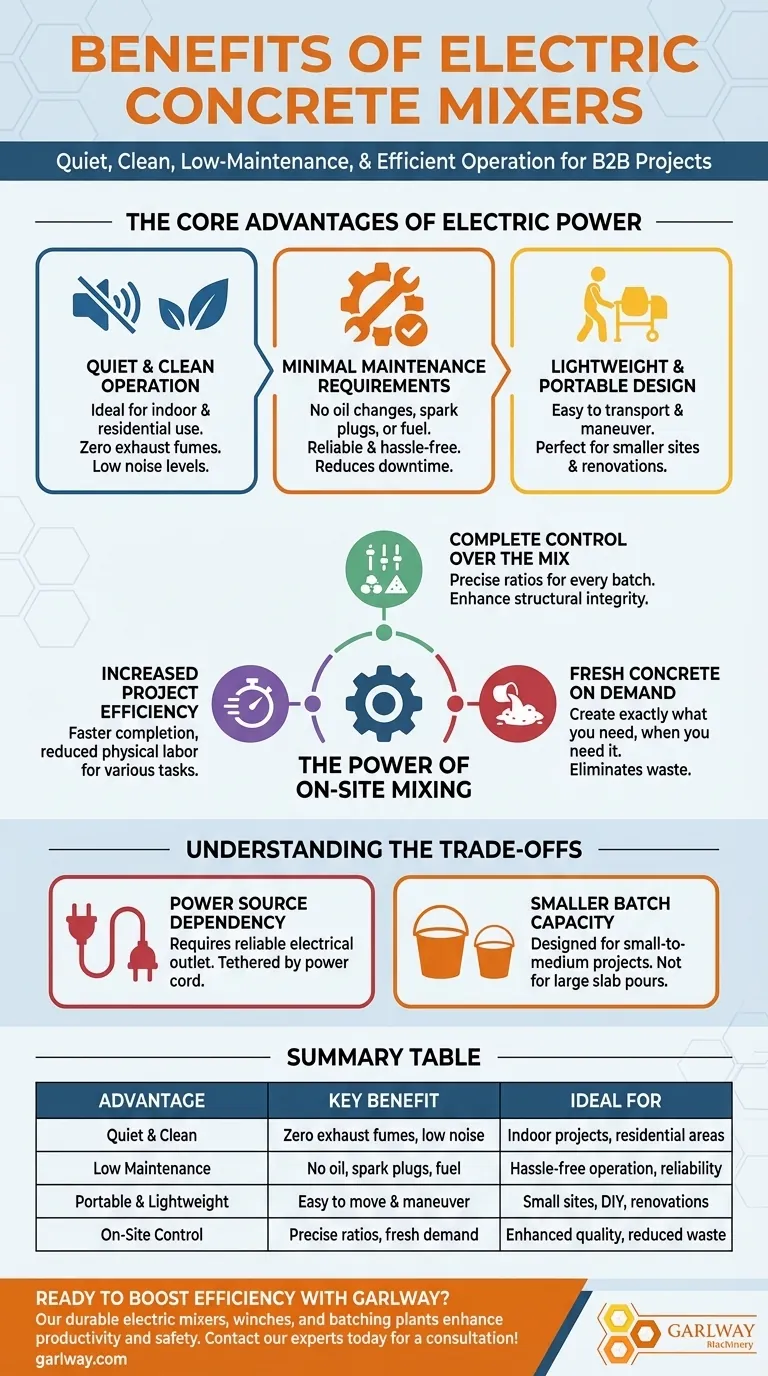
Quiet and Clean Operation
The most noticeable benefit is the dramatic reduction in noise. This makes them ideal for residential neighborhoods or indoor renovation projects where loud gas engines would be disruptive.
Because they run on electricity, these mixers produce zero exhaust fumes. This is a critical safety and comfort feature for any work done in basements, garages, or other poorly ventilated spaces.
Minimal Maintenance Requirements
Electric motors are fundamentally simpler than gasoline engines. There is no need for oil changes, spark plug replacements, or fuel stabilization.
This reliability means you can store the mixer for long periods and trust it to start immediately when plugged in, reducing project delays and long-term upkeep costs.
Lightweight and Portable Design
Electric motors are often lighter and more compact than their gas-powered counterparts. This contributes to a more portable and maneuverable machine.
Their ease of transport makes them perfect for smaller construction sites, DIY projects, and renovation work where the mixer may need to be moved frequently.
The Power of On-Site Mixing
Beyond their electric-specific benefits, these mixers provide the fundamental advantages of mixing concrete on-site, giving you greater control and flexibility.
Complete Control Over the Mix
On-site mixing allows you to precisely control the ratio of cement, sand, aggregate, and water for each batch.
This ability to make on-the-fly adjustments ensures the concrete meets the exact specifications for different parts of a project, which can enhance the final structure's integrity and durability.
Increased Project Efficiency
Any mechanical mixer drastically reduces the physical labor and time required compared to mixing concrete manually.
This efficiency allows for faster completion of work, whether you're pouring a small slab, setting fence posts, or creating footings.
Fresh Concrete on Demand
With an on-site mixer, you create fresh concrete exactly when and where you need it. This eliminates the risk of a "hot load" from a ready-mix truck and significantly reduces material waste.
Understanding the Trade-offs
While highly advantageous, electric mixers are not the solution for every scenario. Their primary limitations are tied directly to their power source and intended scale.
Power Source Dependency
The most significant constraint is the need for a reliable electrical outlet. An electric mixer is tethered by its power cord, making it unsuitable for remote job sites without access to electricity or a sufficiently powerful generator.
Smaller Batch Capacity
Most portable electric mixers are designed for small-to-medium scale projects. Their drum capacity is typically smaller than that of larger, gas-powered or industrial mixers, making them inefficient for large slab pours.
Making the Right Choice for Your Project
Your decision should be guided by your project's location, scale, and environment.
- If your primary focus is indoor work, renovations, or residential projects: The quiet, fume-free, and low-maintenance electric mixer is the definitive choice.
- If your primary focus is portability for small-to-medium outdoor jobs: A portable electric mixer offers an excellent balance of convenience and capability, provided a power source is available.
- If your primary focus is large-scale pours or remote site construction: A gas-powered mixer or a ready-mix delivery service will be necessary to meet the power and volume demands.
Choosing the right tool begins with a clear understanding of your project's unique constraints and goals.
Summary Table:
| Advantage | Key Benefit | Ideal For |
|---|---|---|
| Quiet & Clean | Zero exhaust fumes, low noise | Indoor projects, residential areas |
| Low Maintenance | No oil changes, spark plugs, or fuel | Hassle-free operation, long-term reliability |
| Portable & Lightweight | Easy to move and maneuver | Small job sites, DIY projects, renovations |
| On-Site Control | Precise mix ratios, fresh concrete on demand | Enhanced project quality, reduced waste |
Ready to boost your project's efficiency with the right equipment?
GARLWAY specializes in providing durable and reliable construction machinery, including electric concrete mixers, winches, and batching plants, tailored for construction companies and contractors worldwide. Our solutions are designed to enhance your productivity, ensure job site safety, and deliver superior results.
Let's discuss how our equipment can power your next project. Contact our experts today for a personalized consultation!
Visual Guide
Related Products
- Portable Electric Concrete Mixer Machine for Cement Mixing
- JDY350 Electric Hydraulic Mortar Mud Concrete Mixer
- JS500 Electric Cement Concrete Mixer for Sale
- Commercial Electric Concrete Mixer Machine HZS 50 Small Batch Plant for Sale
- Portable Electric Small Cement Mixer Concrete Machine
People Also Ask
- How much concrete can you pour with a portable mixer? Find the Perfect Fit for Your Project
- Why is it necessary to use a portable concrete mixer? Gain Total Control & Efficiency
- What was the first recorded version of the portable concrete mixer and who invented it? Discover the 1904 Horse-Drawn Innovation
- How does a portable concrete mixer benefit construction projects? Boost Efficiency & Cut Costs On-Site
- How does the portable concrete mixer optimize time in small construction projects? Gain On-Demand Control & Efficiency