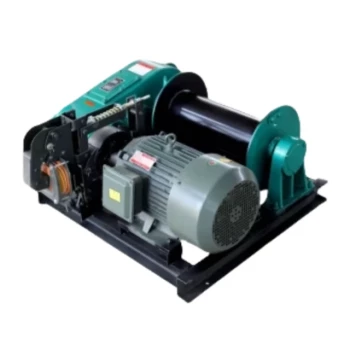
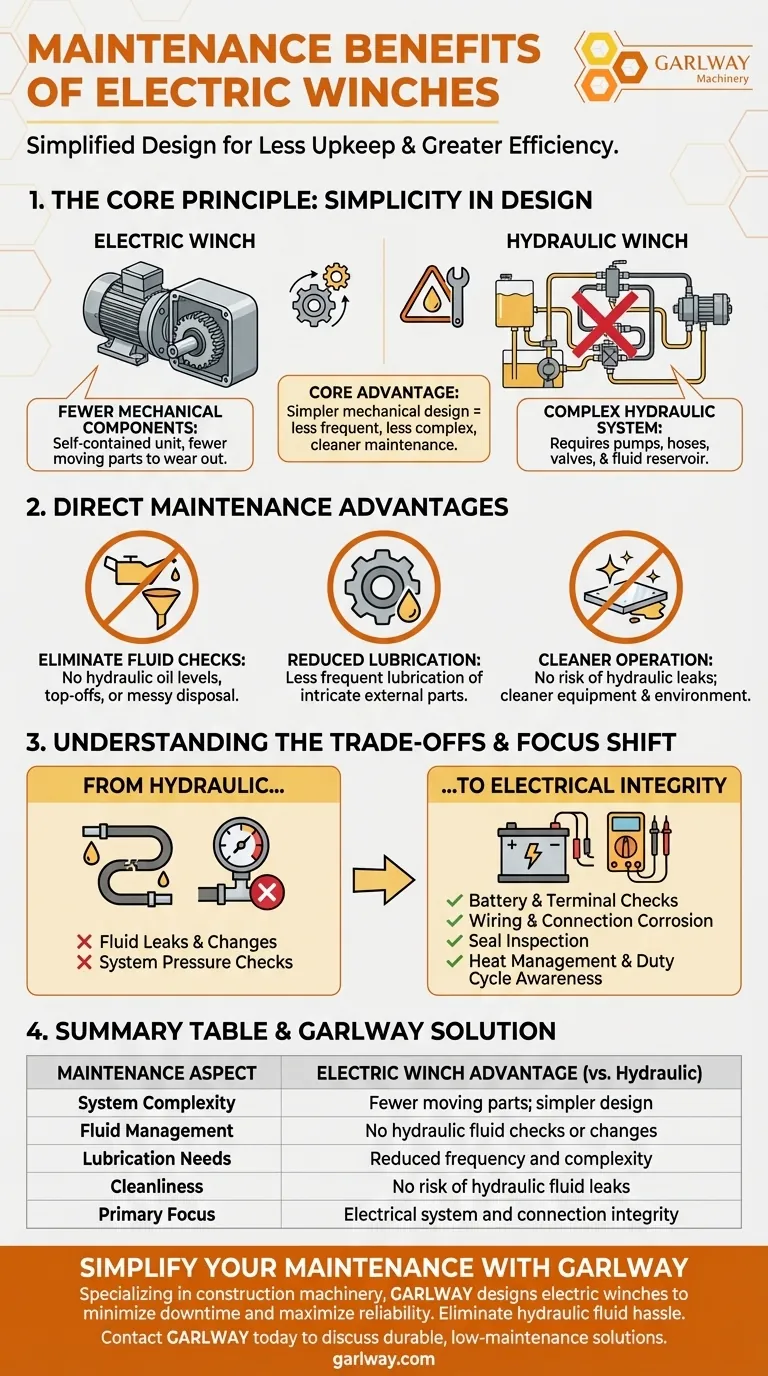
From a maintenance perspective, the primary benefit of an electric winch is its fundamental design simplicity. With fewer moving parts and the absence of a complex hydraulic fluid system, electric winches inherently have fewer potential points of mechanical failure, eliminating the need for routine fluid checks and changes.
The core advantage is clear: the simpler mechanical design of an electric winch directly translates to less frequent, less complex, and cleaner maintenance routines compared to hydraulic alternatives.
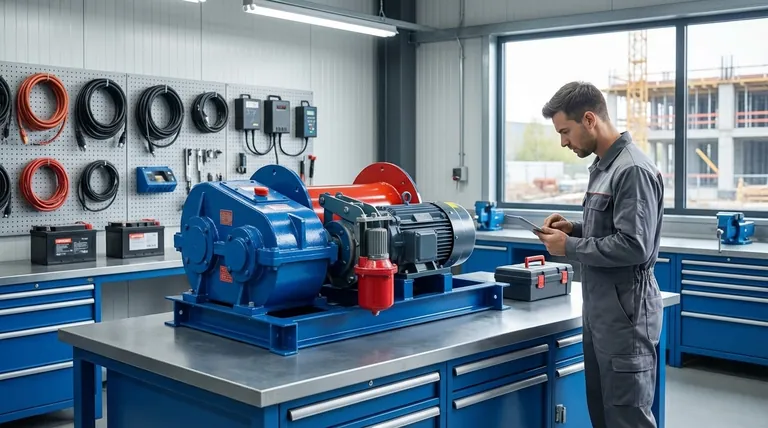
The Core Principle: Simplicity in Design
The maintenance benefits of an electric winch are not just a feature; they are a direct result of its core engineering. Understanding this principle is key to appreciating its long-term value.
Fewer Mechanical Components
An electric winch is a self-contained unit driven by an electric motor through a gear reducer. This design has significantly fewer moving parts than a hydraulic system, which requires pumps, hoses, valves, and a fluid reservoir.
Fewer components mean fewer things that can wear out, break, or require adjustment over time.
No Hydraulic System
The most significant maintenance differentiator is the complete absence of hydraulic fluid. This eliminates an entire category of common upkeep and failure points.
Hydraulic systems are prone to leaks from hoses and fittings, require periodic fluid level checks, and need fluid changes to prevent contamination and degradation. Electric winches bypass all of these requirements.
Direct Maintenance Advantages
This simplified design creates tangible benefits that reduce the time, cost, and complexity of keeping your winch operational.
Eliminating Fluid Checks
With no hydraulic oil, you never have to worry about checking fluid levels, dealing with messy top-offs, or managing fluid disposal during changes. This is often the most demanding aspect of hydraulic system maintenance.
Reduced Lubrication Needs
While some internal gear lubrication is necessary, electric winches do not require the frequent lubrication of intricate external parts that more complex mechanical systems might demand.
Cleaner Operation
The lack of hydraulic fluid means no risk of leaks. This not only keeps the winch and its mounting area cleaner but also prevents potential environmental contamination, which is a critical concern in many industries.
Understanding the Trade-offs
No technology is without its compromises. Acknowledging the specific maintenance needs of an electric winch is crucial for true reliability.
Dependency on Electrical Power
An electric winch is only as reliable as its power source. Its primary maintenance requirement shifts from mechanical and hydraulic upkeep to electrical system integrity.
This means regularly inspecting battery terminals, wiring, and connections for corrosion or damage. A weak battery or faulty wiring is the most common cause of electric winch failure.
Vulnerability of Electrical Components
The motor, solenoids, and control box can be vulnerable to water and mud if not properly sealed. While many are weather-resistant, ensuring these seals remain intact is a critical maintenance inspection point, especially after use in harsh conditions.
Heat Management and Duty Cycle
Electric motors generate significant heat under heavy load. They are governed by a duty cycle, meaning they require a cool-down period after a certain amount of continuous use to prevent overheating and motor damage. This is less of a maintenance task and more of an operational discipline.
Making the Right Choice for Your Goal
Your application determines whether the maintenance profile of an electric winch is the right fit for you.
- If your primary focus is minimal routine upkeep: The electric winch is the clear choice, as it eliminates the entire category of fluid-based maintenance.
- If your primary focus is absolute reliability in wet or muddy conditions: Your maintenance priority shifts to meticulously inspecting and protecting all electrical connections and seals.
- If your primary focus is extreme, continuous-use industrial lifting: A hydraulic system, despite its higher maintenance burden, may be more suitable due to its superior heat dissipation and longer duty cycles.
Ultimately, choosing an electric winch means trading the demands of hydraulic fluid management for the discipline of electrical system care.
Summary Table:
| Maintenance Aspect | Electric Winch Advantage |
|---|---|
| System Complexity | Fewer moving parts; simpler design |
| Fluid Management | No hydraulic fluid checks or changes |
| Lubrication Needs | Reduced frequency and complexity |
| Cleanliness | No risk of hydraulic fluid leaks |
| Primary Focus | Electrical system and connection integrity |
Simplify your equipment maintenance with GARLWAY electric winches.
As a specialist in construction machinery, GARLWAY designs electric winches, concrete mixers, and batching plants to minimize downtime and maximize reliability for construction companies and contractors worldwide. Our electric winches eliminate the hassle of hydraulic fluid management, reducing your routine upkeep and associated costs.
Let our experts help you select the right winch for your project's specific demands. Contact GARLWAY today to discuss your needs and discover how our durable, low-maintenance solutions can enhance your operational efficiency.
Visual Guide
Related Products
- Electric 120V Boat Winch by Badlands
- Electric and Hydraulic Winch for Heavy Duty Applications
- Small Electric Winch 120V and 240V for Compact Applications
- 12000 lb Electric Boat Trailer Winch with Windlass Anchor Warn
- Electric Hoist Winch Boat Anchor Windlass for Marine Applications
People Also Ask
- How do electric boat winches work? Unlock Effortless Launching & Retrieval
- How much current does an electric boat winch draw? Plan Your Electrical System for Peak Performance
- Can I run a winch straight from a battery? Essential Power Setup for Safe Operation
- What are the types of electric winches available? Choose the Right Winch for Your Job
- What are the uses of electric winches in mining and tunneling? Enhance Safety and Efficiency Underground