
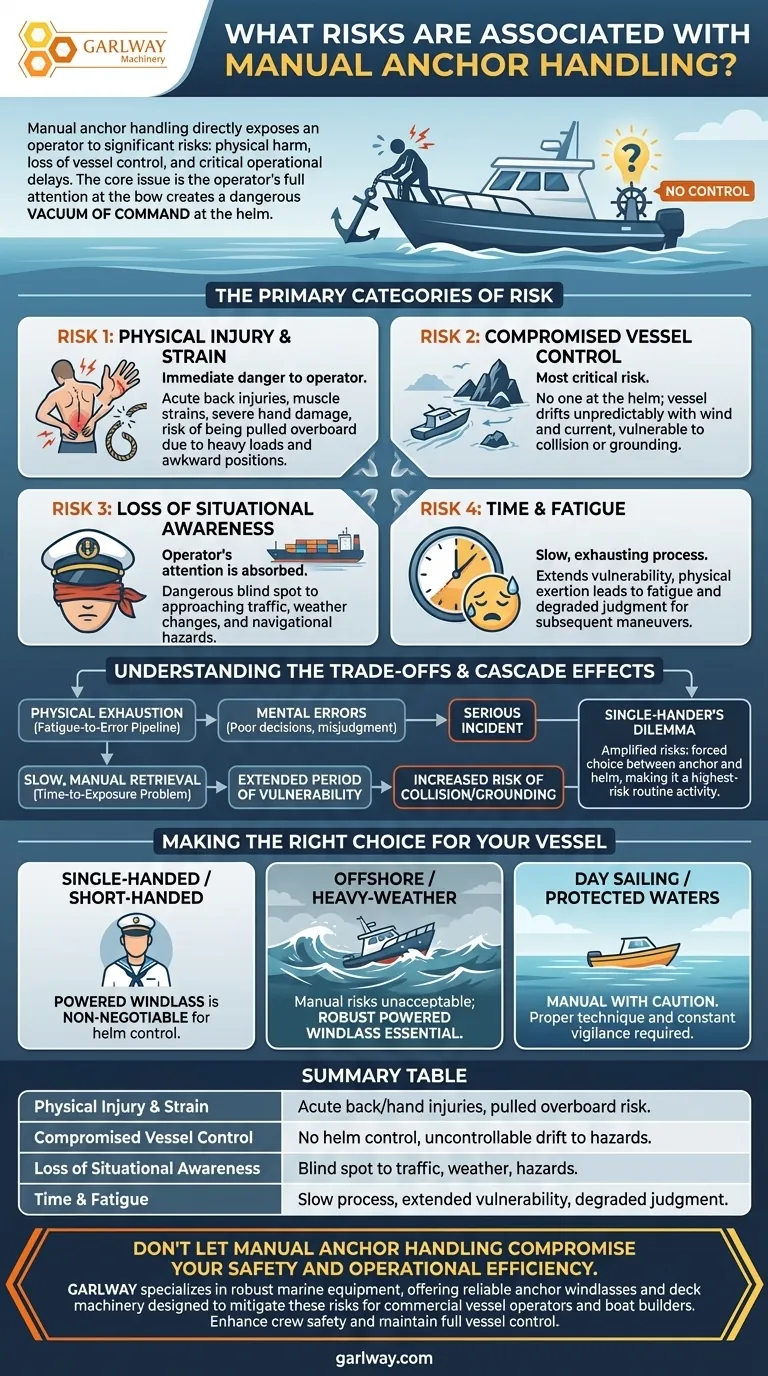
Manual anchor handling directly exposes an operator to significant risks, which can be broadly categorized into three areas: physical harm, loss of vessel control, and critical operational delays. These dangers range from severe personal injury to placing the vessel itself in a compromised and potentially hazardous situation.
The core issue with manual anchoring is not just the physical effort involved. It's that the process demands the operator's full attention and physical presence at the bow, creating a dangerous vacuum of command at the helm and preventing effective management of the vessel during a critical maneuver.
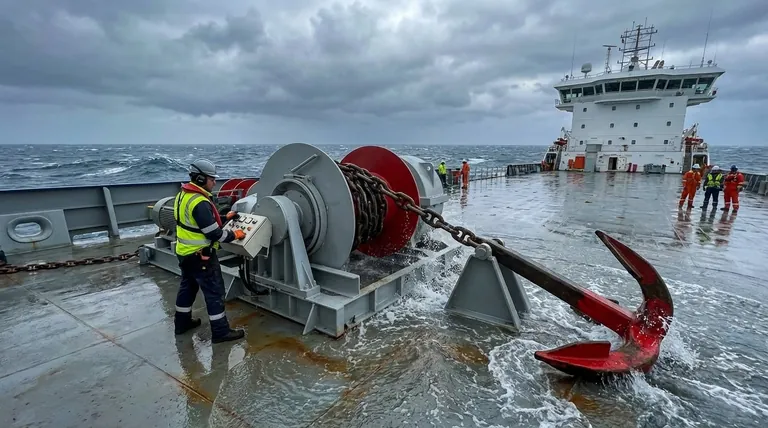
The Primary Categories of Risk
Handling a heavy anchor and rode by hand introduces a chain of vulnerabilities. Understanding each one is essential for any vessel operator weighing their options for ground tackle management.
Risk 1: Physical Injury and Strain
The most immediate danger is to the operator's body. The combination of heavy loads, awkward positions, and a potentially unstable platform (the deck) is a recipe for injury.
This includes acute back injuries from improper lifting, muscle strains, and severe hand damage from a fast-moving rope or chain. In the worst-case scenario, an operator can become entangled in the rode and be pulled overboard.
Risk 2: Compromised Vessel Control
While you are at the bow struggling with the anchor, no one is at the helm controlling the boat. This is the most critical operational risk.
The vessel is subject to wind and current, and it can swing unpredictably. Without active helm control, the boat can easily drift too close to other vessels, shoals, or navigational hazards. You are effectively "not at the controls" for the entire duration of the retrieval.
Risk 3: Loss of Situational Awareness
A sole operator's attention is completely absorbed by the physical task of hauling the anchor. This creates a dangerous blind spot in their situational awareness.
They cannot maintain a proper watch for approaching boat traffic, monitor changes in weather, or manage their position relative to their surroundings. This single-minded focus on the anchor means the bigger picture of vessel safety is temporarily ignored.
Risk 4: Time and Fatigue
Manually retrieving an anchor, especially in deep water or with an all-chain rode, is slow and exhausting. This is more than an inconvenience; it's a safety factor.
The longer the process takes, the longer the vessel remains in a vulnerable, uncontrolled state. Furthermore, the physical exertion induces fatigue, which degrades judgment and increases the likelihood of mistakes during subsequent maneuvers, such as navigating out of a crowded anchorage.
Understanding the Trade-offs and Cascade Effects
The risks associated with manual anchor handling are not isolated. They often compound each other, turning a minor issue into a serious incident.
The Fatigue-to-Error Pipeline
Physical exhaustion leads directly to mental errors. An operator fatigued from hauling an anchor is more likely to make a poor decision when they finally get back to the helm, misjudging distance or failing to react quickly to a new hazard.
The Time-to-Exposure Problem
A slow, manual retrieval extends the time your vessel is "un-anchored" but not yet fully under command. In a tight anchorage with shifting winds, this extended period of vulnerability significantly increases the risk of collision or grounding.
The Single-Hander's Dilemma
For a solo operator, these risks are amplified exponentially. They are forced to choose between managing the anchor and controlling the boat, when both tasks are critical. This dilemma makes manual anchoring one of the highest-risk routine activities for a single-hander.
Making the Right Choice for Your Vessel
Evaluating these risks in the context of your specific boating style is key to ensuring safety and operational readiness.
- If your primary focus is single-handed or short-handed operation: A powered windlass is a non-negotiable piece of safety equipment, allowing you to control the vessel from the helm during retrieval.
- If your primary focus is offshore or heavy-weather cruising: The physical demands and risks of manual handling are unacceptable; a robust, powered windlass is essential for managing heavy ground tackle safely.
- If your primary focus is day sailing a small boat in protected waters: Manual handling can be an acceptable practice, but only with proper lifting techniques and a constant, vigilant awareness of your boat's position and surroundings.
Ultimately, recognizing the full spectrum of risk allows you to implement systems and procedures that protect both yourself and your vessel.
Summary Table:
| Risk Category | Key Dangers |
|---|---|
| Physical Injury & Strain | Acute back injuries, muscle strains, hand damage, risk of being pulled overboard. |
| Compromised Vessel Control | No one at the helm; vessel drifts uncontrollably towards hazards. |
| Loss of Situational Awareness | Blind spot to approaching traffic, weather changes, and navigational hazards. |
| Time & Fatigue | Slow, exhausting process extends vulnerability and degrades judgment for subsequent maneuvers. |
Don't let manual anchor handling compromise your safety and operational efficiency. GARLWAY specializes in robust marine equipment, offering reliable anchor windlasses and deck machinery designed to mitigate these risks for commercial vessel operators and boat builders. Enhance crew safety and maintain full vessel control during critical maneuvers. Contact our marine experts today to find the right solution for your vessel!
Visual Guide
Related Products
- Electric Hoist Winch Boat Anchor Windlass for Marine Applications
- Best 18000 Pound Drum Anchor Trailer Winch
- Heavy Duty Electric Boat Winch Windlass Anchor
- 12000 lb Electric Boat Trailer Winch with Windlass Anchor Warn
People Also Ask
- How does an electric anchor winch work? Power, Safety, and Reliable Operation Explained
- What are the advantages of installing an electric anchor winch on a boat? Boost Safety & Ease for Boaters
- What are the operational differences between electric hoists and winches? A Guide to Safe Lifting vs. Pulling
- What are the main benefits of a boat anchor winch? Boost Safety & Efficiency for Your Vessel
- How does a boat anchor winch work? A Guide to Reliable Anchor Handling


