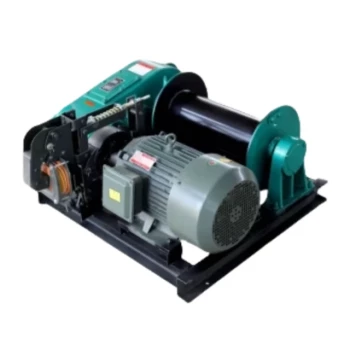
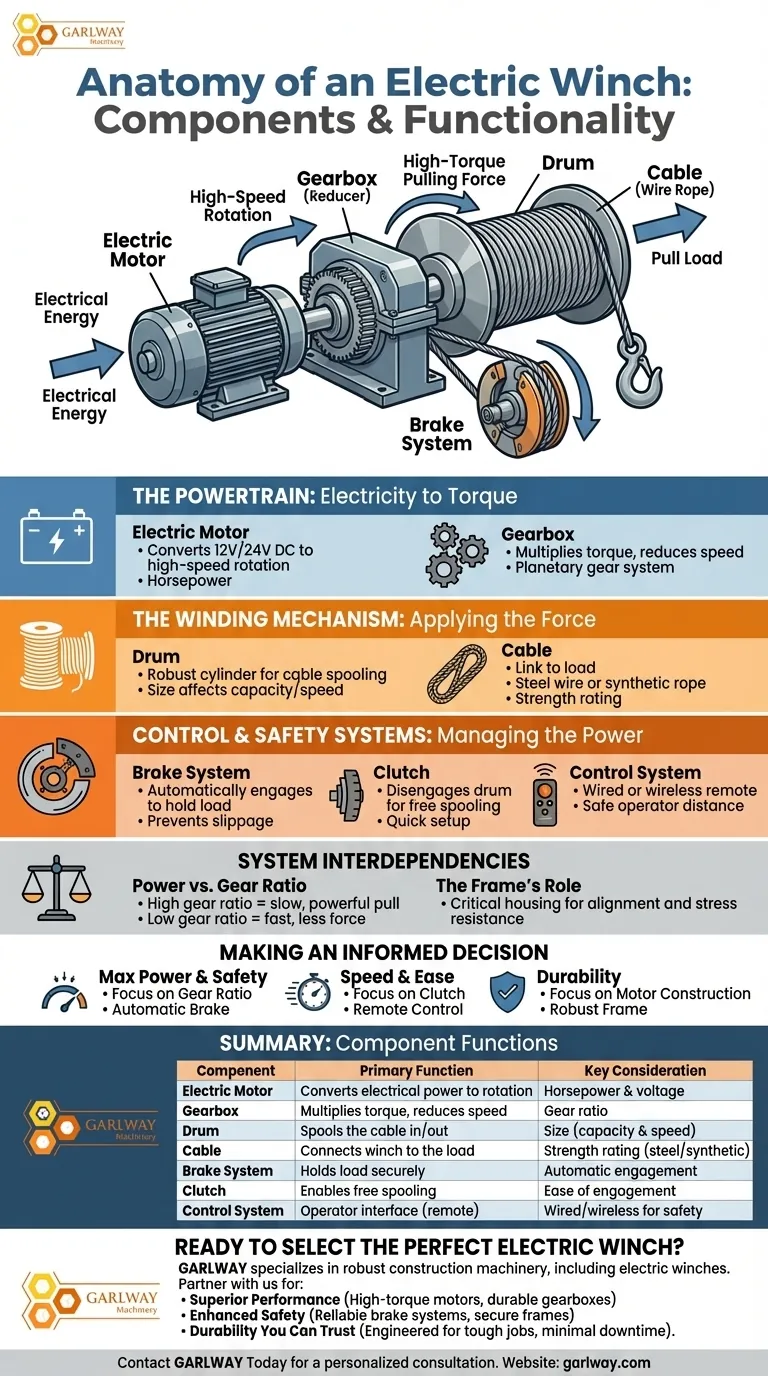
At its core, an electric winch is a system of five primary components. These are the electric motor, the gearbox, the drum, the cable, and the brake system. Together, they work in a sequence to convert electrical energy from a power source, like a vehicle's battery, into the immense pulling force required for recovery or hoisting operations.
An electric winch is not just a motor; it is a complete mechanical system. Each component plays a critical role in multiplying force and ensuring safe, controlled operation, turning a motor's high-speed spin into a powerful, low-speed pull.
The Powertrain: From Electricity to Torque
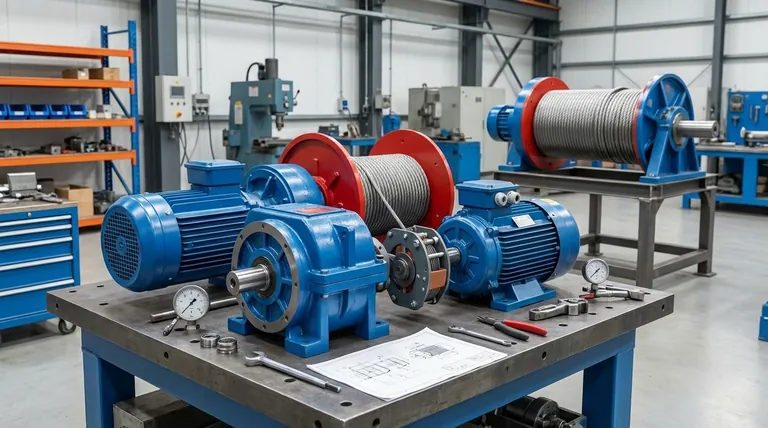
The first stage of any winch is converting electrical power into usable mechanical force. This is the job of the motor and the gearbox, which form the winch's powertrain.
The Electric Motor
The electric motor is the heart of the winch. It draws power, typically 12V or 24V DC from a vehicle battery, and converts it into high-speed rotational energy. The motor's horsepower is a key specification, but it does not tell the whole story of a winch's power.
The Gearbox (Reducer)
This is the winch's force multiplier. The motor produces high speed but low torque (twisting force). The gearbox, often a planetary gear system, reduces this speed significantly while multiplying the torque. This trade-off is what gives a winch its incredible pulling capability.
The Winding Mechanism: Applying the Force
Once the powertrain creates sufficient torque, the winding mechanism applies that force to the load.
The Drum
The drum is the simple, robust cylinder that the cable wraps around. As the gearbox turns the drum, it spools the cable either in or out, effectively pulling the load closer or letting it out. The drum's size can influence both pulling speed and cable capacity.
The Cable (Wire Rope)
The cable is the link between the winch and the object being pulled. It can be made of either traditional steel wire or lighter, more flexible synthetic rope. Its strength rating must be appropriate for the winch's capacity.
Control and Safety Systems
Power is useless without control and safety. These components ensure the operator can manage the load and that the winch will not fail under pressure.
The Brake System
This is a non-negotiable safety feature. The brake automatically engages the moment the motor stops. This prevents the drum from unspooling under load, securely holding the object in place and preventing dangerous slippage.
The Clutch (Free Spooling)
The clutch disengages the drum from the gearbox. This allows the cable to be pulled out by hand quickly, a feature known as "free spooling." This is far faster than using the motor to unspool the cable when preparing for a pull.
The Control System
This is the interface for the operator, usually a wired or wireless remote. It allows the user to direct the motor to spool the cable in or out from a safe distance.
Understanding the Interdependencies
A winch is a chain of components, and its performance is dictated by the seamless interaction between them. A failure in one part can compromise the entire system.
Power vs. Gear Ratio
A winch's final pulling power is a function of both its motor and its gear ratio. A very high gear ratio can make a moderately powerful motor pull immense loads, albeit slowly. Conversely, a lower gear ratio will result in a faster pull but with less maximum force.
The Frame's Critical Role
Often overlooked, the frame or housing is what holds everything together. It must be strong enough to withstand the massive forces generated by the powertrain and transferred through the drum, ensuring all components remain in proper alignment under extreme stress.
Making an Informed Decision
Understanding how these parts function allows you to evaluate a winch based on your specific needs.
- If your primary focus is maximum pulling power and safety: Pay closest attention to the gear ratio and the design of the automatic brake system.
- If your primary focus is speed and ease of use: A smooth-engaging clutch for free spooling and a reliable remote control system are essential features.
- If your primary focus is durability and long-term reliability: The quality of the motor's construction and the robustness of the frame and housing are critical indicators.
By recognizing how each component contributes, you can better operate, maintain, and choose the right winch for any task.
Summary Table:
| Component | Primary Function | Key Consideration |
|---|---|---|
| Electric Motor | Converts electrical power to rotation | Horsepower and voltage (e.g., 12V/24V) |
| Gearbox | Multiplies torque, reduces speed | Gear ratio for power vs. speed |
| Drum | Spools the cable in/out | Size affects cable capacity and speed |
| Cable | Connects winch to the load | Strength rating (steel or synthetic) |
| Brake System | Holds load securely; prevents slippage | Automatic engagement is critical for safety |
| Clutch | Enables manual cable release (free spooling) | Ease of engagement for quick setup |
| Control System | Operator interface (remote) | Wired or wireless for safe operation |
Ready to Select the Perfect Electric Winch for Your Project?
Understanding the components is the first step to choosing a reliable and powerful winch. GARLWAY specializes in engineering robust construction machinery, including electric winches, concrete mixers, and batching plants for construction companies and contractors worldwide.
Partner with GARLWAY to get:
- Superior Performance: Our winches are built with high-torque motors and durable gearboxes for maximum pulling power.
- Enhanced Safety: Featuring reliable automatic brake systems and secure frames designed to handle extreme stress.
- Durability You Can Trust: Engineered for the toughest job sites, ensuring long-term reliability and minimal downtime.
Let our experts help you find the ideal solution for your lifting and pulling needs.
Contact GARLWAY Today for a personalized consultation and quote!
Visual Guide
Related Products
- Electric 120V Boat Winch by Badlands
- Electric and Hydraulic Winch for Heavy Duty Applications
- Small Electric Winch 120V and 240V for Compact Applications
- 12000 lb Electric Boat Trailer Winch with Windlass Anchor Warn
- Electric Hoist Winch Boat Anchor Windlass for Marine Applications
People Also Ask
- How do electric boat winches work? Unlock Effortless Launching & Retrieval
- How much current does an electric boat winch draw? Plan Your Electrical System for Peak Performance
- Can I run a winch straight from a battery? Essential Power Setup for Safe Operation
- What are the types of electric winches available? Choose the Right Winch for Your Job
- What are the uses of electric winches in mining and tunneling? Enhance Safety and Efficiency Underground