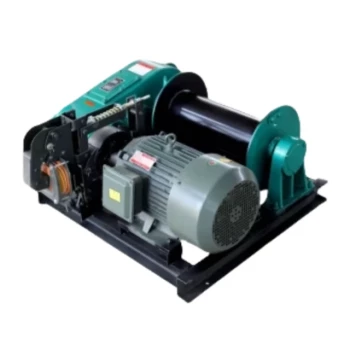
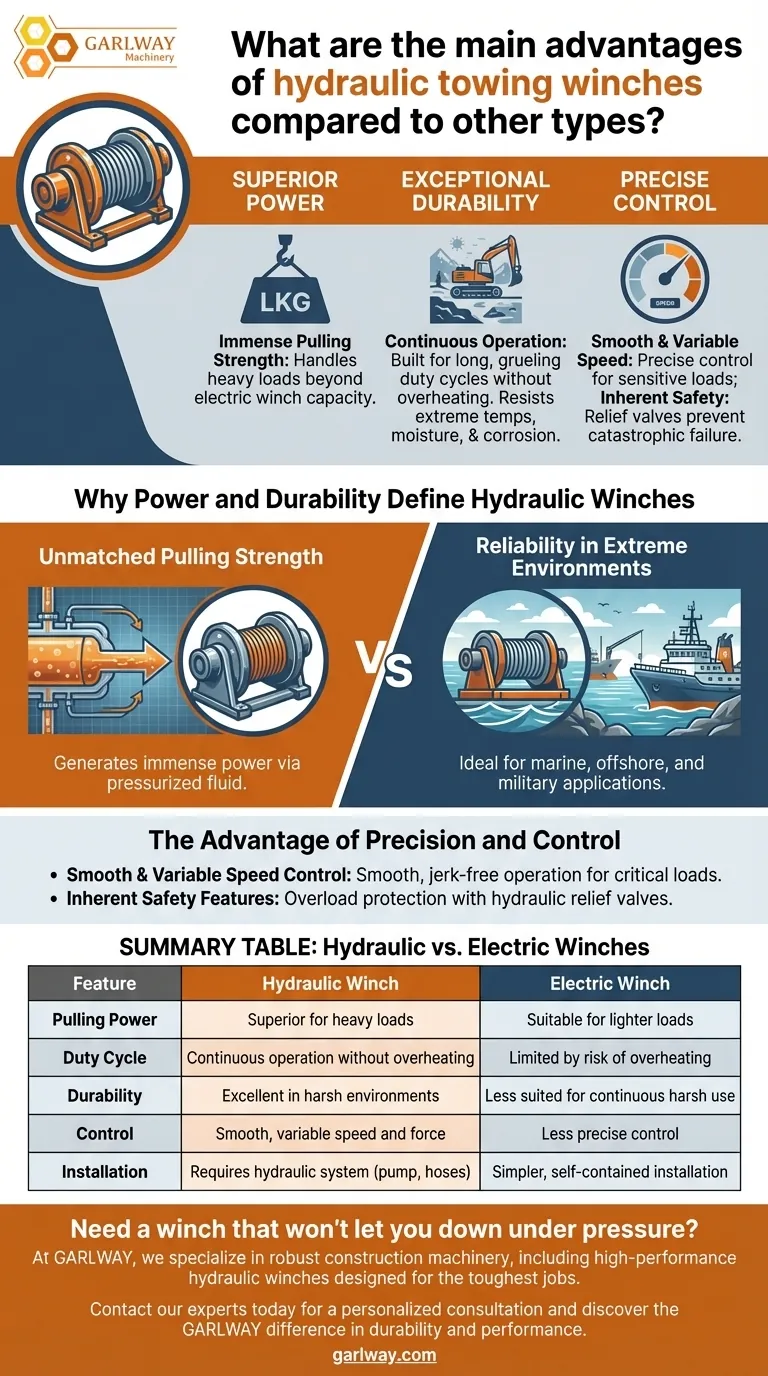
The primary advantages of a hydraulic towing winch are its superior power, exceptional durability for continuous use, and precise operational control. These systems are engineered for the most demanding tasks where other winch types, like electric models, might overheat or lack the necessary brute force and resilience.
The core reason to choose a hydraulic winch is its unmatched reliability in harsh, high-load, and continuous-duty environments. While other winches have their place, hydraulic systems are the definitive choice for critical industrial, marine, and military applications where failure is not an option.
Why Power and Durability Define Hydraulic Winches
Hydraulic systems operate on a fundamentally different principle than their electric counterparts, giving them inherent advantages in strength and endurance.
Unmatched Pulling Strength
Hydraulic winches generate immense pulling power by using pressurized fluid. This makes them capable of handling extremely heavy loads that are often beyond the capacity of standard electric winches.
Designed for Continuous Operation
Unlike many electric winches that can overheat during prolonged use, hydraulic systems are built for long, grueling duty cycles. They can operate continuously without significant risk of overheating or performance degradation.
Reliability in Extreme Environments
These winches are exceptionally robust. They are highly resistant to extreme temperatures, moisture, and corrosive conditions, making them the ideal choice for marine, offshore, and military applications.
The Advantage of Precision and Control
Beyond raw power, the nature of hydraulic systems allows for a superior level of operational finesse and safety.
Smooth and Variable Speed Control
Operators have precise control over the winch's speed and pulling force. This allows for smooth, jerk-free operation, which is critical when handling sensitive or heavy loads where sudden movements could be dangerous.
Inherent Safety Features
Hydraulic systems can be equipped with relief valves that act as a natural overload protection. If the load exceeds the winch's capacity, the system prevents catastrophic failure, enhancing operational safety.
Understanding the Trade-offs
No single solution is perfect for every scenario. The primary trade-off for a hydraulic winch's power is its reliance on a hydraulic power source.
When Electric Winches Have an Edge
Electric winches are often a better fit for applications that are less demanding. They excel in situations requiring faster retrieval for lighter loads or where operator strength is a concern and a simpler, self-contained unit is preferred.
Installation and System Dependency
A hydraulic winch requires a hydraulic pump, fluid reservoir, and hoses to operate. This makes installation more complex and dependent on the vehicle or vessel having a compatible hydraulic system, unlike a more straightforward electric winch installation.
Considering Specialized Alternatives
For highly specific and complex hauling needs, other options exist. For example, sliding combination winches offer unparalleled customization for unique challenges, though they are a much more specialized solution.
How to Choose the Right Winch for Your Application
Your choice should be dictated entirely by the demands of your specific task.
- If your primary focus is heavy-duty, continuous use in harsh conditions: A hydraulic winch is the only reliable choice for its power and durability.
- If your primary focus is intermittent use, lighter loads, or ease of installation: An electric winch provides a more practical and cost-effective solution.
- If your primary focus is complex, multi-angle hauling: You may need to investigate specialized systems like sliding combination winches.
Ultimately, selecting the right winch is about matching the tool's core strengths to your operational reality.
Summary Table:
| Feature | Hydraulic Winch | Electric Winch |
|---|---|---|
| Pulling Power | Superior for heavy loads | Suitable for lighter loads |
| Duty Cycle | Continuous operation without overheating | Limited by risk of overheating |
| Durability | Excellent in harsh, extreme environments | Less suited for continuous harsh use |
| Control | Smooth, variable speed and force | Less precise control |
| Installation | Requires hydraulic system (pump, hoses) | Simpler, self-contained installation |
Need a winch that won't let you down under pressure?
At GARLWAY, we specialize in robust construction machinery, including high-performance hydraulic winches designed for the toughest jobs. Our winches are built to deliver reliable, continuous power for construction companies and contractors working in demanding environments globally.
Let us help you choose the right equipment for your project. Contact our experts today for a personalized consultation and discover the GARLWAY difference in durability and performance.
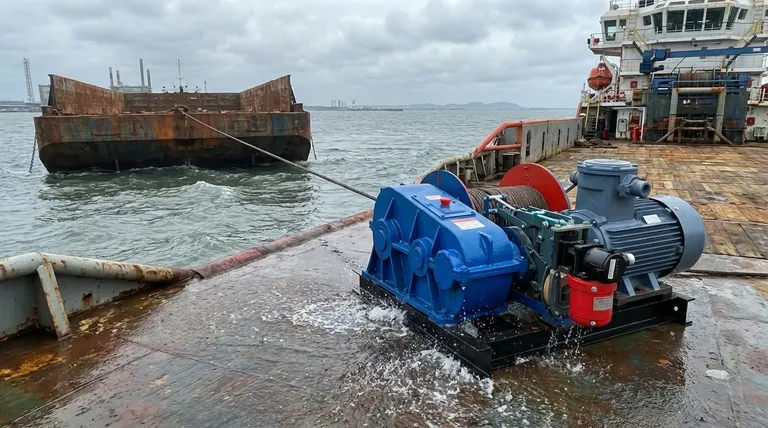
Visual Guide
Related Products
- Electric and Hydraulic Winch for Heavy Duty Applications
- Hydraulic Winding Engine Harbor Freight Winch
- Warn Winch Windlass Boat Trailer Winch
- 12000 lb Electric Boat Trailer Winch with Windlass Anchor Warn
- Portable Small Trailer Winch
People Also Ask
- What are the differences between electric and hydraulic winches? Choose the Right Winch for Your Job
- What are some common uses for a heavy-duty winch? Power Your Construction & Industrial Projects
- What are electro-hydraulic winches and their applications? The Integrated Power Solution for Heavy-Duty Operations
- How do winches assist in bridge launching? Accelerate Bridge Placement with Controlled Pulling Power
- What are the benefits of using heavy-duty winches for large projects? Boost Efficiency & Safety