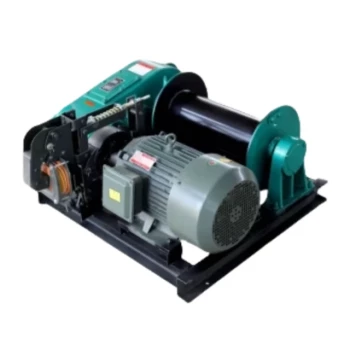
At its core, a linear winch is a system designed to multiply force. It achieves this through a series of essential components that work in concert: an electric motor, a gearbox, a brake, a coupling, and a drum that holds the wire rope or cable. Each part plays a critical role in converting electrical energy into controlled, powerful pulling force.
The central purpose of a winch's internal components is not just to pull, but to transform the high-speed, low-torque output of a motor into the low-speed, high-torque force necessary to move heavy loads safely and efficiently.
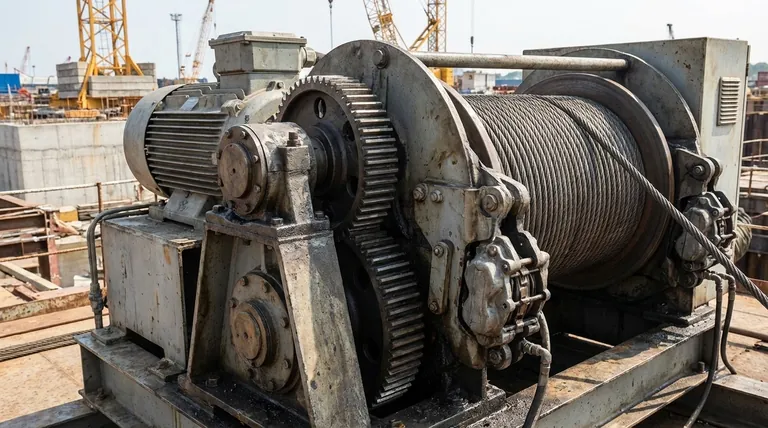
The Core Powertrain: From Electricity to Force
The primary function of a winch is to generate and transmit power. This is handled by a powertrain that begins with the motor and ends where the force is applied to the drum.
The Electric Motor: The Prime Mover
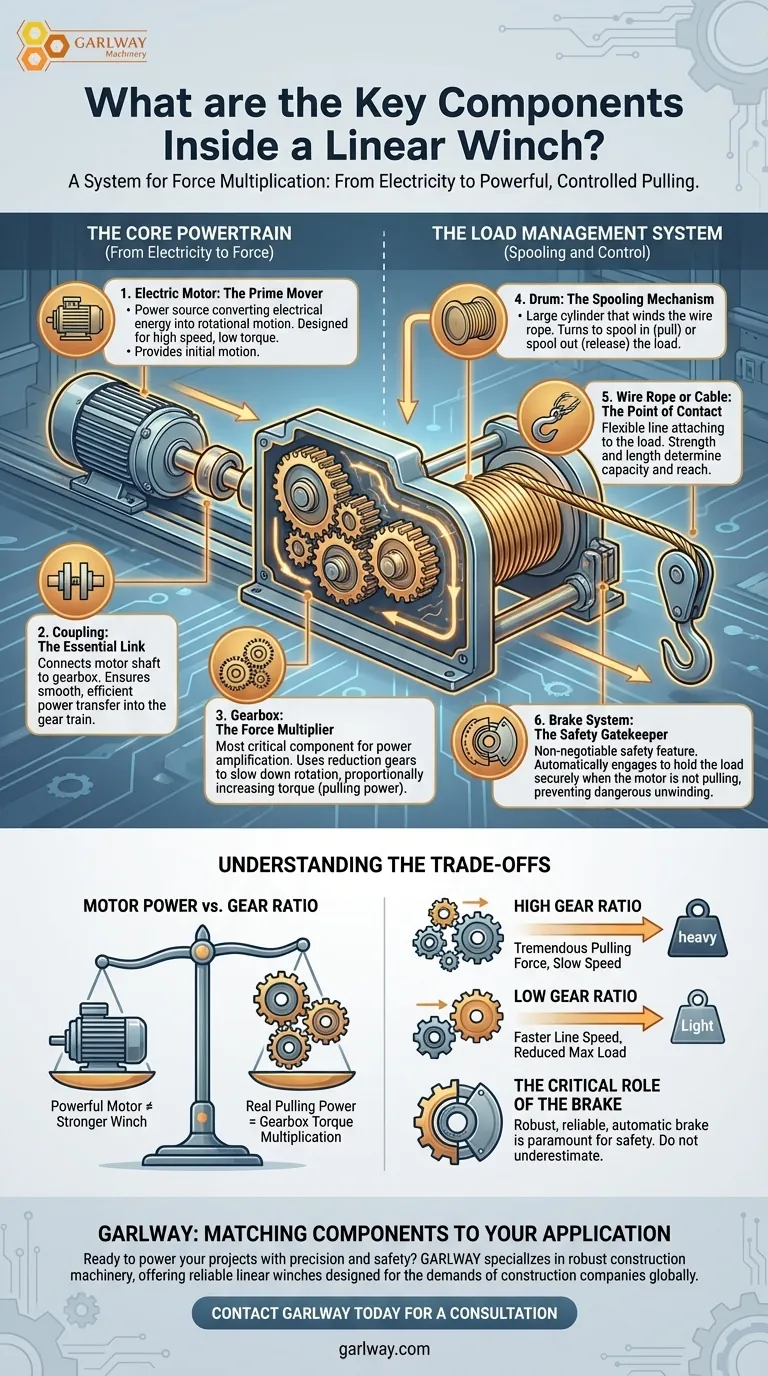
The electric motor is the heart of the winch. It is the power source that converts electrical energy into rotational mechanical energy.
Motors in winches are typically designed for high speed and relatively low torque. Their job is to spin quickly, providing the initial motion for the rest of the system.
The Gearbox: The Force Multiplier
The gearbox, or gear train, is arguably the most critical component for power amplification. It takes the high-speed rotation from the motor and uses a series of reduction gears to slow it down.
This reduction in speed results in a proportional increase in torque—the actual pulling power of the winch. Think of it like the gears on a bicycle: a low gear makes it easier to pedal uphill (high torque) but you move slowly.
The Coupling: The Essential Link
The coupling is a simple but vital component that connects the motor's output shaft to the gearbox's input shaft. It ensures that the power generated by the motor is transferred smoothly and efficiently into the gear train.
The Load Management System: Spooling and Control
Once the power is generated and multiplied, it must be applied to the load and controlled safely. This is the job of the load management components.
The Drum: The Spooling Mechanism
The drum is the large cylinder onto which the wire rope or cable is wound. As the gearbox turns the drum, the cable is either spooled in (pulling the load) or spooled out (releasing it).
The Wire Rope or Cable: The Point of Contact
This is the flexible line that attaches directly to the object being pulled. The strength and length of the cable are critical factors that determine the winch's overall capacity and reach.
The Brake System: The Safety Gatekeeper
The brake is a non-negotiable safety feature. Its primary function is to automatically engage and hold the load securely whenever the motor is not actively pulling.
This prevents the drum from unwinding under load, which would cause a dangerous and uncontrolled release of the object being moved.
Understanding the Trade-offs
Choosing or specifying a winch requires understanding how its components create inherent trade-offs in performance. Ignoring these can lead to inefficiency or unsafe operation.
Motor Power vs. Gear Ratio
A more powerful motor does not always mean a stronger winch. The real pulling power comes from the torque multiplication provided by the gearbox.
A winch with a moderate motor but a very high gear reduction ratio can often pull a heavier load than one with a powerful motor and a low gear ratio, though it will do so much more slowly.
Speed vs. Pulling Force
The gear ratio dictates the fundamental trade-off between speed and power.
A high gear ratio delivers tremendous pulling force but results in a slow line speed. A low gear ratio allows for much faster line speed but significantly reduces the maximum load it can pull.
The Critical Role of the Brake
Braking systems are not all created equal. A robust, reliable, and automatic brake is the most important safety component. Underestimating its importance can put both the equipment and personnel at risk.
Matching Components to Your Application
To make an informed decision, you must align the winch's component characteristics with your primary goal.
- If your primary focus is maximum pulling power: Prioritize a winch with a high gear reduction ratio and a robust braking system.
- If your primary focus is operational speed: Look for a winch with a lower gear ratio, but ensure its pulling capacity still meets your safety margins.
- If your primary focus is safety and precise control: Invest in a winch known for a high-quality, automatic braking system and a smooth, controllable motor.
Understanding how these core components function together empowers you to select the right tool for the job.
Summary Table:
| Component | Key Function |
|---|---|
| Electric Motor | Converts electrical energy into rotational motion. |
| Gearbox | Reduces speed and multiplies torque for pulling power. |
| Brake System | Automatically holds the load for safety. |
| Drum & Cable | Spools the cable, which attaches to the load. |
| Coupling | Connects the motor to the gearbox for power transfer. |
Ready to power your projects with precision and safety? The right winch is critical for efficiency and job site security. GARLWAY specializes in robust construction machinery, offering reliable linear winches, concrete mixers, and batching plants designed for the demands of construction companies and contractors globally. Let our expertise guide you to the perfect equipment solution.
Contact GARLWAY today for a consultation and discover the difference quality engineering makes.
Visual Guide
Related Products
- Small Electric Winch 120V and 240V for Compact Applications
- Electric and Hydraulic Winch for Heavy Duty Applications
- Hydraulic Winding Engine Harbor Freight Winch
- Warn Winch Windlass Boat Trailer Winch
- Portable Small Trailer Winch
People Also Ask
- What makes electric winches suitable for off-road use? Key Features for Reliable Vehicle Recovery
- What are the common applications of electric winches? Power Your Lifting & Pulling Tasks
- What are the common uses of an electric winch? A Guide to Safe and Efficient Heavy Lifting
- What are the uses of electric winches in mining and tunneling? Enhance Safety and Efficiency Underground
- How do electric winches contribute to energy savings? Maximize Efficiency and Lower Costs