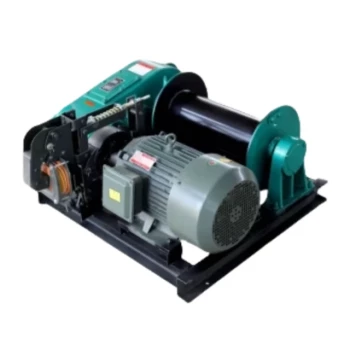
Beyond simple pulling power, electric winches deliver a compelling combination of safety, precision, and operational efficiency for industrial applications. They provide controlled and predictable load management through electric motors and advanced controls, significantly reducing manual labor while enhancing workplace safety and lowering long-term operating costs.
The primary advantage of an electric winch is not just its power, but its precision and integrability. Their digital control, lower maintenance, and inherent safety features make them a strategically superior choice for modern industrial operations focused on efficiency and cost control.
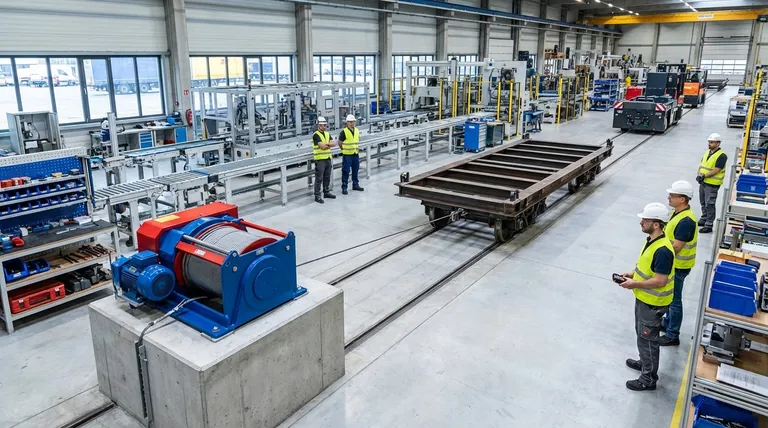
The Core Operational Advantages
Electric winches have evolved beyond simple "on/off" devices. They are now sophisticated tools that offer significant improvements to the workflow, safety, and precision of industrial material handling.
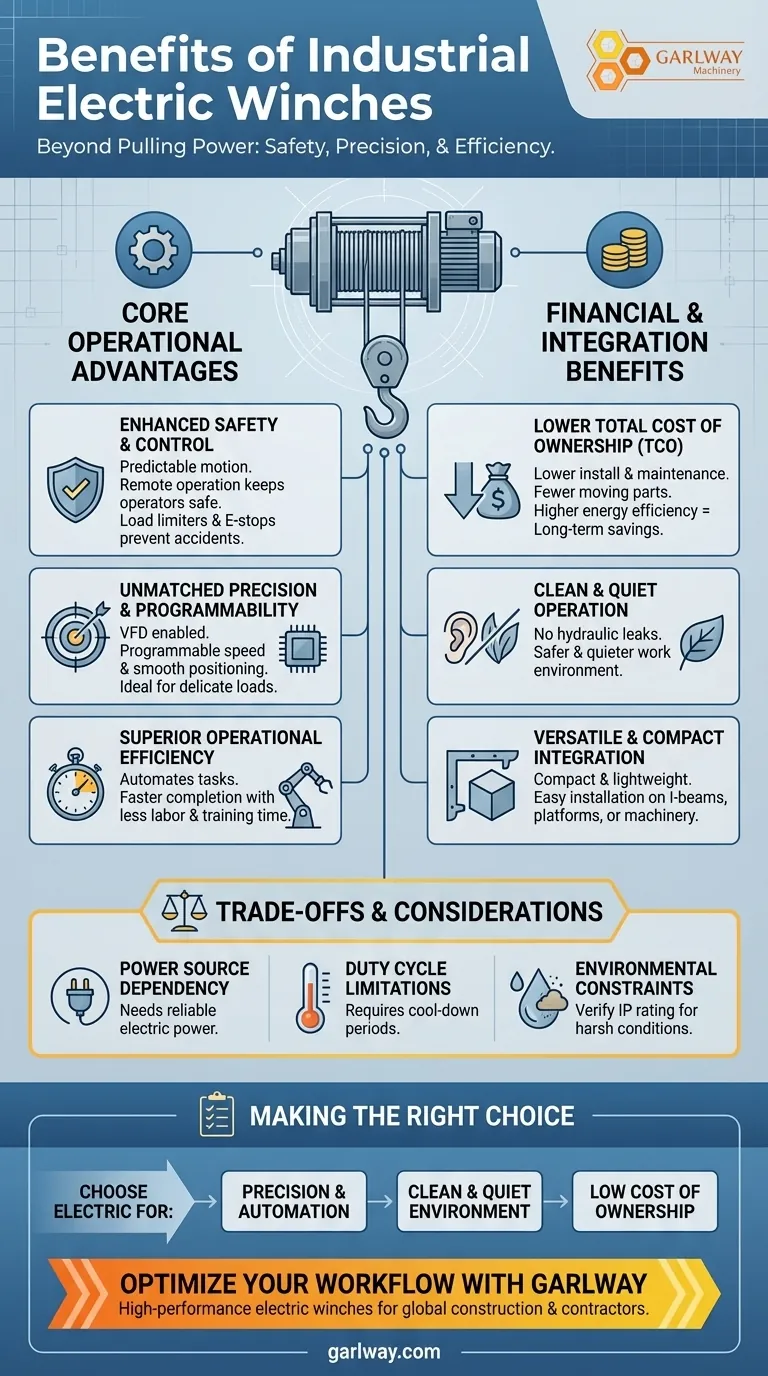
Enhanced Safety and Control
An electric winch provides a controlled, predictable motion that is fundamental to workplace safety. This eliminates the jerking and inconsistency associated with manual pulling or less advanced systems.
Operators can manage the load from a safe distance using a remote control, keeping them out of hazardous zones. Furthermore, many units can be equipped with critical safety features like load limiters, emergency stops, and audible alarms to prevent overloads and accidents.
Unmatched Precision and Programmability
The true power of modern electric winches lies in their control systems. When paired with a Variable Frequency Drive (VFD), they offer exceptionally precise control over speed and positioning.
This allows for programmable start/stop speeds, specific stop positions, and smooth acceleration/deceleration, which is critical for handling delicate or valuable materials on an assembly line or in a manufacturing process.
Superior Operational Efficiency
By automating the lifting and pulling process, electric winches dramatically increase efficiency. Tasks that would require significant manual effort are completed faster and with less personnel.
The ease of use, often via a simple remote or control panel, reduces the training burden and minimizes the potential for operator error.
The Financial and Integration Benefits
Beyond day-to-day operations, electric winches present a strong business case through lower costs and easier integration compared to traditional alternatives like hydraulic or pneumatic systems.
Lower Total Cost of Ownership
Electric winches typically have lower installation costs than hydraulic systems, which require complex plumbing for fluid lines. Their design involves fewer moving parts, leading to reduced maintenance needs.
This combination of lower upfront cost, minimal maintenance, and higher energy efficiency results in significant long-term savings and a lower total cost of ownership.
Clean and Quiet Operation
A key benefit, especially in manufacturing and indoor environments, is the absence of hydraulic fluid. This eliminates the risk of messy, hazardous, and costly fluid leaks that can contaminate products or create slip hazards.
Electric motors also operate far more quietly than hydraulic or pneumatic systems, contributing to a better and safer work environment.
Versatile and Compact Integration
Electric winches are generally more compact and lightweight than their hydraulic counterparts with similar capacity. This makes them easier to install, particularly in situations with space or weight restrictions.
Their versatility allows them to be mounted on structural I-beams, mobile platforms, or integrated directly into larger machinery across industries like construction, shipping, and manufacturing.
Understanding the Trade-offs
While highly beneficial, electric winches are not universally superior for every single task. Acknowledging their limitations is key to making an informed decision.
Power Source Dependency
The most obvious constraint is the need for a reliable electrical power source. In remote field locations or during power outages, an electric winch is unusable without a generator, whereas a hydraulic system could be run from a combustion engine.
Duty Cycle Limitations
Electric motors generate heat and often have a duty cycle rating. This means they may require a cool-down period after a certain amount of continuous operation at full load. For applications requiring constant, non-stop pulling for extended periods, a heavy-duty hydraulic system may be more suitable.
Environmental Considerations
While many industrial electric winches are well-sealed against dust and moisture, extremely harsh, wet, or corrosive environments may demand the robust, sealed nature of a specialized hydraulic or pneumatic system. Always verify the IP (Ingress Protection) rating of an electric winch against your specific environmental conditions.
Making the Right Choice for Your Application
Selecting the right winch requires aligning its capabilities with your primary operational goal.
- If your primary focus is precision and automation: An electric winch paired with a VFD is the definitive choice for programmable, repeatable motion.
- If your primary focus is a clean and quiet environment: An electric winch is vastly superior, as it eliminates hydraulic fluid leaks and reduces operational noise.
- If your primary focus is low installation and maintenance costs: An electric winch is typically the most cost-effective solution over its lifecycle.
- If your primary focus is continuous, heavy-duty use in a remote location: A hydraulic system may offer more robust performance, provided you can accommodate its infrastructure needs.
By evaluating your specific needs for control, cost, and environment, you can leverage the distinct advantages of an electric winch to create a safer and more productive operation.
Summary Table:
| Benefit | Key Advantage |
|---|---|
| Safety | Remote control, load limiters, and emergency stops for accident prevention. |
| Precision | Variable Frequency Drive (VFD) for smooth, programmable speed control. |
| Efficiency | Reduces manual labor, lowers training time, and minimizes operator error. |
| Cost Savings | Lower installation & maintenance costs with a reduced total cost of ownership. |
| Integration | Compact, versatile design for easy mounting in various industrial settings. |
Ready to enhance your industrial operations with a reliable electric winch?
At GARLWAY, we specialize in high-performance construction machinery, including robust electric winches designed for construction companies and contractors worldwide. Our solutions deliver the precision, safety, and cost-efficiency your projects demand.
Contact us today to discuss your needs and discover how a GARLWAY electric winch can optimize your workflow!
Visual Guide
Related Products
- Electric 120V Boat Winch by Badlands
- Electric and Hydraulic Winch for Heavy Duty Applications
- Small Electric Winch 120V and 240V for Compact Applications
- 12000 lb Electric Boat Trailer Winch with Windlass Anchor Warn
- Electric Hoist Winch Boat Anchor Windlass for Marine Applications
People Also Ask
- How do electric boat winches work? Unlock Effortless Launching & Retrieval
- How much current does an electric boat winch draw? Plan Your Electrical System for Peak Performance
- Can I run a winch straight from a battery? Essential Power Setup for Safe Operation
- What are the types of electric winches available? Choose the Right Winch for Your Job
- What are the uses of electric winches in mining and tunneling? Enhance Safety and Efficiency Underground