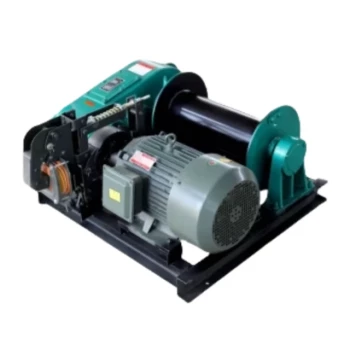
The primary device that controls winding operations is known as a winding-speed regulator. Its core function is to intelligently calculate the appropriate hoisting speed relative to the distance the load has traveled, while carefully limiting acceleration and deceleration during both ascent and descent.
The purpose of a winding-speed regulator is not simply to control speed, but to ensure the entire winding cycle is safe and efficient by managing the complex relationship between speed, distance, and acceleration from start to finish.
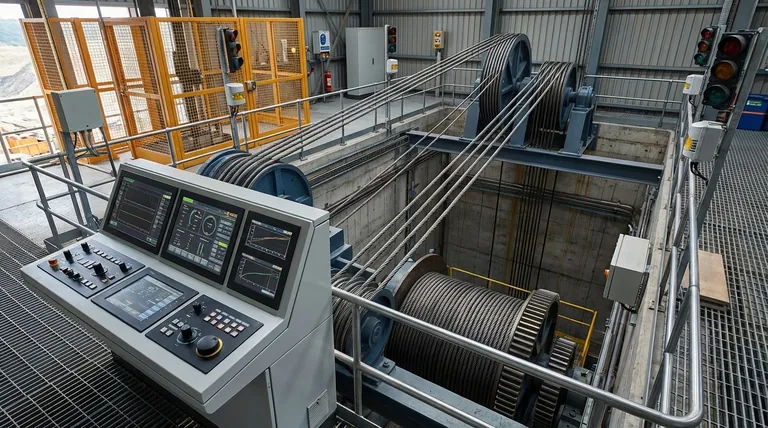
The Core Function of a Winding-Speed Regulator
A winding system, whether in a mine or an elevator, must move heavy loads with precision and safety. The regulator is the brain that makes this controlled motion possible.
Calculating Speed Relative to Distance
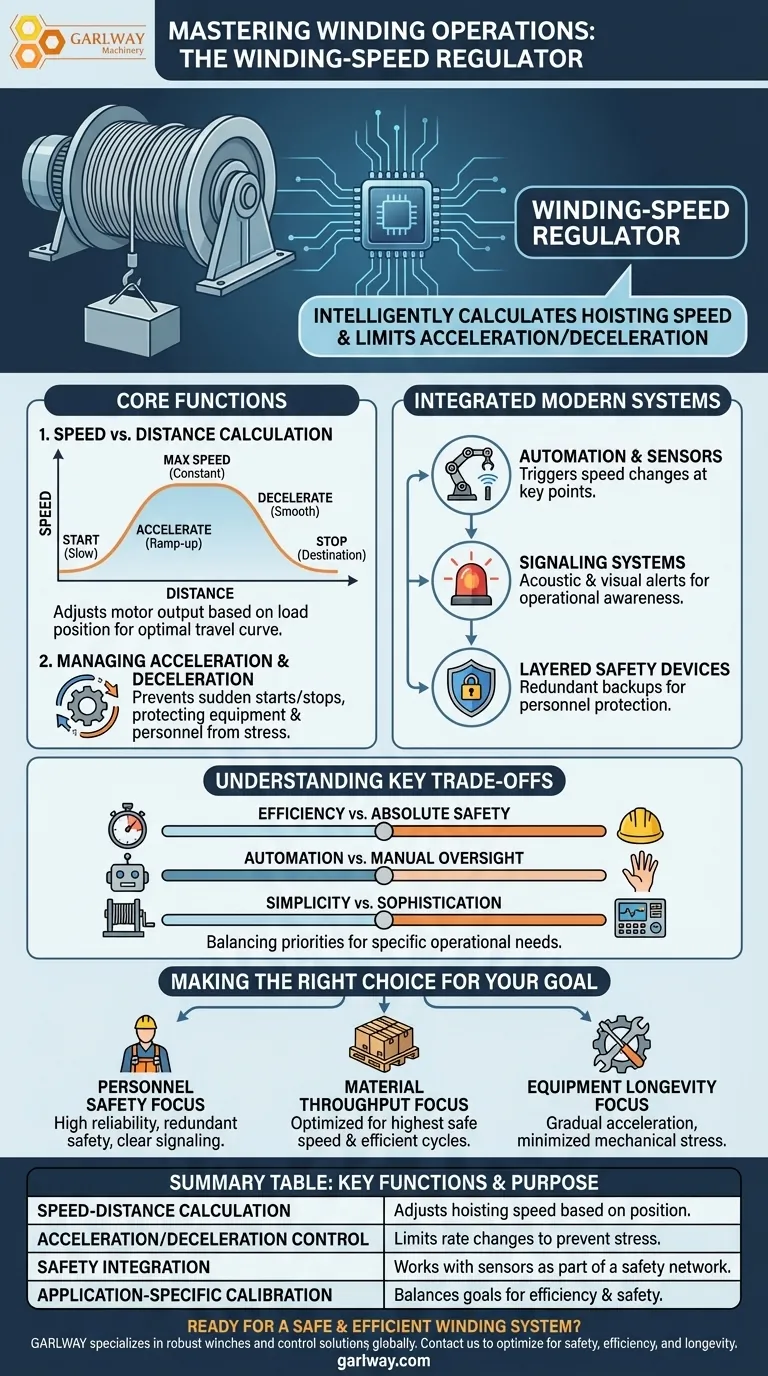
The hoisting speed cannot be constant. The system must start slowly, accelerate to a maximum speed for the main travel distance, and then decelerate smoothly as it approaches its destination.
The regulator continuously tracks the position of the load or conveyance. Based on this data, it adjusts the motor's output to ensure the speed is appropriate for that specific point in the journey.
Managing Acceleration and Deceleration
Sudden starts or stops would place enormous stress on the mechanical components, such as cables and gears, and would be extremely dangerous for any personnel being transported.
The regulator imposes strict limits on the rate of acceleration and deceleration. This creates a smooth "ramp-up" and "ramp-down" of speed, protecting both the equipment and its payload.
Winding Systems in a Modern Context
While the winding-speed regulator is the core controller, it operates as part of a larger, integrated system, especially in modern industrial applications like mining.
The Role of Automation
In automated systems, the regulator works in conjunction with electrical contacts and sensors. These devices signal when the conveyance has reached key points, triggering automated changes in speed or initiating a stop.
Integrated Signaling Systems
For operational awareness, the control system is linked to acoustic and visual signals. These alerts inform operators of the system's status, direction of travel, and any potential issues, ensuring clear communication.
Layered Safety Devices
When winding operations involve raising or lowering personnel, the system includes numerous redundant safety devices. The regulator is just one component in a comprehensive safety network designed to prevent accidents.
Understanding the Key Trade-offs
Implementing a winding control system involves balancing competing priorities. Understanding these trade-offs is crucial for designing a system that meets specific operational needs.
Efficiency vs. Absolute Safety
The primary goal is always safety. However, the parameters of the regulator—such as maximum speed and acceleration rates—are set to find a balance between moving materials or people efficiently and maintaining a wide margin of safety.
Automation vs. Manual Oversight
While automation increases efficiency and repeatability, it reduces the moment-to-moment control of a human operator. Modern systems layer automation with robust safety interlocks and provide clear feedback to a supervising operator.
Simplicity vs. Sophistication
A simple winch may only have a basic motor control. A sophisticated mine hoist requires a complex regulator integrated with multiple sensors and safety backups. The complexity of the control system must match the critical nature of the task.
Making the Right Choice for Your Goal
The design and calibration of a winding control system depend entirely on its intended application.
- If your primary focus is personnel safety: The system must feature a highly reliable regulator integrated with multiple, redundant safety devices and clear signaling.
- If your primary focus is material throughput: The regulator should be optimized for efficient, repeatable cycles by enabling the highest safe speed and smoothest acceleration profiles.
- If your primary focus is equipment longevity: The regulator must be calibrated to minimize mechanical stress by enforcing gradual acceleration and deceleration, preventing shock loads on the system.
Ultimately, a well-implemented winding control system transforms raw power into controlled, safe, and efficient motion.
Summary Table:
| Key Function | Purpose |
|---|---|
| Speed-Distance Calculation | Adjusts hoisting speed based on the load's position for optimal travel. |
| Acceleration/Deceleration Control | Limits rate changes to prevent mechanical stress and ensure smooth operation. |
| Safety Integration | Works with sensors and signaling systems as part of a comprehensive safety network. |
| Application-Specific Calibration | Balances efficiency, safety, and equipment longevity based on operational goals. |
Ready to implement a safe and efficient winding control system?
GARLWAY specializes in construction machinery, offering robust winches and control solutions for construction companies and contractors globally. Our expertise ensures your hoisting operations are optimized for safety, efficiency, and equipment longevity.
Contact GARLWAY today to discuss your specific needs and discover the right solution for your project.
Visual Guide
Related Products
- Small Electric Winch 120V and 240V for Compact Applications
- Hydraulic Winding Engine Harbor Freight Winch
People Also Ask
- What makes electric winches suitable for off-road use? Key Features for Reliable Vehicle Recovery
- What are the common applications of electric winches? Power Your Lifting & Pulling Tasks
- What are the common uses of an electric winch? A Guide to Safe and Efficient Heavy Lifting
- What are the uses of electric winches in mining and tunneling? Enhance Safety and Efficiency Underground
- How do electric winches contribute to energy savings? Maximize Efficiency and Lower Costs