
In short, the primary advantages of a cement mortar mixing plant are high efficiency, superior quality, increased yield, and improved environmental protection. This is achieved by replacing manual labor and guesswork with a mechanized, automated system that precisely controls the entire production process from material screening to final mixing.
A dedicated mortar mixing plant transforms mortar production from a variable, labor-intensive task into a highly controlled, automated system. This automation is the key to achieving predictable quality and efficiency at a scale that is nearly impossible to replicate with manual methods.
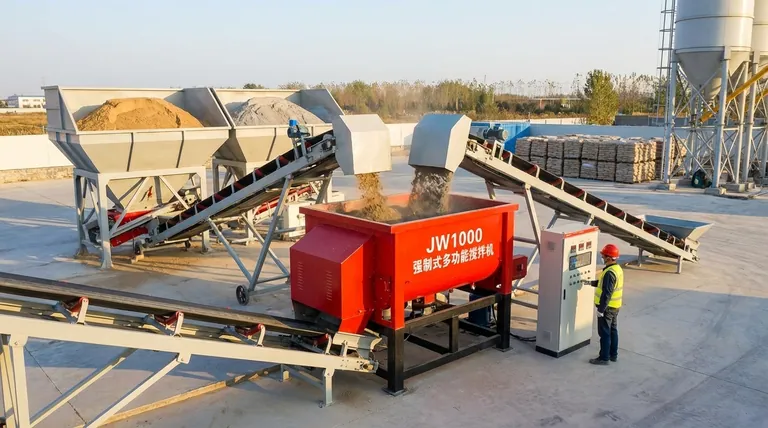
The Core Advantage: From Guesswork to Precision
The fundamental value of a mixing plant lies in its ability to remove human error and inconsistency from the equation. It systematizes the creation of mortar, ensuring every batch meets exact specifications.
Unmatched Mixing Quality and Consistency
A plant uses high-precision sensors to strictly control the ratio of sand, cement, water, and additives. This guarantees a uniform and consistent mixture every time.
This automated control prevents issues like premature hardening and weak spots, which can occur with improper manual mixing.
Unlike standard cement mixers designed for coarse concrete aggregates, a specialized mortar plant is engineered to properly blend finer materials, ensuring the mix is thoroughly and correctly integrated.
Significant Gains in Efficiency and Yield
The entire process—from screening raw materials to transportation and mixing—is fully mechanized. This drastically increases working efficiency compared to manual operation.
Central mix plants enable faster batching, providing ready-to-use mortar that can be immediately dispatched to the construction site. This high-volume output is essential for keeping large projects on schedule.
Enhanced Environmental and Cost Control
By containing the mixing process, these plants significantly reduce the dust and particulate matter released into the air, leading to a cleaner and safer work environment.
Automated systems minimize the waste of raw materials, which, combined with reduced energy consumption compared to less efficient methods, helps overcome the bottlenecks of high cost and waste.
Understanding the Trade-offs
While the benefits are clear, a mixing plant is not the right solution for every scenario. It's crucial to understand the associated costs and complexities.
High Initial Investment
These plants represent a significant capital expenditure. The advanced equipment, sensors, and automated systems are far more costly than manual mixing tools.
Operational Requirements
Operating a mixing plant requires skilled personnel for management, operation, and maintenance. It is not a simple tool but a piece of industrial machinery.
Suitability for Scale
The primary benefits of efficiency and yield are realized on medium- to large-scale projects. For very small repair jobs, the setup time and operational costs would be impractical and far outweigh the advantages.
Making the Right Choice for Your Project
The decision to use a cement mortar mixing plant should be driven by your project's specific goals for quality, volume, and speed.
- If your primary focus is large-scale construction: A mixing plant is essential for meeting tight deadlines and ensuring structural consistency across the entire project.
- If your primary focus is high-performance or specialized mortar: The plant's precision control over material ratios is non-negotiable for achieving the required technical specifications.
- If your primary focus is a small-scale repair or a DIY project: The cost and complexity of a plant are prohibitive; manual or small-batch mixing is the more practical choice.
Ultimately, investing in a mixing plant is a decision to prioritize industrial-grade precision and predictability in your workflow.
Summary Table:
| Advantage | Key Benefit |
|---|---|
| Quality & Consistency | Precise material ratios via sensors for uniform, high-performance mortar. |
| Efficiency & Yield | Fully mechanized process for faster batching and high-volume output. |
| Environmental & Cost Control | Reduces dust, minimizes material waste, and lowers energy consumption. |
| Best For | Medium to large-scale projects requiring predictable, industrial-grade results. |
Ready to upgrade your construction project with industrial-grade precision?
GARLWAY specializes in construction machinery, offering robust and efficient concrete batching plants and mortar mixing solutions for construction companies and contractors globally. Our equipment ensures superior mixing quality, maximizes your project's efficiency, and helps you control costs.
Contact GARLWAY today to discuss how our mixing plants can bring predictable, high-yield performance to your workflow!
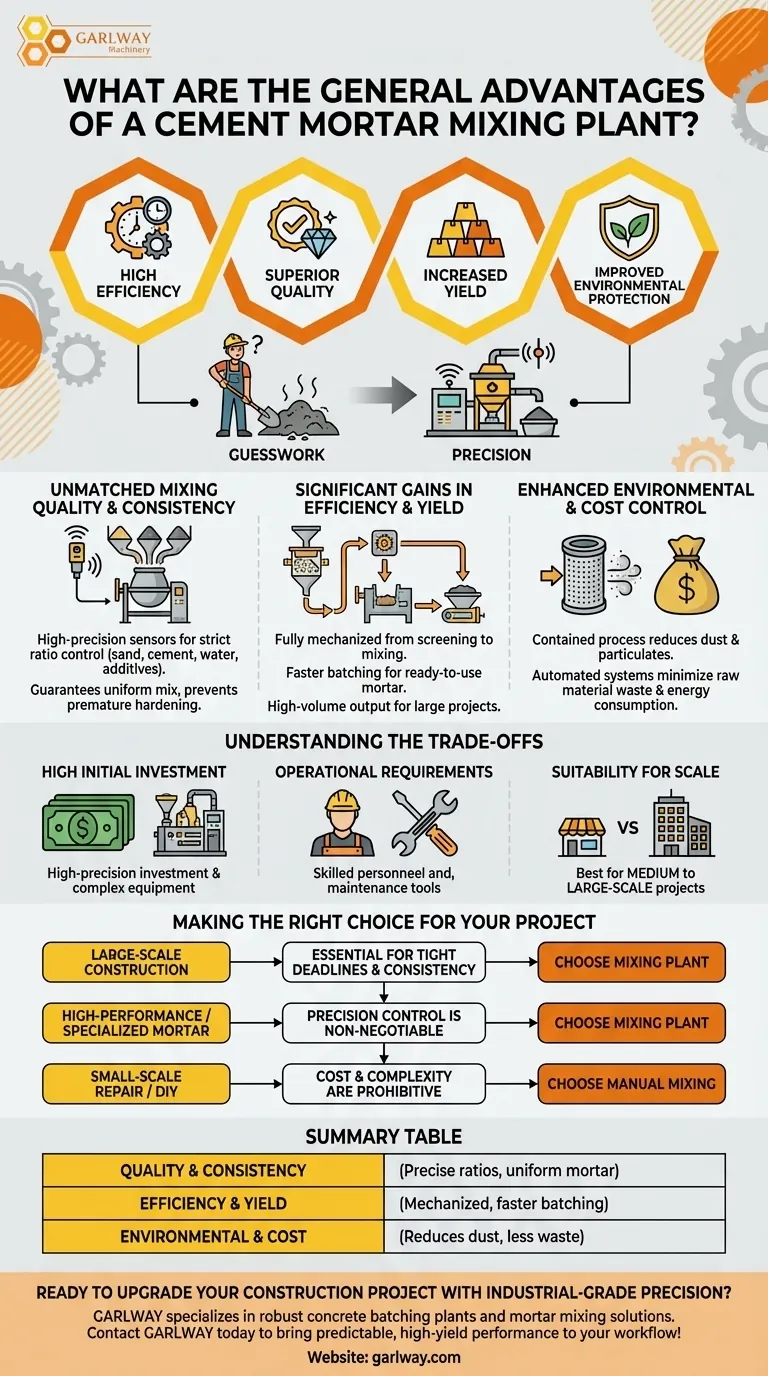
Visual Guide
Related Products
- HZS25 Best Cement Mixer for Quick Mix Concrete at Bunnings
- HZS120 Ready Mix Concrete Batching Plant Commercial Mud Cement Mixer
- JDC350 Small Cement Concrete Mortar Mixer
- HZS35 Small Cement Concrete Mixing Batch Plant
- HZS75 Concrete Batching Plant Cement Mixer Price Concrete Mixer Bunnings Mixing Plant
People Also Ask
- How do cement mixers enhance safety on construction sites? Reduce Strain, Hazards, and Accidents
- What are the main components of a cement mixer? A Guide to Core Parts & Functions
- What are some tips for using a cement mixer effectively? Maximize Your Mixer's Performance & Concrete Quality
- How does cleaning a cement mixer after use benefit its performance? Maximize Lifespan and Mix Quality
- Why is it important to clean the cement mixer after use? Prevent Costly Damage and Ensure Quality Concrete





