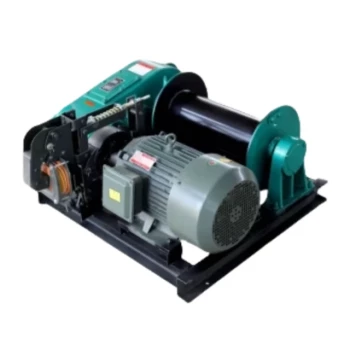
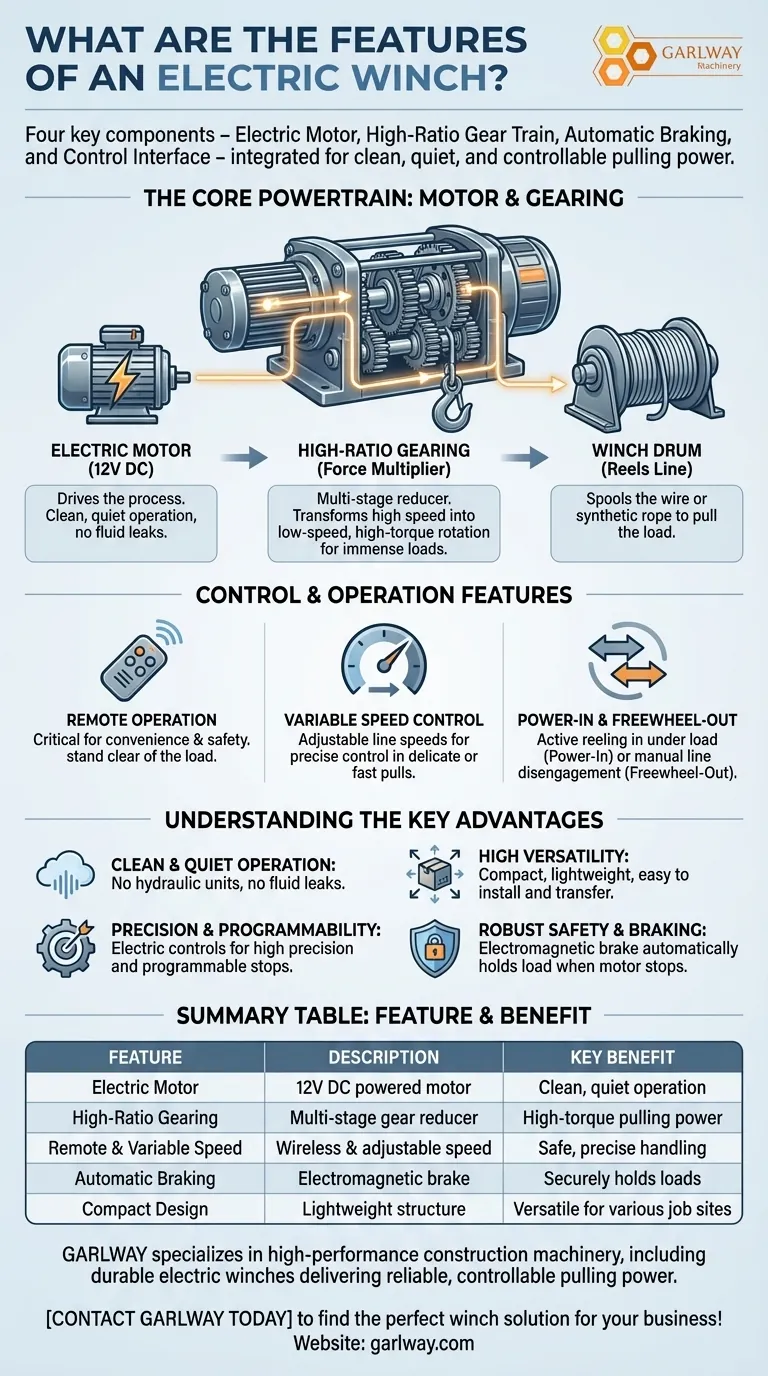
At their core, electric winches are defined by four key components: an electric motor for power, a high-ratio gear train to multiply force, an automatic braking system for safety, and a control interface for operation. They connect to a power source, typically a 12-volt battery, to drive a drum that reels in a cable, enabling the user to pull immense loads with precision and control.
The true value of an electric winch lies not in a single feature, but in how its integrated system delivers clean, quiet, and highly controllable pulling power in a compact and versatile package, making it a superior choice for a wide range of applications.
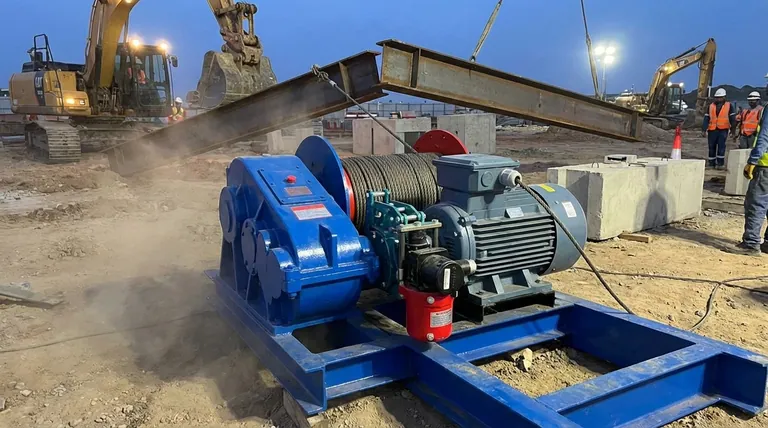
The Core Powertrain: Motor and Gearing
An electric winch's pulling power originates from its simple yet effective powertrain. This system is responsible for converting electrical energy into mechanical force.
The Electric Motor
The heart of the winch is its electric motor. It typically runs on a standard 12-volt DC power supply, making it compatible with most vehicle batteries.
This motor drives the entire pulling process, offering a significant advantage in its quiet and clean operation, free from the noise and potential fluid leaks of hydraulic systems.
High-Ratio Gearing
The motor's power is channeled through a gear reducer, often a three-stage system. This is the winch's force multiplier.
High gear ratios transform the motor's high speed into low-speed, high-torque rotation. This is how a small electric motor can pull loads weighing several tons.
The Winch Drum
The gearing system drives the winch drum. This is the component that the wire or synthetic rope spools onto, effectively reeling in the line and pulling the load.
Control and Operation Features
Modern electric winches are designed for safety, convenience, and precision. Their control features allow an operator to manage heavy loads with confidence.
Remote Operation
Many electric winches include a remote control. This is a critical feature for both convenience and safety, allowing the operator to stand clear of the line and the load during a pull.
Variable Speed Control
Electric winches offer adjustable line speeds. Using technologies like variable frequency drives (VFDs), users can achieve precise control for both slow, delicate operations and faster pulls when needed.
Power-In and Freewheel-Out
The most common operational modes are power-in and freewheel-out. Power-in uses the motor to actively reel the line in under load.
Freewheel-out disengages the drum from the gearing, allowing the user to pull the line out by hand quickly. A less common but valuable feature on some models is power-out, which uses the motor to unspool the line in a controlled manner.
Understanding the Key Advantages
The design features of an electric winch translate into distinct operational advantages over other systems, such as hydraulic winches.
Clean and Quiet Operation
Because they are electrically powered, these winches eliminate noisy hydraulic power units and the risk of messy, environmentally harmful fluid leaks.
High Versatility
Their compact structure, small size, and light weight make them easy to install and transfer between job sites or vehicles. This versatility is one of their most valued characteristics.
Precision and Programmability
The electric controls allow for a high degree of precision. Advanced models offer programmable speeds and stop positions, enabling repeatable, accurate pulls that are difficult to achieve with other systems.
Robust Safety and Braking
A key safety component is the electromagnetic brake. This mechanism automatically engages when the motor stops, securely holding the load in place and preventing accidental slippage.
Making the Right Choice for Your Application
Selecting an electric winch means matching its features to your specific requirements.
- If your primary focus is safety and convenience: A model with a reliable remote control and a proven electromagnetic braking system is essential.
- If your primary focus is precision work: Prioritize features like variable speed control and the ability to program stop positions.
- If your primary focus is portability and versatility: A compact, lightweight design with a high pulling capacity will provide the most value for various tasks.
Ultimately, the combination of these features makes the electric winch a uniquely powerful, adaptable, and user-friendly tool for demanding pulling applications.
Summary Table:
| Feature | Description | Key Benefit |
|---|---|---|
| Electric Motor | 12V DC powered motor | Clean, quiet operation, no fluid leaks |
| High-Ratio Gearing | Multi-stage gear reducer | Transforms speed into high-torque pulling power |
| Remote & Variable Speed Control | Wireless remote and adjustable line speed | Safe operation and precise load handling |
| Automatic Braking System | Electromagnetic brake | Engages automatically to securely hold loads |
| Compact & Versatile Design | Lightweight and easy to install | Ideal for various job sites and vehicles |
Ready to harness the power and precision of an electric winch for your projects?
GARLWAY specializes in high-performance construction machinery, offering durable electric winches, concrete mixers, and batching plants designed for the demands of construction companies and contractors worldwide. Our winches deliver the reliable, controllable pulling power you need to work efficiently and safely.
Contact GARLWAY today to discuss your specific requirements and find the perfect winch solution for your business!
Visual Guide
Related Products
- Electric 120V Boat Winch by Badlands
- Electric and Hydraulic Winch for Heavy Duty Applications
- Small Electric Winch 120V and 240V for Compact Applications
- 12000 lb Electric Boat Trailer Winch with Windlass Anchor Warn
- Electric Hoist Winch Boat Anchor Windlass for Marine Applications
People Also Ask
- How do electric boat winches work? Unlock Effortless Launching & Retrieval
- How much current does an electric boat winch draw? Plan Your Electrical System for Peak Performance
- Can I run a winch straight from a battery? Essential Power Setup for Safe Operation
- What are the types of electric winches available? Choose the Right Winch for Your Job
- What are the uses of electric winches in mining and tunneling? Enhance Safety and Efficiency Underground