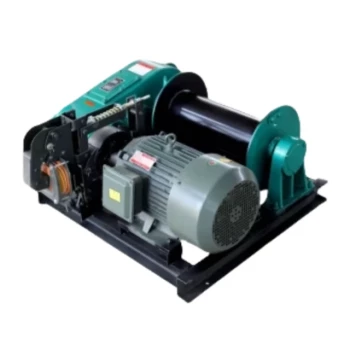
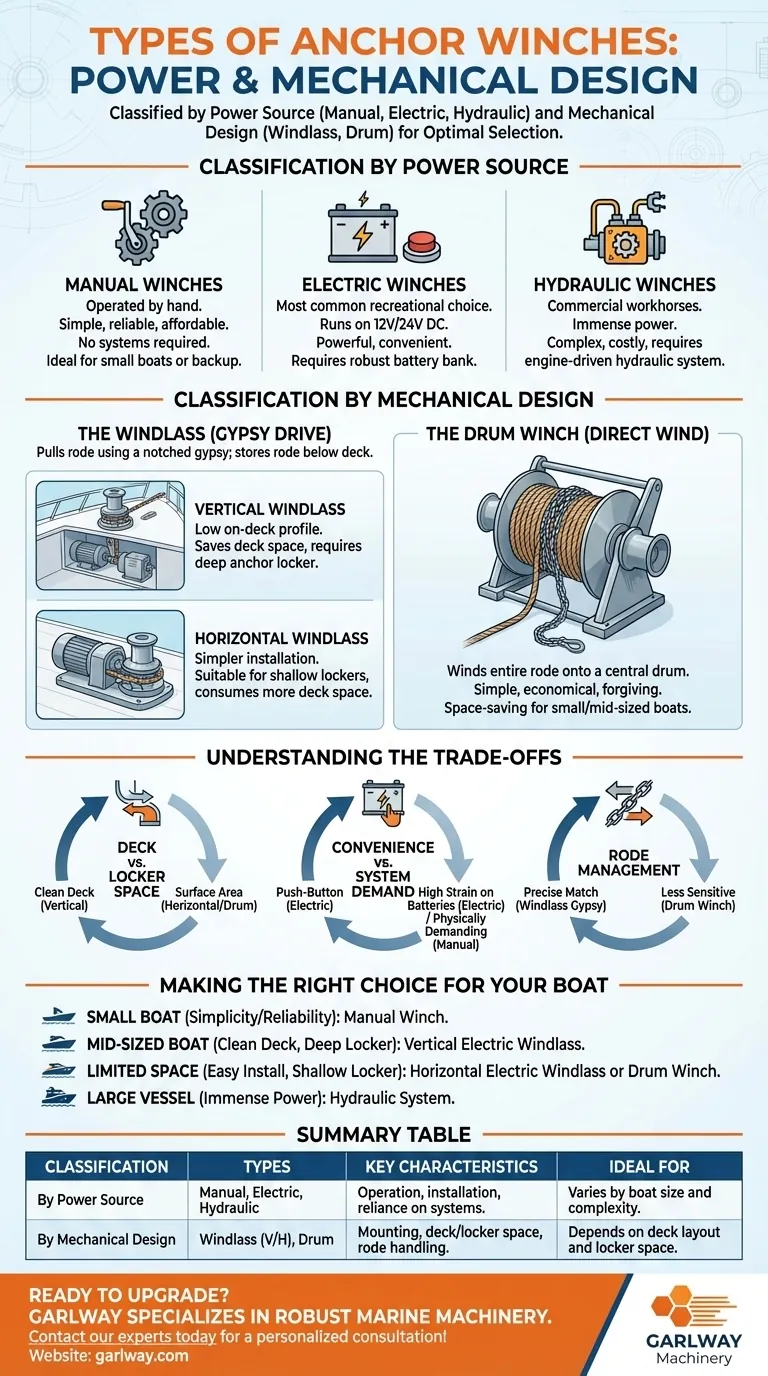
To put it simply, anchor winches are classified in two distinct ways: by their power source (manual, electric, or hydraulic) and by their mechanical design (windlass, drum, or capstan). Most winches are defined by a combination of these two classifications, such as an "electric vertical windlass." Electric models are, by far, the most common on modern recreational boats.
The critical distinction to understand is that "power source" and "mechanical design" are separate categories. Choosing the right winch involves selecting the correct power type for your boat's systems and the best mechanical design for your deck layout, anchor locker, and type of anchor line.
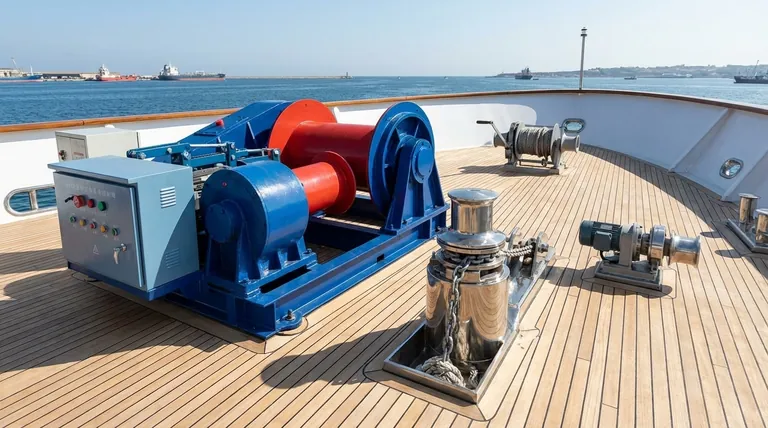
Classification by Power Source
The power source is the most fundamental choice, as it dictates the winch's operation, installation complexity, and reliance on your boat's other systems.
Manual Winches
Manual winches are operated by hand with a crank. They are the simplest, most reliable, and most affordable option.
They require no electrical or hydraulic systems, making them an excellent choice for smaller boats or as a dependable backup system on larger vessels.
Electric Winches
This is the most popular category for recreational boating. Electric winches run off the boat's 12V or 24V DC electrical system, offering powerful and convenient anchor retrieval at the push of a button.
Their primary requirement is a robust battery bank and appropriate wiring to handle the high amperage draw during operation.
Hydraulic Winches
Hydraulic winches are the workhorses of the marine world, typically found on large commercial vessels, superyachts, and serious long-range trawlers.
They offer immense, consistent pulling power but require a dedicated, engine-driven hydraulic system, making them far too complex and costly for the average recreational boat.
Classification by Mechanical Design
The mechanical design dictates how the winch is mounted and how it handles the anchor line (known as the rode), which can be rope, chain, or a combination.
The Windlass (Vertical & Horizontal)
A windlass does not store the rode; it simply pulls it in using a notched wheel called a gypsy that is specifically sized for your chain or rope. The rode then feeds down into an anchor locker below deck.
A Vertical Windlass has a low on-deck profile because its motor and gearbox are mounted below deck. This saves valuable deck space but requires significant room in the anchor locker for the machinery.
A Horizontal Windlass has its motor and gearbox housed in a single unit on deck. This makes for a simpler installation and is suitable for boats with shallow anchor lockers, but it consumes more deck space.
The Drum Winch
A drum winch functions like a large fishing reel, winding the entire length of the anchor rode directly onto a central drum.
This design is very simple, economical, and forgiving of different rode types (rope and chain combinations). It is an increasingly popular, space-saving option for small to mid-sized boats.
Understanding the Trade-offs
Choosing an anchor winch is a balancing act between power, space, and complexity. There is no single "best" type.
Deck Space vs. Locker Space
A vertical windlass keeps your deck clean and uncluttered, but you must have sufficient vertical clearance in your anchor locker to install the motor and gearbox. A horizontal windlass or drum winch solves this, but at the cost of taking up more surface area on your bow.
Convenience vs. System Demand
An electric winch offers incredible convenience, but it is a high-demand component. It can place significant strain on your batteries, requiring a healthy electrical system and often necessitating that the engine is running during use. A manual winch, while physically demanding, is completely self-sufficient.
Rode Management
A windlass is highly efficient but requires the gypsy to be perfectly matched to your chain size (e.g., 1/4" chain needs a 1/4" gypsy). A drum winch is less sensitive and easily manages a rope-to-chain splice, storing it neatly on the drum.
Making the Right Choice for Your Boat
Your decision should be guided by your vessel's size, systems, and your primary use case.
- If your primary focus is simplicity and reliability on a smaller boat: A manual winch is a foolproof and cost-effective solution.
- If your primary focus is a clean deck on a mid-sized boat with a deep anchor locker: A vertical electric windlass is the ideal choice.
- If your primary focus is an easy installation on a boat with limited below-deck space: A horizontal electric windlass or an electric drum winch are your best options.
- If your primary focus is immense power for a large vessel: A hydraulic system is the only choice for handling heavy ground tackle reliably.
Ultimately, selecting the right anchor winch comes down to a clear assessment of your boat's capabilities and your anchoring needs.
Summary Table:
| Classification | Types | Key Characteristics | Ideal For |
|---|---|---|---|
| By Power Source | Manual, Electric, Hydraulic | Dictates operation, installation, and reliance on boat systems. | Varies by boat size and system complexity. |
| By Mechanical Design | Windlass (Vertical/Horizontal), Drum | Determines mounting, deck/locker space usage, and rode handling. | Depends on deck layout and anchor locker space. |
Ready to Upgrade Your Anchoring System?
Choosing the right anchor winch is critical for safety and ease of use. GARLWAY specializes in robust construction and marine machinery, offering reliable winches designed for demanding environments. Whether you're a commercial operator or a serious recreational boater, our expertise ensures you get a winch that matches your vessel's power and space requirements.
Let us help you make the right choice. Contact our experts today for a personalized consultation on the best winch solution for your needs!
Visual Guide
Related Products
- Electric Hoist Winch Boat Anchor Windlass for Marine Applications
- 12000 lb Electric Boat Trailer Winch with Windlass Anchor Warn
- Best 18000 Pound Drum Anchor Trailer Winch
- Heavy Duty Electric Boat Winch Windlass Anchor
- Portable Small Trailer Winch
People Also Ask
- How does an electric anchor winch work? Power, Safety, and Reliable Operation Explained
- What are the advantages of installing an electric anchor winch on a boat? Boost Safety & Ease for Boaters
- What are the operational differences between electric hoists and winches? A Guide to Safe Lifting vs. Pulling
- What are the main benefits of a boat anchor winch? Boost Safety & Efficiency for Your Vessel
- How does a boat anchor winch work? A Guide to Reliable Anchor Handling