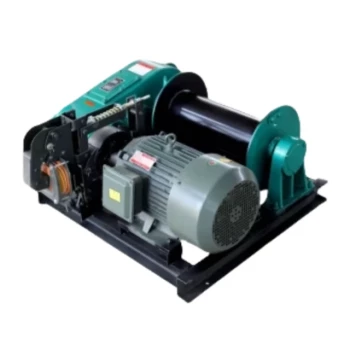
In short, an electric winch substitutes mechanical power for human effort. It delivers vastly superior pulling force, operates significantly faster, and offers greater safety and control than a manual winch. These capabilities make it the definitive choice for handling heavy loads, frequent use, or any situation where operator fatigue is a concern.
The choice between an electric and manual winch is a fundamental trade-off between capability and simplicity. An electric winch provides an exponential leap in power, speed, and safety, but requires a power source and involves greater mechanical complexity.
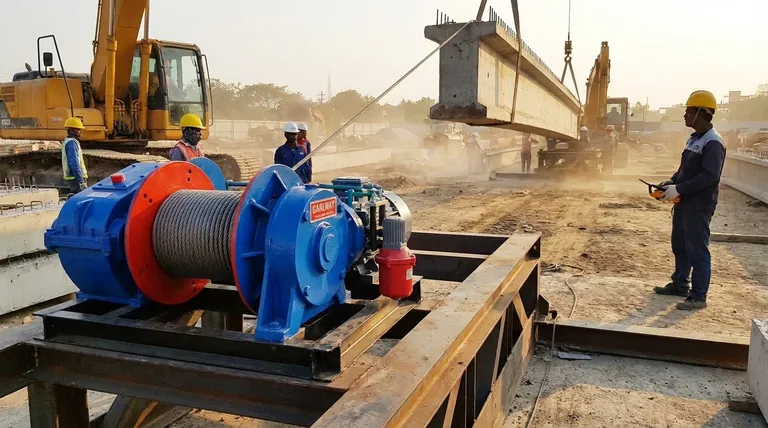
The Core Advantages Explained
An electric winch isn't just a convenience; it represents a fundamental shift in how you manage heavy loads. The advantages are rooted in its core design, moving beyond the physical limitations of a human operator.
Superior Pulling Power
A manual winch is limited by the physical strength of the operator. An electric winch uses a motor and a gear reduction system to generate immense torque, allowing it to pull loads far heavier than a person could ever manage with a hand crank.
This makes it indispensable for applications like vehicle recovery or loading large boats onto a trailer.
Increased Speed and Efficiency
The most immediate benefit is speed. An electric winch can retrieve a cable and its load in a fraction of the time it would take to do so manually.
This dramatic increase in efficiency saves significant time and energy, especially when performing multiple pulls or working against a deadline.
Enhanced Safety and Control
Electric winches are inherently safer. The operator can stand clear of the winch and load, using a wired or wireless remote to manage the operation. This eliminates the primary risk of a manual winch: handle kickback, which can cause serious injury.
Furthermore, advanced control systems provide precise management of speed and direction, ensuring the load is maneuvered safely and accurately.
Unmatched Ease of Use
The most obvious advantage is the elimination of strenuous physical labor. Simply pressing a button replaces the exhaustive effort of hand-cranking a heavy load.
This not only reduces fatigue but also makes the task accessible to operators regardless of their physical strength.
How Electric Winches Achieve These Gains
The performance of an electric winch is the result of several key components working in concert. Understanding them clarifies why it so thoroughly outperforms a manual system.
The Motor and Drivetrain
At its heart is a powerful 12-volt electric motor. This motor connects to a planetary gear train that multiplies its torque, creating the high pulling force required to move thousands of pounds.
The Solenoid and Control System
A solenoid acts as a heavy-duty electrical relay. It allows the low-power switch on your remote control to safely manage the high-amperage current flowing to the winch motor, protecting both the operator and the equipment.
The Clutch and Free-Spooling
Nearly all electric winches feature a clutch. When disengaged, it allows the drum to spin freely, a feature known as free-spooling. This lets you pull out the winch cable by hand quickly, saving time and motor wear when setting up a pull.
Power-In vs. Power-Out Control
Most standard electric winches "power-in" to pull a load and use free-spooling to let the cable out. More advanced models also feature a "power-out" function, which uses the motor to provide a controlled release of the load. This is a critical safety feature for lowering a heavy object down an incline.
Understanding the Trade-offs
While powerful, an electric winch is not the right tool for every single application. Objectivity requires acknowledging its specific dependencies and complexities.
Dependency on a Power Source
An electric winch is entirely dependent on a charged 12-volt battery. If the power source is dead or unavailable, the winch is inoperable. A manual winch, by contrast, will work anywhere at any time.
Increased Complexity and Maintenance
The motor, solenoid, wiring, and controls add multiple points of potential failure that do not exist on a simple manual winch. These components require periodic inspection and maintenance to ensure reliable operation.
Higher Initial Investment
The advanced components and superior capabilities of an electric winch naturally come at a higher upfront cost compared to their simpler, manual counterparts.
Making the Right Choice for Your Goal
Your ideal winch depends entirely on the weight of your load, the frequency of use, and your operational environment.
- If your primary focus is recovering vehicles or loading heavy boats: The superior pulling power and remote-controlled safety features of an electric winch are non-negotiable.
- If your primary focus is frequent, repetitive tasks: The speed and effortless operation of an electric winch will save you a tremendous amount of time and physical energy.
- If your primary focus is occasional use with light loads in remote settings: The simplicity, lower cost, and power independence of a manual winch may be the more practical solution.
By aligning the tool's capabilities with the demands of your task, you can ensure you have the right equipment for safe and efficient work.
Summary Table:
| Feature | Electric Winch | Manual Winch |
|---|---|---|
| Pulling Power | High (Motor-driven) | Limited (Human strength) |
| Speed | Fast | Slow |
| Safety | High (Remote control, no kickback) | Lower (Risk of handle kickback) |
| Ease of Use | Effortless (Button operation) | Strenuous (Hand-cranking) |
| Best For | Heavy loads, frequent use, vehicle recovery | Light loads, occasional use, remote locations |
Upgrade Your Operations with GARLWAY Electric Winches
Are you a construction company or contractor looking to enhance efficiency and safety on your job sites? GARLWAY specializes in high-performance construction machinery, including robust electric winches designed for heavy-duty applications. Our winches deliver unmatched pulling power, speed, and control—perfect for vehicle recovery, material handling, and more.
Why Choose GARLWAY?
- Reliable Performance: Built with durable motors and advanced control systems for consistent results.
- Safety First: Remote-operated designs keep your team safe from hazardous manual handling.
- Global Support: We serve construction professionals worldwide with reliable products and expert service.
Ready to power up your projects? Contact us today to find the perfect electric winch solution for your needs!
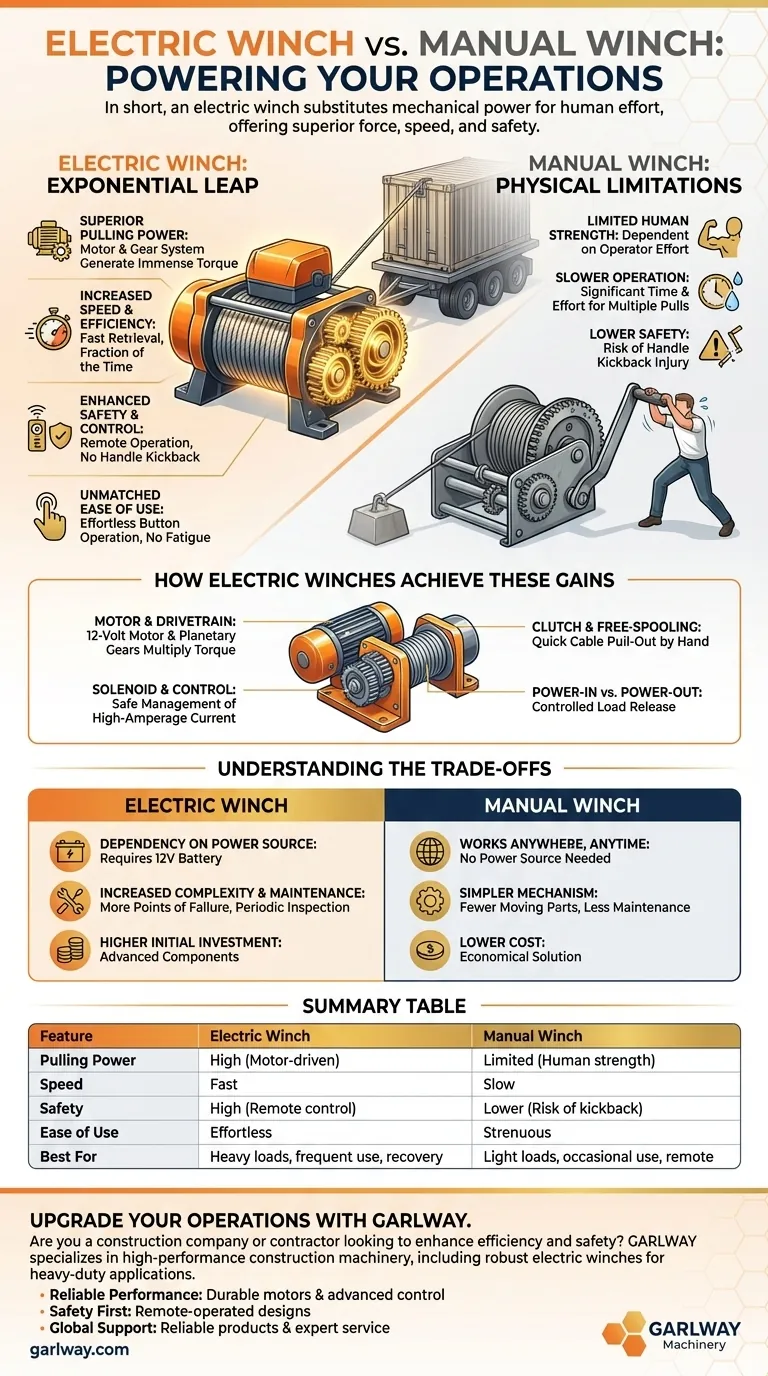
Visual Guide
Related Products
- Electric 120V Boat Winch by Badlands
- Electric and Hydraulic Winch for Heavy Duty Applications
- Small Electric Winch 120V and 240V for Compact Applications
- 12000 lb Electric Boat Trailer Winch with Windlass Anchor Warn
- Electric Hoist Winch Boat Anchor Windlass for Marine Applications
People Also Ask
- How do electric boat winches work? Unlock Effortless Launching & Retrieval
- How much current does an electric boat winch draw? Plan Your Electrical System for Peak Performance
- Can I run a winch straight from a battery? Essential Power Setup for Safe Operation
- What are the types of electric winches available? Choose the Right Winch for Your Job
- What are the uses of electric winches in mining and tunneling? Enhance Safety and Efficiency Underground