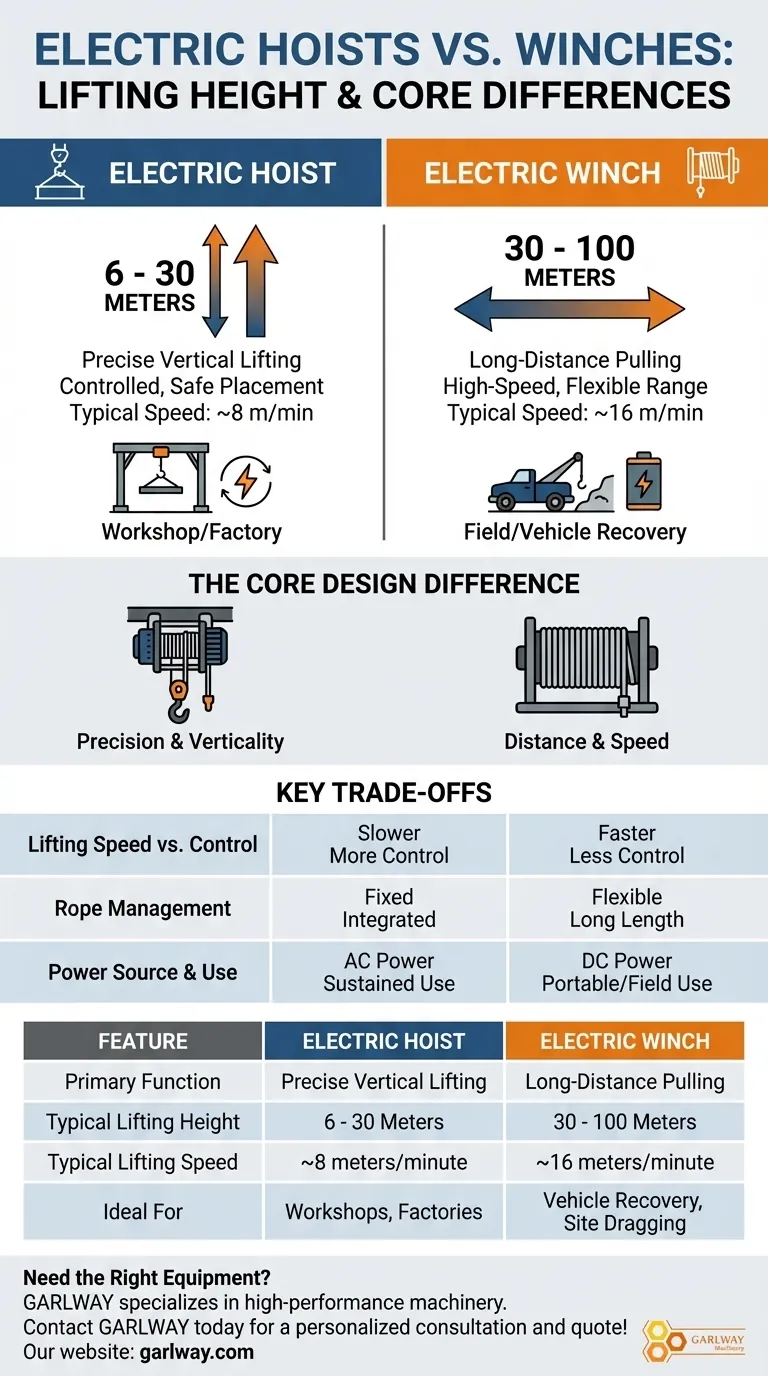
In short, electric hoists and winches operate in distinctly different ranges. A typical electric hoist is designed for shorter, more precise vertical lifts, with common height ranges between 6 and 30 meters. In contrast, an electric winch is built for longer-distance pulling and has a significantly greater range, typically from 30 to 100 meters.
The difference in lifting height is not arbitrary; it stems from their core design philosophy. Hoists are engineered for controlled, vertical lifting, while winches are engineered for high-speed, long-distance pulling.
The Core Design Difference: Lifting vs. Pulling
To choose the right tool, you must understand that hoists and winches solve fundamentally different problems, which dictates their mechanical design, speed, and rope capacity.
Hoist: Precision and Verticality
An electric hoist is a specialized lifting machine. Its rope or chain is often a fixed, integrated part of the mechanism.
This design is intentional. It ensures the load is lifted straight up with maximum control and safety, which is critical in a workshop or factory setting. The common 6 to 30-meter range is optimized for these environments.
Winch: Distance and Speed
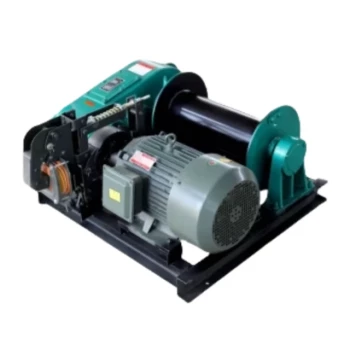
An electric winch, on the other hand, is a pulling machine. Its primary component is a simple drum around which a long wire rope is wound.
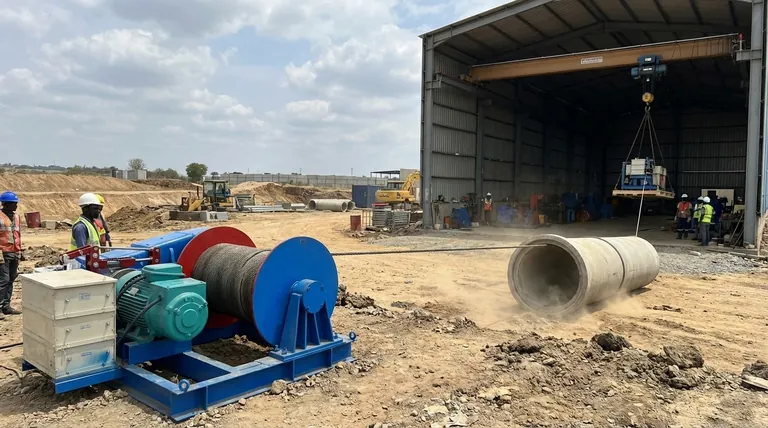
This design allows it to hold a much greater length of rope, typically up to 100 meters. This makes it ideal for applications like vehicle recovery or dragging materials across a work site where distance is the primary concern.
Understanding the Key Trade-offs
The choice between a hoist and a winch involves more than just lifting height. You are trading control for speed and specialization for flexibility.
Lifting Speed vs. Operational Control
A hoist's slower lifting speed, often around 8 meters per minute, is a deliberate feature. It provides the operator with the precision needed to safely place a heavy load onto a specific point.
A winch is significantly faster, with speeds around 16 meters per minute. This speed is necessary to cover long distances efficiently but makes it unsuitable for the precise vertical placement required of a hoist.
Rope Management and Flexibility
The rope on a hoist is a fixed part of its system. Changing the lifting height often requires significant mechanical adjustments or purchasing a different model.
A winch offers more flexibility. The long rope on its drum can be used for pulls of varying distances, from short to very long, without any modification to the unit itself.
Power Source and Intended Use
Many electric winches are designed for field use, often drawing power from a vehicle's battery. This makes them portable but can be a limitation for long-duration tasks, as they can drain the battery quickly.
Electric hoists are typically installed permanently in a workshop or on a gantry crane and are powered by a consistent AC power source, allowing for more sustained and repetitive use.
Making the Right Choice for Your Application
Selecting the correct equipment depends entirely on the job you need to accomplish.
- If your primary focus is precise vertical lifting: An electric hoist is the only appropriate tool, providing the necessary safety and control for workshop or industrial applications.
- If your primary focus is horizontal pulling over long distances: An electric winch is designed specifically for this task, offering the required speed and rope capacity.
- If your primary focus is vehicle recovery or field work: A vehicle-mounted electric winch provides the power and range needed for unpredictable outdoor situations.
Choosing the right tool begins with correctly identifying the fundamental nature of your task.
Summary Table:
| Feature | Electric Hoist | Electric Winch |
|---|---|---|
| Primary Function | Precise vertical lifting | Long-distance pulling |
| Typical Lifting Height | 6 - 30 meters | 30 - 100 meters |
| Typical Lifting Speed | ~8 meters/minute | ~16 meters/minute |
| Ideal For | Workshops, factories, precise placement | Vehicle recovery, site dragging, long pulls |
Need the Right Equipment for Your Project?
Choosing between a hoist for precision lifting or a winch for long-distance pulling is critical for safety and efficiency. GARLWAY specializes in high-performance construction machinery, including durable electric winches, concrete mixers, and batching plants designed for construction companies and contractors worldwide.
Let us help you select the perfect tool for your specific needs. Our experts can guide you to the most efficient and cost-effective solution for your job site.
Contact GARLWAY today for a personalized consultation and quote!
Visual Guide
Related Products
- Electric Hoist Winch Boat Anchor Windlass for Marine Applications
- Electric and Hydraulic Winch for Heavy Duty Applications
- Heavy Duty Electric Boat Winch Windlass Anchor
- 12000 lb Electric Boat Trailer Winch with Windlass Anchor Warn
- Electric 120V Boat Winch by Badlands
People Also Ask
- How does an electric anchor winch work? Power, Safety, and Reliable Operation Explained
- What are the advantages of installing an electric anchor winch on a boat? Boost Safety & Ease for Boaters
- What are the operational differences between electric hoists and winches? A Guide to Safe Lifting vs. Pulling
- What are the main benefits of a boat anchor winch? Boost Safety & Efficiency for Your Vessel
- How does a boat anchor winch work? A Guide to Reliable Anchor Handling