In short, a remote control enhances both safety and operational flexibility when using a winch. It untethers the operator from the immediate winching area, providing a clear line of sight to the entire recovery situation and keeping them away from a potentially snapping line.
The core benefit is not just convenience; it's a fundamental shift in safety and control. By separating the operator from the winch, a remote allows for safer vantage points, better communication, and more precise adjustments during complex vehicle recoveries.
Why a Remote is a Non-Negotiable Upgrade
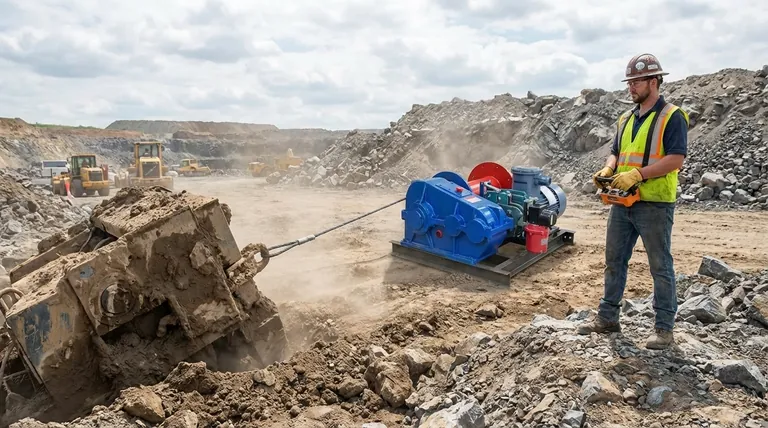
A winch remote moves the operator from being a stationary part of the machinery to being a mobile, adaptable controller of the recovery process. This change has profound implications for safety and effectiveness.
The Paramount Benefit: Operator Safety
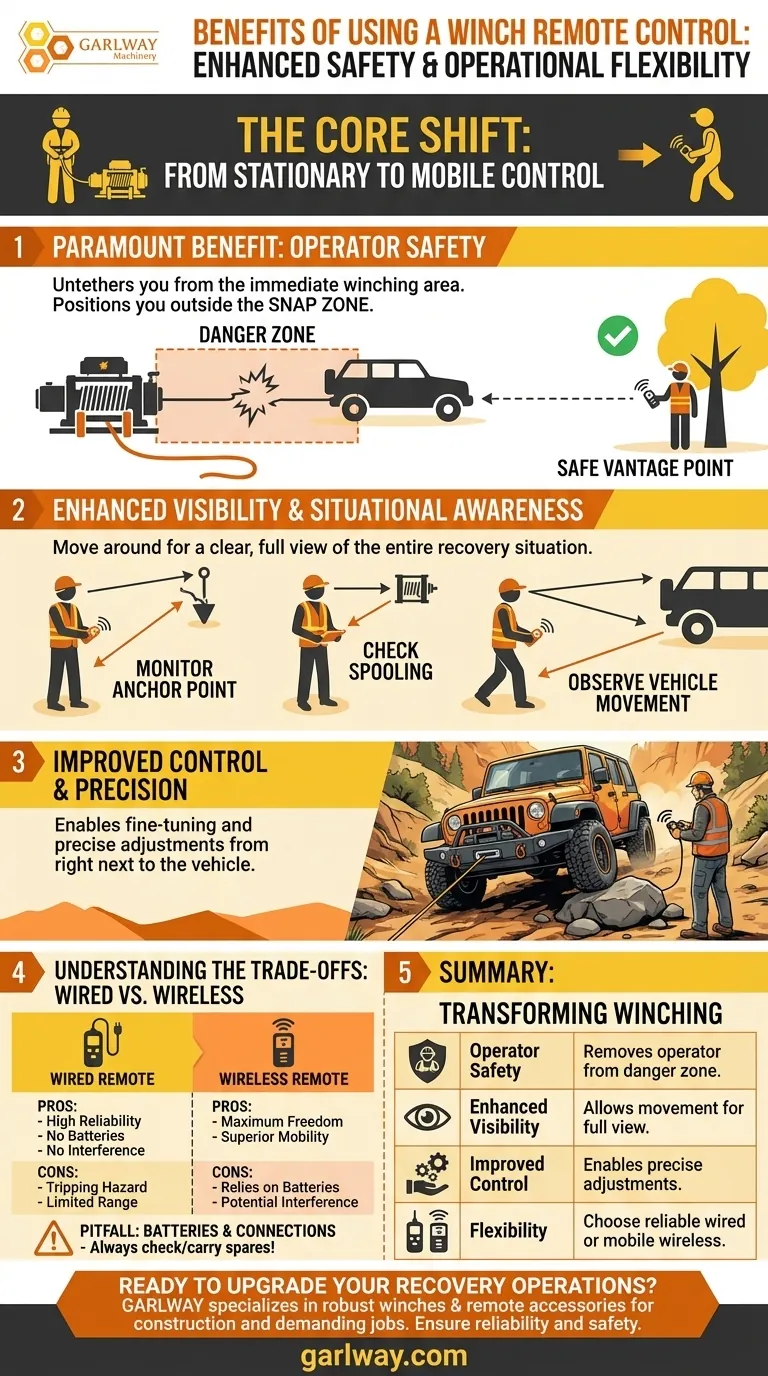
The single most critical danger in winching is a snapped cable or rope. A remote control allows you to operate the winch from outside this "danger zone."
You can position yourself far from the direct line of pull, behind a tree, or even inside a second vehicle, drastically reducing the risk of injury from a catastrophic line failure.
Enhanced Visibility and Situational Awareness
Being tethered to the winch itself provides a very limited view of the recovery.
With a remote, you can move around the entire scene. This allows you to monitor the anchor point, check for line spooling issues on the drum, and observe the recovered vehicle's movement from the most advantageous angle.
This improved situational awareness prevents mistakes, such as the line binding or the recovered vehicle shifting into a more dangerous position.
Improved Control and Precision
Complex recoveries often require small, precise adjustments.
A remote allows you to be right next to the vehicle being recovered, making slight adjustments to the steering or clearing an obstacle while still controlling the winch. This level of fine-tuning is impossible when you are stuck at the winch's physical location.
Understanding the Trade-offs
While overwhelmingly beneficial, it's important to understand the practical considerations of relying on a remote system.
Wired vs. Wireless Remotes
Wired remotes are praised for their reliability. They don't have batteries that can die, and they are immune to radio frequency interference. Their main drawback is the physical cord, which can be a tripping hazard and limits your range.
Wireless remotes offer maximum freedom of movement, which is their key advantage. However, they rely on batteries, which must be maintained, and can potentially suffer from signal interference in rare circumstances.
The Point of Failure: Batteries and Connections
The primary pitfall of any remote system is a loss of power or connection.
For wireless models, always carry spare batteries. For wired models, regularly inspect the cord and connection points for frays or damage that could cause an intermittent failure during a critical operation.
Making the Right Choice for Your Goal
- If your primary focus is maximum safety and reliability: Choose a high-quality wired remote and always inspect the cable before use.
- If your primary focus is operational flexibility and complex recoveries: A wireless remote is superior, but you must commit to maintaining its batteries and keeping a spare set.
- If you are a professional or frequent user: Consider having both a wired and a wireless remote as part of your recovery kit to ensure you have a reliable backup for any situation.
Ultimately, using a remote transforms winching from a high-risk, stationary task into a safer and more dynamic recovery process.
Summary Table:
| Benefit | Key Advantage |
|---|---|
| Operator Safety | Removes operator from the danger zone of a potential snapped cable. |
| Enhanced Visibility | Allows movement for a full view of the recovery scene. |
| Improved Control | Enables precise adjustments during complex recoveries. |
| Flexibility | Choose between reliable wired or mobile wireless options. |
Ready to upgrade your recovery operations with a safer, more efficient winch remote? GARLWAY specializes in construction machinery, offering robust winches and accessories designed for construction companies and contractors globally. Our remote-controlled winches provide the reliability and safety you need for demanding jobs. Contact us today to find the perfect winch solution for your projects!
Visual Guide
Related Products
- Warn Winch Windlass Boat Trailer Winch
- Electric and Hydraulic Winch for Heavy Duty Applications
- Small Electric Winch 120V and 240V for Compact Applications
- Quick Windlass Portable Winch for Truck and Boat Best Boat Winch
- Hydraulic Winding Engine Harbor Freight Winch
People Also Ask
- What are the main components of a boat trailer winch? A Guide to Safe & Efficient Boat Loading
- What factors should be considered when choosing a boat trailer winch? Ensure Safe and Effortless Boat Loading
- What is the purpose of boat trailer winches? Safely and Efficiently Load Your Boat
- What are the two main types of boat trailer winches? Manual vs. Electric Explained
- How often should a boat trailer winch be replaced? Your Guide to Safety and Longevity