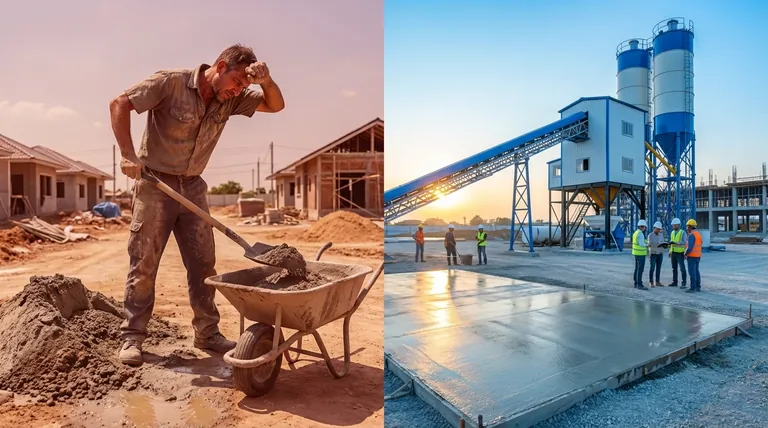
In short, a cement mixer is superior to hand-mixing because it produces a stronger, more consistent concrete batch while saving significant time and physical effort. It eliminates the inconsistencies and guesswork of manual methods, ensuring every part of the mix is properly hydrated and homogenous.
While hand-mixing might suffice for a tiny repair, a cement mixer is the definitive choice for any project where structural integrity, quality, and efficiency are priorities. It transforms concrete work from a physically punishing task into a controlled, repeatable process.
The Core Benefits of Mechanical Mixing
The advantages of a cement mixer go far beyond simple convenience. They directly impact the quality of the final product and the well-being of the person doing the work.
Unmatched Consistency and Strength
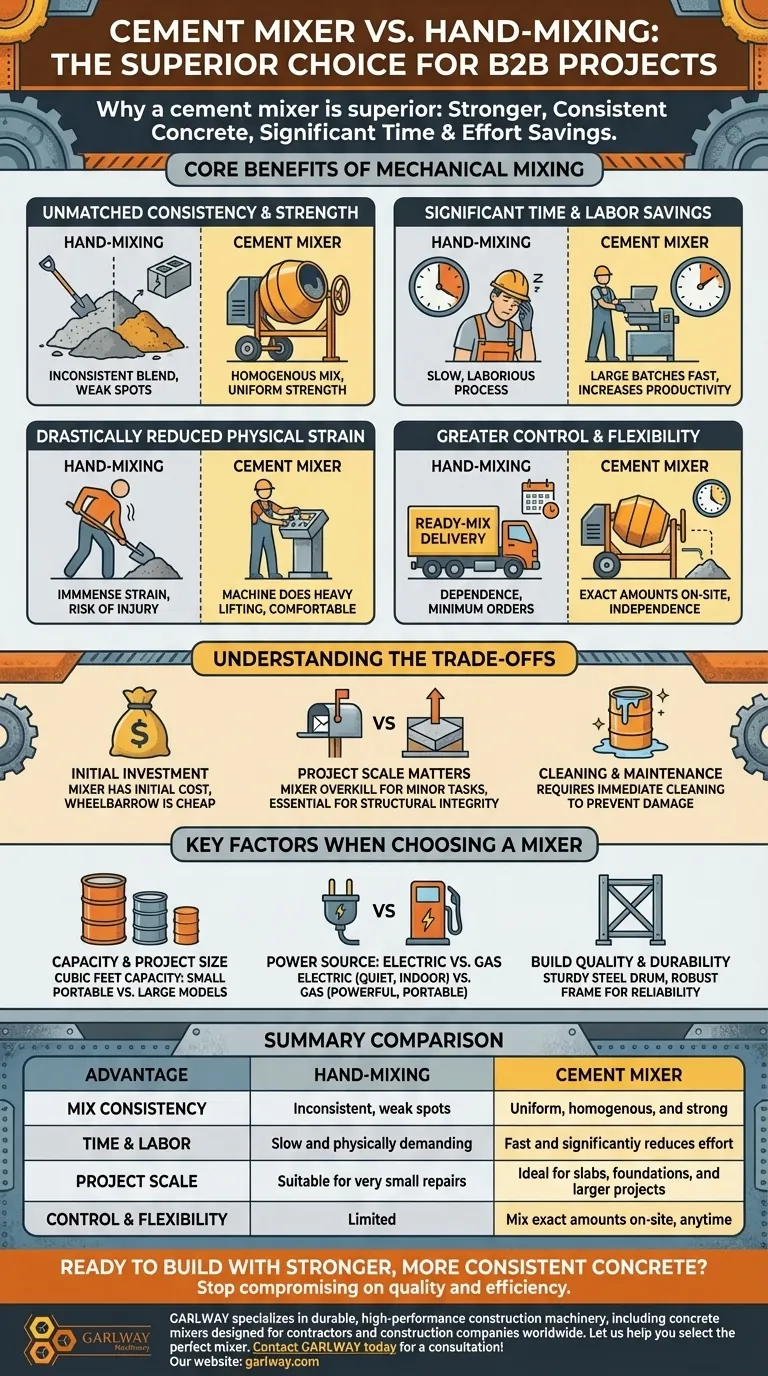
Hand-mixing in a wheelbarrow often results in an uneven blend. You can have dry pockets or areas with too much water, creating weak spots that compromise the entire structure's integrity.
A cement mixer’s continuous tumbling action ensures every grain of sand and aggregate is fully coated with cement paste. This homogenous mix results in uniform strength and durability throughout the cured concrete.
Significant Time and Labor Savings
Manually mixing concrete is a slow, laborious process, especially for any project larger than a single post hole.
A mixer can prepare a large batch in a fraction of the time, dramatically increasing productivity. This allows you to place more concrete faster, reducing the need for extra labor and shortening project timelines.
Drastically Reduced Physical Strain
The repetitive motion of shoveling and turning heavy materials by hand places immense strain on the back, shoulders, and other muscles. This can lead to fatigue, pain, and even long-term injury.
A cement mixer does all the heavy lifting. You simply add the materials and let the machine do the work, making the entire process far more comfortable and sustainable.
Greater Control and Flexibility
Using a mixer gives you independence from ready-mix delivery companies, which often have minimum order sizes and rigid schedules.
With a portable mixer, you can produce the exact amount of concrete you need, precisely when and where you need it. This flexibility is invaluable for smaller jobs, remote locations, or projects with uncertain timelines.
Understanding the Trade-offs
While the benefits are clear, a mixer isn't the right tool for every conceivable situation. Understanding its limitations is key to making an informed decision.
The Initial Investment
The most obvious trade-off is cost. A wheelbarrow and shovel are inexpensive, whereas a mixer requires an initial purchase or rental fee.
Project Scale Matters
For a truly minor task, like setting a single mailbox post, the setup and cleanup time for a mixer might outweigh the benefits. Hand-mixing a single bag of concrete can be faster in these specific, small-scale scenarios.
Cleaning and Maintenance
A cement mixer must be cleaned thoroughly immediately after use. Any leftover concrete will harden and become extremely difficult to remove, potentially damaging the drum and reducing the machine's effectiveness.
Key Factors When Choosing a Mixer
If you determine a mixer is right for your needs, consider these critical factors.
Capacity and Project Size
Mixer capacity is measured in cubic feet. Small, portable mixers are ideal for residential jobs like footings or small slabs, while larger models are needed for substantial construction projects.
Power Source: Electric vs. Gas
Electric mixers are quieter, lighter, and require no refueling, making them perfect for indoor or residential work near a power outlet.
Gas-powered mixers are more powerful and completely portable, making them the standard choice for professional job sites without reliable access to electricity.
Build Quality and Durability
Look for a mixer with a sturdy steel drum and a robust frame. The durability of the machine will determine its lifespan and reliability, especially under frequent use.
Making the Right Choice for Your Goal
Your project's specific needs should guide your decision.
- If your primary focus is a small, one-time repair: Hand-mixing is likely sufficient and more cost-effective for tasks like setting a single fence post.
- If your primary focus is structural integrity for a slab or foundation: A cement mixer is non-negotiable to ensure the consistent strength required for any load-bearing application.
- If your primary focus is efficiency across multiple or large-scale projects: Investing in a portable mixer provides significant long-term savings in time, labor, and material quality.
Ultimately, choosing to use a cement mixer is an investment in safety, quality, and professional efficiency.
Summary Table:
| Advantage | Hand-Mixing | Cement Mixer |
|---|---|---|
| Mix Consistency | Inconsistent, weak spots | Uniform, homogenous, and strong |
| Time & Labor | Slow and physically demanding | Fast and significantly reduces effort |
| Project Scale | Suitable for very small repairs | Ideal for slabs, foundations, and larger projects |
| Control & Flexibility | Limited | Mix exact amounts on-site, anytime |
Ready to build with stronger, more consistent concrete?
Stop compromising on quality and efficiency. GARLWAY specializes in durable, high-performance construction machinery, including concrete mixers designed for contractors and construction companies worldwide.
Let us help you select the perfect mixer to save time, reduce labor costs, and ensure the structural integrity of your projects.
Contact GARLWAY today for a consultation and discover the right equipment for your needs!
Visual Guide
Related Products
- HZS25 Best Cement Mixer for Quick Mix Concrete at Bunnings
- JDC350 Small Cement Concrete Mortar Mixer
- JW1000 Mobile Cement Mixer Concrete Mixer Truck and Batching Plant
- JZC400 Mobile Small Concrete Mixer Cement Mixer Machine
- Concrete Cement Mixer Machine Drum Mixer for Construction
People Also Ask
- How do cement mixers enhance safety on construction sites? Reduce Strain, Hazards, and Accidents
- What are the main components of a cement mixer? A Guide to Core Parts & Functions
- What are some tips for using a cement mixer effectively? Maximize Your Mixer's Performance & Concrete Quality
- How does cleaning a cement mixer after use benefit its performance? Maximize Lifespan and Mix Quality
- Why is it important to clean the cement mixer after use? Prevent Costly Damage and Ensure Quality Concrete