In short, cleaning a cement mixer immediately after use is the single most critical factor in its long-term performance and lifespan. A clean mixer operates at full capacity, produces a consistent mix, and avoids the mechanical strain that leads to premature failure. Neglecting this simple step allows hardened concrete to accumulate, permanently reducing the machine's effectiveness.
The core principle is simple: a few minutes of cleaning after every use prevents hours of difficult labor and saves you from the significant cost of repairing or replacing a damaged machine. It transforms the mixer from a disposable tool into a reliable, long-term asset.
The Vicious Cycle of Concrete Buildup
Failing to clean a mixer initiates a cascade of performance issues. What starts as a small amount of leftover material quickly becomes a serious mechanical problem.
How Hardened Concrete Reduces Capacity
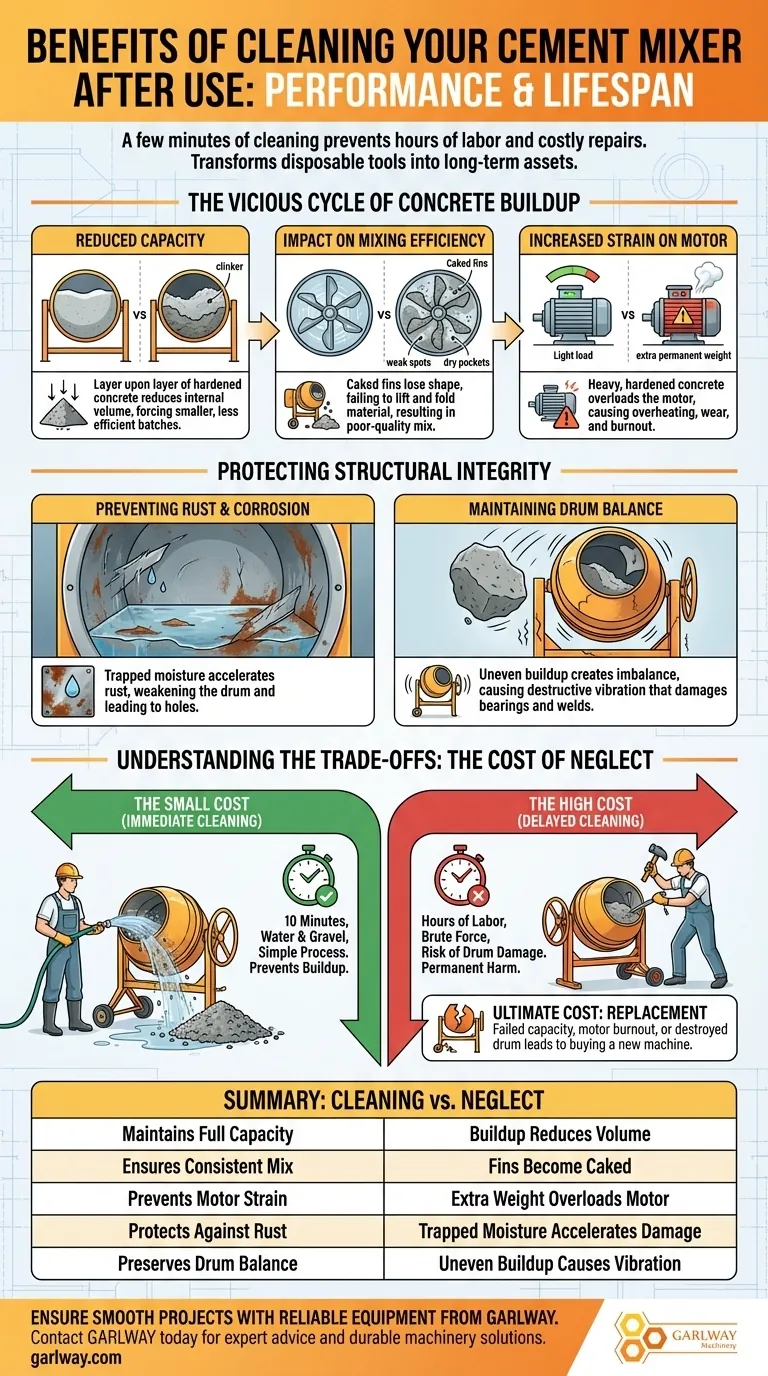
Each time you use the mixer without cleaning it, a new layer of concrete hardens onto the previous one. This buildup, known as "clinker," steadily reduces the internal volume of the drum.
A mixer rated for a certain capacity can quickly become unable to handle that volume, forcing you to mix smaller, less efficient batches.
The Impact on Mixing Efficiency
The mixing fins or paddles inside the drum are engineered to tumble and combine the aggregate, sand, cement, and water uniformly.
When these fins are caked with hardened concrete, their shape is compromised. They can no longer effectively lift and fold the material, leading to an inconsistent, poor-quality mix with weak spots or dry pockets.
Increased Strain on the Motor
Hardened concrete is incredibly heavy. This extra, permanent weight forces the motor to work significantly harder just to turn the drum.
This constant overload can lead to overheating, excessive wear on gears and bearings, and eventual motor burnout. The machine will struggle to start and run smoothly.
Protecting the Machine's Structural Integrity
Beyond the immediate mixing performance, neglect directly damages the physical components of the mixer itself.
Preventing Rust and Corrosion
Leftover wet concrete traps moisture directly against the steel drum. This accelerates the formation of rust, especially in areas where the paint or protective coating has been worn away by abrasion.
Over time, this corrosion weakens the drum, potentially leading to holes and rendering the mixer unusable.
Maintaining Drum Balance
A large, uneven chunk of hardened concrete throws the drum dangerously out of balance.
As it rotates, this imbalance creates significant vibration. This constant shaking will destroy bearings, stress welds, and damage the frame of the entire machine.
Understanding the Trade-offs: The Cost of Neglect
The choice isn't between cleaning or not cleaning; it's between a small, immediate effort and a large, future cost.
The Small Cost of Immediate Cleaning
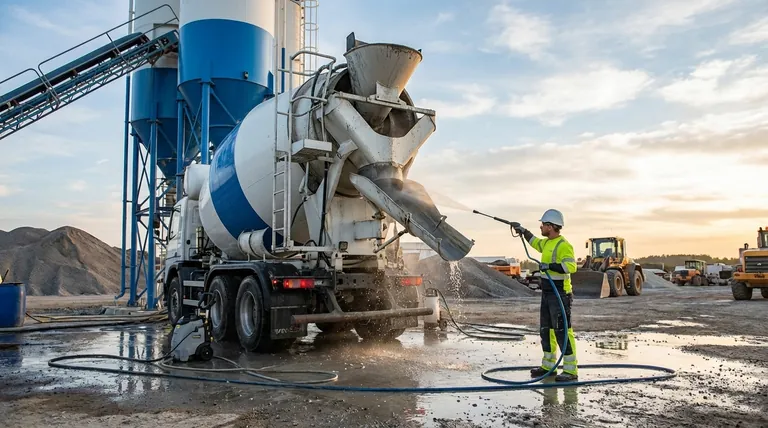
Cleaning a wet mixer is straightforward. It typically involves rinsing with water and tumbling a slurry of gravel and water for a few minutes to scour the interior.
This process takes less than 10 minutes and requires no special tools.
The High Cost of Delayed Cleaning
Once concrete has fully cured inside the drum, the only way to remove it is with brute force, typically a hammer and chisel.
This is a time-consuming, physically demanding task that carries a high risk of denting, puncturing, or otherwise damaging the drum, permanently harming its performance.
The Ultimate Cost: Replacement
Ultimately, a mixer that is not regularly cleaned will fail. Its capacity will be choked, its motor will burn out, or its drum will be destroyed.
The cost of a new mixer is the final price paid for skipping a few minutes of preventative maintenance.
How to Apply This to Your Goal
Your approach to mixer maintenance directly impacts your project outcomes and long-term costs.
- If your primary focus is consistent mix quality: A clean mixer is non-negotiable, as it ensures the fins can properly combine materials for maximum concrete strength.
- If your primary focus is long-term equipment value: Regular cleaning is the most effective way to prevent the rust, motor strain, and damage that lead to costly repairs and premature replacement.
- If your primary focus is operational efficiency: A clean drum holds its full rated capacity and prevents the mechanical issues that cause downtime on the job site.
Treating your cement mixer as a precision tool that requires care ensures it will perform reliably for years to come.
Summary Table:
| Benefit of Cleaning | Impact of Neglect |
|---|---|
| Maintains full drum capacity | Buildup reduces mixing volume |
| Ensures consistent mix quality | Fins become caked, leading to poor mixes |
| Prevents motor strain and burnout | Extra weight overloads the motor |
| Protects against rust and corrosion | Trapped moisture accelerates damage |
| Preserves drum balance and structure | Uneven buildup causes vibration and damage |
Ensure your construction projects run smoothly with reliable equipment from GARLWAY.
As a specialist in construction machinery, we provide durable cement mixers, concrete batching plants, and winches designed for the demands of construction companies and contractors worldwide. Proper maintenance is key to performance, and starting with a high-quality mixer makes all the difference.
Let us help you maximize your equipment's lifespan and efficiency. Contact GARLWAY today for expert advice and durable machinery solutions tailored to your needs.
Visual Guide
Related Products
- HZS25 Best Cement Mixer for Quick Mix Concrete at Bunnings
- JDC350 Small Cement Concrete Mortar Mixer
- JW1000 Mobile Cement Mixer Concrete Mixer Truck and Batching Plant
- Concrete Cement Mixer Machine Drum Mixer for Construction
- JZC400 Mobile Small Concrete Mixer Cement Mixer Machine
People Also Ask
- How do cement mixers enhance safety on construction sites? Reduce Strain, Hazards, and Accidents
- What are the main components of a cement mixer? A Guide to Core Parts & Functions
- What are some tips for using a cement mixer effectively? Maximize Your Mixer's Performance & Concrete Quality
- Why is it important to clean the cement mixer after use? Prevent Costly Damage and Ensure Quality Concrete
- What factors should be considered when choosing a cement mixer? Select the Right Mixer for Efficiency and Durability