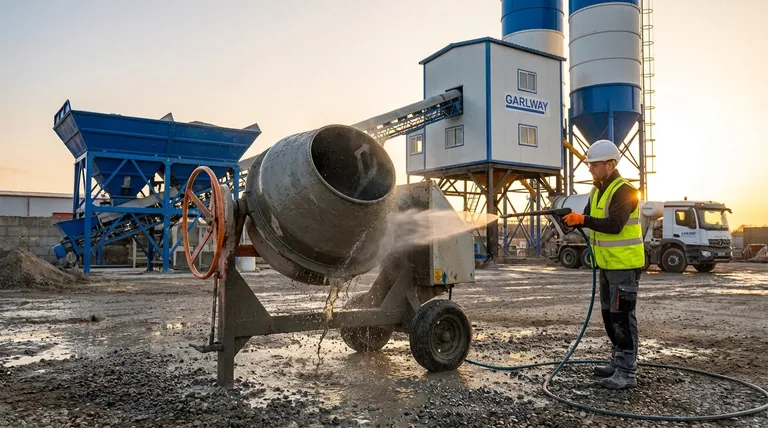
Cleaning your cement mixer is not just about tidiness; it is the single most critical maintenance task for the tool. Failing to clean it immediately after use allows wet concrete to cure and harden inside the drum, which permanently reduces its capacity, damages the equipment, and compromises the quality of all future batches.
The core principle is simple: wet concrete is easy to remove, but hardened concrete is destructive. Immediate cleaning prevents permanent damage and ensures your mixer remains a reliable and effective tool for every project.
The Consequences of a Dirty Mixer
Failing to clean your mixer has direct, cascading consequences that affect the equipment's lifespan, its performance, and the structural integrity of the concrete you produce.
Permanent Damage to the Drum
Hardened chunks of concrete do more than just take up space. As the drum turns, these abrasive masses scour the interior, wearing down the metal and weakening the structure over time. This buildup also adds weight and throws the drum off-balance, putting immense strain on the motor and bearings.
Reduced Mixing Capacity
Every layer of hardened concrete that sticks to the drum's interior is volume you can no longer use. A mixer that was designed to handle a specific capacity will be able to mix progressively less material, forcing you to run smaller, less efficient batches to get the job done.
Compromised Concrete Quality
Proper cleaning is essential for maintaining the quality and consistency of your concrete. Old, hardened pieces can break off and contaminate a new batch, creating weak spots. Furthermore, leftover residue can absorb water and throw off the precise water-to-cement ratio, resulting in a mix that is weaker or less workable than intended.
The Principle of Immediate Action
The chemical reaction that turns cement into concrete begins the moment you add water. This process, known as hydration, is irreversible, which is why speed is the most important factor in proper mixer maintenance.
Why "Later" is Too Late
Once the concrete begins to set, it forms a powerful bond with the metal surface of the drum. What takes only a few minutes to rinse away when wet will require hours of difficult, potentially damaging labor to chip out with a hammer and chisel once it has cured.
The Correct Cleaning Method
The most effective cleaning process is also the simplest. As soon as you have emptied the last of the wet concrete, immediately add water to the drum and let it tumble. This slurry will dissolve and dislodge any remaining material. Pour it out, repeat if necessary, and your mixer is ready for its next use.
Making the Right Choice for Your Goal
Your approach to maintenance should align directly with your project standards and your investment in your equipment.
- If your primary focus is equipment longevity: Clean the mixer with water immediately after every single use to prevent the permanent buildup that causes damage.
- If your primary focus is consistent, high-quality concrete: A clean drum is non-negotiable for ensuring accurate batching and preventing old residue from weakening your new mix.
- If your primary focus is operational efficiency: A clean mixer maintains its full capacity and mixes effectively, saving you time, labor, and material on the job.
A few minutes of cleaning is the best investment you can make in the performance and lifespan of your cement mixer.
Summary Table:
| Consequence of Not Cleaning | Impact on Your Project |
|---|---|
| Permanent Drum Damage | Scoured metal, unbalanced drum, and motor strain reduce the mixer's lifespan. |
| Reduced Mixing Capacity | Hardened concrete buildup forces smaller, less efficient batches. |
| Compromised Concrete Quality | Contamination and incorrect water ratios create weak, inconsistent concrete. |
Protect your investment and ensure project success with reliable equipment from GARLWAY.
As a specialist in construction machinery, GARLWAY provides durable cement mixers, winches, and batching plants designed for the demanding needs of construction companies and contractors worldwide. Proper maintenance is key, and so is starting with quality machinery.
Contact our experts today to find the perfect concrete mixer for your business and keep your projects running smoothly.
Visual Guide

Related Products
- HZS25 Best Cement Mixer for Quick Mix Concrete at Bunnings
- JDC350 Small Cement Concrete Mortar Mixer
- JW1000 Mobile Cement Mixer Concrete Mixer Truck and Batching Plant
- JZC400 Mobile Small Concrete Mixer Cement Mixer Machine
- Concrete Cement Mixer Machine Drum Mixer for Construction
People Also Ask
- How do cement mixers enhance safety on construction sites? Reduce Strain, Hazards, and Accidents
- What are the main components of a cement mixer? A Guide to Core Parts & Functions
- What are some tips for using a cement mixer effectively? Maximize Your Mixer's Performance & Concrete Quality
- How does cleaning a cement mixer after use benefit its performance? Maximize Lifespan and Mix Quality
- What factors should be considered when choosing a cement mixer? Select the Right Mixer for Efficiency and Durability