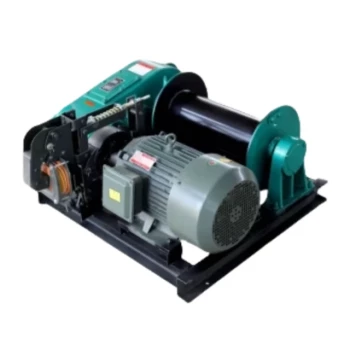
In essence, a capstan winch trades automation for control and consistency. It offers significant advantages, including constant pulling power regardless of rope length, a compact design, and excellent portability. However, its primary disadvantage is that it requires continuous, hands-on operation from the user to maintain tension and control the load, as it typically lacks an integrated braking system.
The capstan winch's core design—a rotating drum that does not accumulate rope—is the source of both its greatest strength and its most critical limitation. This ensures unwavering pulling force but demands constant operator engagement to function safely and effectively.
The Core Principle: How a Capstan Differs
A capstan winch operates on a simple, powerful principle that sets it apart from a standard drum winch. Understanding this is key to using it correctly.
No Rope Accumulation
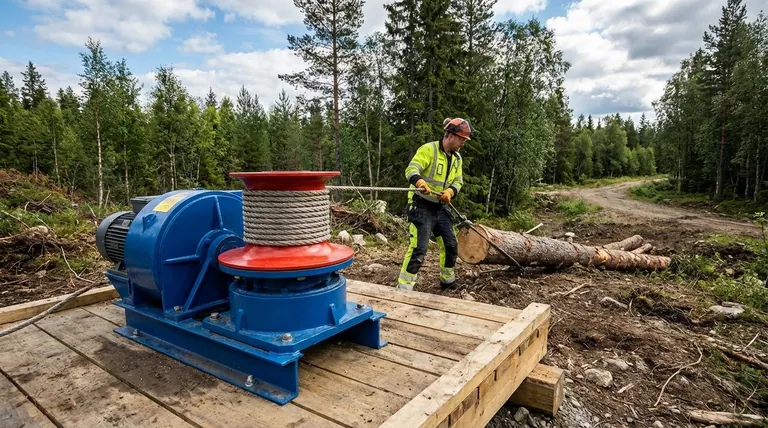
Unlike a traditional winch that spools cable or rope onto its drum, a capstan winch simply uses the friction from a few wraps of rope around its vertical drum (the capstan) to pull.
The rope does not collect on the winch; it flows around the drum as the operator pulls on the loose end.
The Source of Constant Power
Because rope doesn't build up on the drum, the drum's effective diameter never changes.
This is critical because it means the winch delivers its full, rated pulling power from the beginning of the pull to the very end. Standard winches lose significant pulling force as the drum fills with cable.
The Role of the Operator
The operator is an active part of the machine. By applying tension to the tail end of the rope, the operator engages the pull.
To stop pulling or control the load, the operator simply releases that tension. You are the clutch and the brake.
Key Advantages Explained
The unique design of the capstan winch gives rise to several distinct operational advantages.
Unwavering Pulling Force
For tough, sustained pulling tasks, the capstan's dependable performance is its main benefit. You never have to worry about a reduction in power as more line is paid out.
Unmatched Portability and Flexibility
Many capstan winches are self-powered (gas or battery) and designed to be portable.
Being lightweight and compact, they can be carried and operated by a single person in remote locations where a vehicle-mounted winch is not an option, such as in forestry or hunting.
Enhanced Operational Safety
When used correctly, a capstan can be a very safe tool. The operator stands away from the direct line of pull, providing a better overview of the operation and staying out of the most dangerous zone.
Furthermore, using synthetic rope instead of steel cable dramatically reduces the risk of serious injury if the line were to break.
Compact, Space-Saving Design
The vertical drum orientation makes the capstan winch inherently compact, a valuable feature on crowded boat decks or in tight work areas. The line can also be released from the drum at any angle, adding to its flexibility.
Understanding the Trade-offs and Disadvantages
To use a capstan winch effectively, you must respect its limitations. These are not so much flaws as they are fundamental trade-offs for its unique benefits.
Active Manual Control is Non-Negotiable
This is the most critical point to understand. A capstan winch requires your constant attention.
You cannot start a pull and walk away. The machine only works when you are actively managing the rope tension. This makes it unsuitable for any task that requires unattended operation.
Not Designed for Holding Static Loads
Most capstan winches do not have an integrated mechanical brake for holding a load in place.
They are pulling machines, not hoisting or suspension machines. If you need to lift a load vertically and hold it in position, a traditional winch or hoist with a proper braking system is the correct and safe choice.
Potential for Higher Initial Costs
For permanently mounted units, such as those on boats, capstan winches can have a higher installation cost compared to some traditional winch or windlass designs.
Routine Rope Wear
Like any system that relies on friction, the capstan will gradually cause wear on the anchor or pulling rope over time. This is a normal maintenance consideration.
Making the Right Choice for Your Goal
Selecting the right tool depends entirely on the job you need to accomplish.
- If your primary focus is remote or unpredictable pulling tasks: The portability and self-powered nature of many capstan winches make them the ideal choice for jobs in forestry, hunting, or off-grid construction.
- If your primary focus is consistent, heavy horizontal pulling: A capstan's constant, unwavering power offers a significant performance advantage over a standard drum winch.
- If you need to lift and securely hold a load unattended: A traditional drum winch or a hoist with an integrated braking system is the safer and more appropriate tool for the job.
By understanding its principle of manual control, you can leverage the capstan winch's unique strengths for tasks where consistency and flexibility are paramount.
Summary Table:
| Aspect | Advantage | Disadvantage |
|---|---|---|
| Pulling Power | Constant force, no loss as rope pays out | Requires continuous manual operator control |
| Design & Portability | Compact, lightweight, self-powered options | Not designed for holding static loads (no brake) |
| Safety & Flexibility | Operator stands clear; can use safer synthetic rope | Higher initial cost for some permanent installations |
| Operation | Rope can be released at any angle; ideal for remote work | Causes routine wear on the rope over time |
Need a reliable winch solution for your construction or contracting projects?
At GARLWAY, we specialize in durable construction machinery, including a range of winches designed for demanding tasks. Whether you need the consistent pull of a capstan winch or another robust solution, our experts can help you select the perfect equipment to enhance safety and efficiency on your job site.
Contact our team today for a personalized consultation and discover how GARLWAY machinery can power your success.
Visual Guide
Related Products
- Portable Small Trailer Winch
- Small Electric Winch 120V and 240V for Compact Applications
- Electric and Hydraulic Winch for Heavy Duty Applications
- 12000 lb Heavy Duty Electric Boat Winch
- Hydraulic Winding Engine Harbor Freight Winch
People Also Ask
- What features were incorporated into the upgraded portable winch system? Boost Your Recovery Power & Safety
- What are some uses mentioned for portable winches beyond vehicle recovery? Essential Versatility for Property & Work
- How could the twisting issue with a portable winch be mitigated? Achieve Safe, Centered Pulls with Proper Rigging
- What is the significance of trailer winches in the boating industry? Ensure Safe and Efficient Boat Recovery
- What should be considered when mounting a winch on a trailer? Ensure a Safe, Aligned Installation