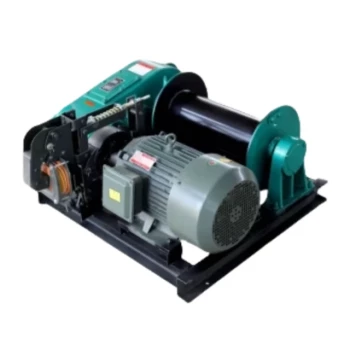
While not strictly mandatory for every boat, an anchor winch shifts from a luxury to a near-necessity for anyone who boats alone, in challenging conditions, or simply wants to make anchoring a safer and less physically demanding task. It provides a crucial speed advantage in emergencies, allowing you to raise anchor in seconds when you might otherwise be in danger.
An anchor winch is more than a convenience; it is a significant upgrade to your boat's safety and operational systems. The decision to install one hinges on an honest assessment of your boating style, the conditions you face, and your willingness to manage the system properly.

The Core Benefits: Beyond Simple Convenience
Many boaters initially view a winch as a way to avoid the hard work of hauling an anchor. While true, the most compelling reasons are rooted in safety and control.
Critical Safety in Emergencies
An anchor winch can be a boat-saver. If a sudden wind shift swings your boat towards rocks or another vessel, the ability to raise anchor and move immediately can prevent a serious incident. Manually hauling in these situations costs precious time you may not have.
The Solo Boater's Essential Tool
For those who fish or cruise alone, an anchor winch is an indispensable piece of equipment. It allows you to manage setting and retrieving the anchor from the helm, keeping you in full control of the boat without having to scramble to the bow.
Reducing Physical Strain
Anchoring can be strenuous. Hauling hundreds of feet of rope and chain with a heavy anchor at the end is physically taxing and can lead to back injuries. A winch eliminates this strain, making boating more accessible and enjoyable.
Practical Considerations Before You Buy
Installing an anchor winch is not a simple plug-and-play operation. It requires careful planning and assessment of your vessel's capabilities.
Evaluating Your Boat's Structure
A winch exerts immense force on your deck. You must have a strong, flat surface on the foredeck for mounting. In many cases, this area will need to be reinforced from below to handle the load without causing structural damage.
Confirming Available Space
Drum-style winches, a popular choice, require significant space in the anchor locker or below the deck to house the unit and the neatly spooled rope and chain. You must measure this space carefully before purchasing a unit.
Calculating Rope and Chain Capacity
Your winch's drum must be able to hold enough line, known as "rode." A common rule of thumb is to have a rode length of at least three times your maximum intended anchoring depth, plus some extra as a safety margin. Ensure the winch you choose can accommodate this.
Understanding the Trade-offs and Responsibilities
Owning an anchor winch introduces new operational and maintenance duties. It's a powerful piece of machinery that demands respect.
The Need for Proper Operation
Even with remote controls at the helm, it is wise to have a person stationed at the bow while the winch is operating. This allows for a visual check and access to override controls in case the rode snags or bunches up. The operator must be familiar with the winch's function and emergency stop procedures.
The Commitment to Maintenance
Like any mechanical system on a boat, a winch requires regular inspection and upkeep. This includes checking for loose bolts, ensuring electrical connections are clean and secure, and keeping the unit free of salt and grime. Following the manufacturer's lubrication and service schedule is critical for longevity.
The Initial Investment
A quality anchor winch and its installation represent a significant financial cost. This must be weighed against the safety and convenience benefits it provides for your specific type of boating.
Making the Right Choice for Your Boating Style
To decide if a winch is right for you, consider how and where you use your boat.
- If your primary focus is safety and solo operation: An anchor winch is a must-have investment that provides control and peace of mind.
- If you frequently anchor in deep water or areas with strong currents: A winch is highly recommended to manage the heavy load and ensure precise, reliable anchoring.
- If your primary focus is casual, fair-weather boating with crew: A winch is a fantastic convenience but may be considered optional if your budget is a concern.
Ultimately, an anchor winch transforms anchoring from an unpredictable physical chore into a controlled, reliable procedure.
Summary Table:
| Aspect | Consideration |
|---|---|
| Safety | Enables rapid anchor retrieval in emergencies. |
| Solo Boating | Essential for managing the boat from the helm. |
| Physical Strain | Eliminates the heavy work of manual hauling. |
| Installation | Requires a strong deck structure and adequate space. |
| Maintenance | Needs regular inspection and upkeep for reliability. |
Ready to upgrade your boat's safety and convenience?
GARLWAY specializes in robust marine equipment, offering reliable anchor winches designed for demanding conditions. Our winches provide the power and durability that construction companies, contractors, and serious boaters need for safe and efficient operations.
Contact our experts today to find the perfect winch solution for your vessel and boating style.
Visual Guide

Related Products
- Electric Hoist Winch Boat Anchor Windlass for Marine Applications
- 12000 lb Electric Boat Trailer Winch with Windlass Anchor Warn
- Best 18000 Pound Drum Anchor Trailer Winch
- Heavy Duty Electric Boat Winch Windlass Anchor
- Portable Small Trailer Winch
People Also Ask
- How does an electric anchor winch work? Power, Safety, and Reliable Operation Explained
- What are the advantages of installing an electric anchor winch on a boat? Boost Safety & Ease for Boaters
- What are the operational differences between electric hoists and winches? A Guide to Safe Lifting vs. Pulling
- What are the main benefits of a boat anchor winch? Boost Safety & Efficiency for Your Vessel
- How does a boat anchor winch work? A Guide to Reliable Anchor Handling